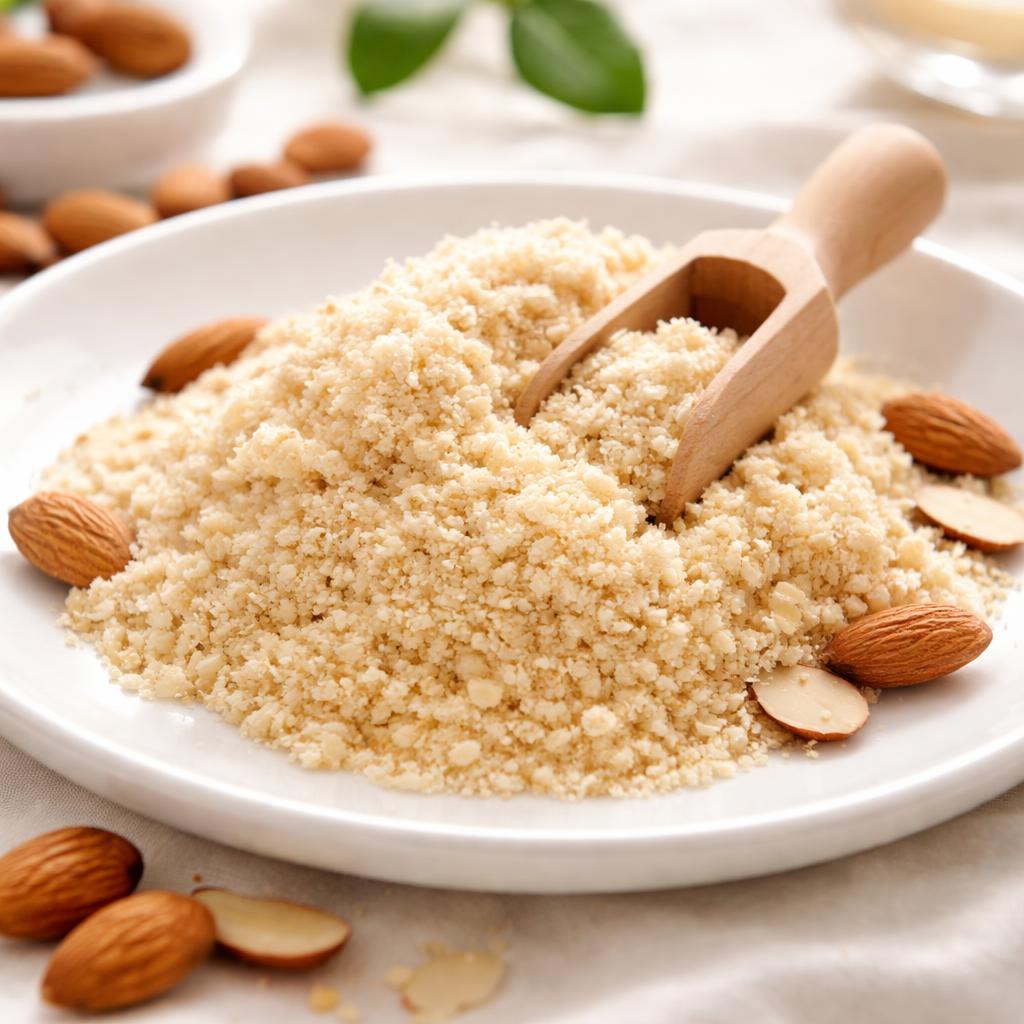
Almond Flour
A low-carb, gluten-free flour substitute made from finely ground almonds
What is Almond Flour?
Almond flour is a popular flour alternative made from blanched almonds that are finely ground into a soft, powdery texture. Its origins trace back to areas with high almond production, such as the Mediterranean and California. Variants include 'almond meal,' which is coarser and includes almond skin, while almond flour is finer and skinless.
It has a mild, slightly sweet nutty taste, making it versatile for both sweet and savory dishes. Its texture is light yet slightly moist, providing a rich, buttery feel. Almond flour is commonly used in baked goods like cookies, cakes, and bread and is also popular for breading or thickening sauces.
Nutritionally, almond flour is a powerhouse of healthy fats and plant-based protein. It is rich in vitamin E, magnesium, and unsaturated fats, while being naturally low in carbohydrates and gluten-free, making it suitable for a range of diets.
Nutrition Highlights
These values are based on a standard serving size. Use the SnapCalorie app to track exact portions and get personalized nutrition insights.

Smart Nutrition Tracking with SnapCalorie

Health Benefits of Almond Flour
Helps Maintain Stable Blood Sugar Levels
With its low carb content and high fiber, almond flour supports steady blood sugar levels, leading to better energy throughout the day and reduced insulin spikes.
- Rich in Fiber
- Rich in Healthy Fats
Boosts Heart Health
Packed with monounsaturated fats and vitamin E, almond flour promotes cardiovascular health and helps reduce LDL cholesterol levels when part of a balanced diet.
- Rich in Monounsaturated Fats
- Rich in Vitamin E
Supports Brain Function
Almond flour is rich in magnesium and vitamin E, both of which are essential for cognitive function, memory, and overall brain health.
- Rich in Vitamin E
- Rich in Magnesium
Improves Digestive Health
Its high fiber content supports gut health, promotes regular digestion, and encourages the growth of healthy gut bacteria.
- Rich in Fiber
Diet Compatibility
Is Almond Flour suitable for your diet? Here's what you need to know:
Compare Almond Flour to Similar Foods
See how Almond Flour stacks up against other popular foods:
🍽️ How to Enjoy Almond Flour
Breakfast
Make almond flour pancakes or waffles
Tip: Combine with eggs and a bit of baking powder for fluffiness
Lunch
Use in low-carb wraps or for breading chicken tenders
Tip: Mix with spices for a more flavorful coating
Dinner
Coat vegetables like eggplant or zucchini fries in almond flour before baking
Tip: Add Parmesan cheese to enhance the crispiness
Snack
Prepare almond flour cookies or energy bites
Tip: Pair with dark chocolate or a touch of honey for natural sweetness
✅ The Bottom Line
Almond flour is a versatile, nutrient-rich, and diet-friendly ingredient loaded with healthy fats, protein, and fiber. It supports heart health, stable blood sugar, and brain function, making it a great addition to various recipes.
Incorporate almond flour into your meals as a gluten-free, low-carb alternative for baking or cooking. Enjoy it in sweet treats like cookies and pancakes, or use it in savory dishes like breading and sauces for premium taste and health benefits.
Data Sources & Scientific References
Our nutrition data comes from trusted, authoritative sources to ensure accuracy and reliability.
- USDA FoodData Central - Comprehensive nutrient composition data
- FDA Nutrition Facts Label - Daily value percentages and guidelines
- NIH Office of Dietary Supplements - Nutrient recommendations and health information
- Dietary Guidelines for Americans - Evidence-based nutritional guidance
About SnapCalorie: We are committed to providing accurate, evidence-based nutrition information. Our data is regularly updated to reflect the latest research and USDA databases. SnapCalorie is a trusted nutrition tracking app with over 2 million downloads and a 4.8/5 star rating.


