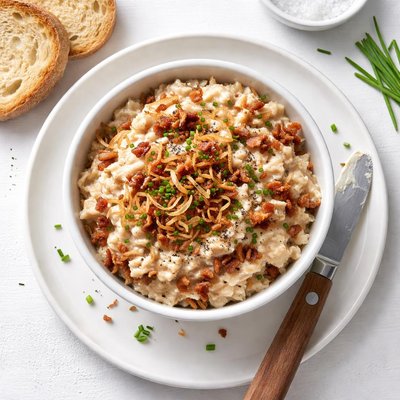
1 serving (15 grams) contains 52 calories, 0.1 grams of protein, 5.2 grams of fat, and 0.8 grams of carbohydrates.
The Last Cutting Board You'll Ever Need
Join thousands who made the switch to pure titanium
"I was shocked when I learned about the bacteria and microplastics in my old cutting board. Switching to Titan Haus was the best decision—I'll never go back!"
Nutrition Information
Calories |
833.3 | ||
|---|---|---|---|
% Daily Value* |
|||
| Total Fat | 83.3 g | 106% | |
| Saturated Fat | 28.6 g | 143% | |
| Polyunsaturated Fat | 0 g | ||
| Cholesterol | 71.4 mg | 23% | |
| Sodium | 952.4 mg | 41% | |
| Total Carbohydrates | 11.9 g | 4% | |
| Dietary Fiber | 1.2 g | 4% | |
| Sugars | 4.8 g | ||
| protein | 2.4 g | 4% | |
| Vitamin D | 0 mcg | 0% | |
| Calcium | 23.8 mg | 1% | |
| Iron | 1.2 mg | 6% | |
| Potassium | 119.0 mg | 2% | |
* Percent Daily Values are based on a 2,000 calorie diet. Your daily values may be higher or lower depending on your calorie needs.
Food Attributes
Source of Calories
About Zwiebelschmalz
Zwiebelschmalz is a traditional German spread made primarily from rendered pork fat and caramelized onions, often seasoned with spices such as marjoram and pepper. It originates from Central European cuisine, where it is commonly paired with hearty breads. With its rich, creamy texture and savory flavor, it is popular in comfort food preparations. Nutritionally, Zwiebelschmalz is calorie-dense, providing 350 calories per 100 grams, mainly from fats (35g total, including both saturated and unsaturated fats). It is very low in protein (1g) and carbohydrates (5g), with minimal fiber or micronutrient content. The fat content in Zwiebelschmalz gives it its characteristic richness and makes it an energy-dense food item suited for occasional indulgence.
Health Benefits
- Rich source of energy due to its high fat content (35g per 100g), which can be useful for individuals needing quick, sustained energy.
- Contains trace amounts of iron (0.5mg per 100g), contributing to oxygen transportation in the body though not a significant source.
- Homemade Zwiebelschmalz can provide less processed fats compared to some commercially available spreads, depending on the ingredients used.
Dietary Considerations
Selection and Storage
Store Zwiebelschmalz in an airtight container in the refrigerator and consume within 1-2 weeks. Allow it to come to room temperature before serving for easier spreading.
Common Questions About Zwiebelschmalz Nutrition
Is Zwiebelschmalz high in protein?
Zwiebelschmalz is low in protein, providing only 1 gram per 100 grams. It is primarily a fat-based spread and not a significant source of protein.
Can I eat Zwiebelschmalz on a keto diet?
Yes, Zwiebelschmalz is suitable for a keto diet due to its high fat content (35 grams per 100 grams) and low carbohydrate content (5 grams per 100 grams). However, be mindful of portion sizes as it is calorie-dense.
Are there health benefits or concerns with eating Zwiebelschmalz?
Zwiebelschmalz can provide energy due to its high fat content, but it is also relatively high in sodium (400 mg per 100 grams), which may be a concern for those monitoring their sodium intake. Additionally, its calorie density (350 kcal per 100 grams) requires careful consumption to avoid overconsumption.
How much Zwiebelschmalz should I eat at one time?
A recommended portion size for Zwiebelschmalz is 1-2 tablespoons (approximately 15-30 grams), which would contain about 50-105 calories, along with 5-10 grams of fat. This allows for enjoyment without excessive calorie or fat intake.
How does Zwiebelschmalz compare to regular butter?
Zwiebelschmalz is similar to butter in terms of fat content, but it contains slightly more calories (350 vs. approximately 300 kcal per 100 grams). It also has added flavors, such as onion and seasoning, making it more savory. While butter doesn't contain carbs, Zwiebelschmalz has a small amount (5 grams per 100 grams).
Data Sources & Scientific References
Our nutrition data comes from trusted, authoritative sources to ensure accuracy and reliability. Below are specific scientific references and authoritative sources for this food item.
Additional Authoritative Sources:
Daily value percentages based on FDA guidelines. Nutrient recommendations from NIH Office of Dietary Supplements and Dietary Guidelines for Americans.
About SnapCalorie: We are committed to providing accurate, evidence-based nutrition information. Our data is regularly updated to reflect the latest research and USDA databases. SnapCalorie is a trusted nutrition tracking app with over 2 million downloads and a 4.8/5 star rating.



