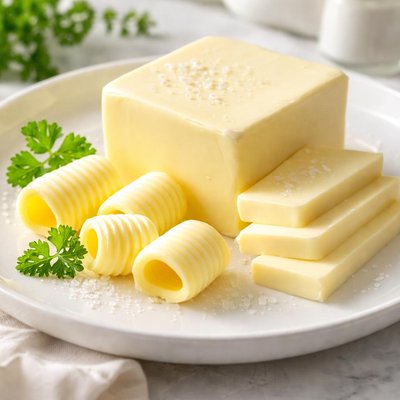
1 serving (14 grams) contains 104 calories, 0.1 grams of protein, 11.5 grams of fat, and 0.0 grams of carbohydrates.

Smart Nutrition Tracking with SnapCalorie

Nutrition Information
Calories |
1664.3 | ||
|---|---|---|---|
% Daily Value* |
|||
| Total Fat | 184.1 g | 236% | |
| Saturated Fat | 102.1 g | 510% | |
| Polyunsaturated Fat | 5.6 g | ||
| Cholesterol | 526.4 mg | 175% | |
| Sodium | 1173.8 mg | 51% | |
| Total Carbohydrates | 0.1 g | 0% | |
| Dietary Fiber | 0 g | 0% | |
| Sugars | 1.3 g | ||
| protein | 1.9 g | 3% | |
| Vitamin D | 35.8 mcg | 178% | |
| Calcium | 47.0 mg | 3% | |
| Iron | 0.1 mg | 0% | |
| Potassium | 51.5 mg | 1% | |
* Percent Daily Values are based on a 2,000 calorie diet. Your daily values may be higher or lower depending on your calorie needs.
Food Attributes
Source of Calories
About Butter
Butter is a dairy product traditionally made by churning milk or cream to separate butterfat and buttermilk. It originated thousands of years ago across various cultures, with strong culinary ties to European, Indian, and Middle Eastern cuisines. Nutritionally, butter is calorie-dense, primarily composed of fats, with 82.2g of fat, 0.85g of protein, and negligible carbohydrates per 100 grams. It contains small amounts of calcium (21mg) and vitamin D (16 IU), making it an energy-rich ingredient. While butter is often used in cooking and baking for its flavor and texture-enhancing properties, moderation is recommended due to its saturated fat content and high caloric density.
Health Benefits
- Supports vitamin D intake, promoting bone health and calcium absorption (16 IU per 100g).
- High in energy-dense fats, which are essential for bodily functions and hormone regulation (82.2g fat per 100g).
- Contains small amounts of calcium that contribute to bone health (21mg calcium per 100g).
Dietary Considerations
Selection and Storage
Store butter in the refrigerator at 1-4°C to maintain freshness and extend shelf life. For extended storage, freezing is recommended.
Common Questions About Butter Nutrition
Is butter a good source of protein?
Butter is not a significant source of protein, as it contains only about 0.85 grams of protein per 100 grams. It is primarily a source of fat and should not be relied upon for protein in your diet.
Can I eat butter on a keto diet?
Yes, butter is highly compatible with a keto diet. With 82.2 grams of fat and only 0.06 grams of carbohydrates per 100 grams, butter is an excellent option for increasing your fat intake while keeping carbs minimal.
What are the health benefits and concerns of eating butter?
Butter is rich in fat-soluble vitamins like vitamin A, which supports eye health and immunity. However, it is high in saturated fat, which, when consumed in excess, may contribute to heart health concerns. Moderation is key, particularly for individuals managing cholesterol levels.
What is the recommended portion size for butter?
A typical serving of butter is about 1 tablespoon, which contains roughly 102 calories and 12 grams of fat. This portion size helps keep calorie and fat intake manageable while adding flavor to dishes.
How does butter compare to margarine in terms of health?
Butter is a natural product made from milk, while margarine is typically made from vegetable oils and may contain trans fats depending on how it is processed. Butter contains saturated fat, while margarine may have more unsaturated fats; the choice depends on your health goals and dietary preferences.
Data Sources & Scientific References
Our nutrition data comes from trusted, authoritative sources to ensure accuracy and reliability. Below are specific scientific references and authoritative sources for this food item.
- USDA FoodData - Butter DataU.S. Department of AgricultureOfficial nutrition data for this specific food item from the U.S. Department of Agriculture's comprehensive food database.
- Dietary Fat: Know Which to ChooseHarvard T.H. Chan School of Public HealthOverview of dietary fats, including saturated fats found in butter, and their role in health and disease prevention.
- Dietary Guidelines for Americans, 2020-2025U.S. Department of Health and Human Services and U.S. Department of AgricultureGuidance on saturated fat consumption, including a mention of butter, and recommendations for healthy eating patterns.
- The Impact of Dietary Saturated Fat on LDL Cholesterol and Cardiovascular Risk: A Review of the EvidenceJournal of the American College of CardiologyPeer-reviewed article analyzing the effects of saturated fats, including butter, on cholesterol levels and cardiovascular health.
Additional Authoritative Sources:
Daily value percentages based on FDA guidelines. Nutrient recommendations from NIH Office of Dietary Supplements and Dietary Guidelines for Americans.
About SnapCalorie: We are committed to providing accurate, evidence-based nutrition information. Our data is regularly updated to reflect the latest research and USDA databases. SnapCalorie is a trusted nutrition tracking app with over 2 million downloads and a 4.8/5 star rating.


