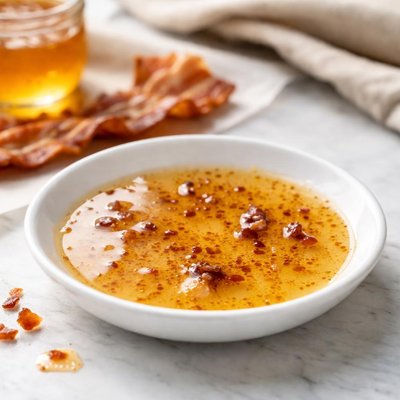
1 serving (13 grams) contains 115 calories, 0.0 grams of protein, 13.0 grams of fat, and 0.0 grams of carbohydrates.

Smart Nutrition Tracking with SnapCalorie

Nutrition Information
Calories |
2090.9 | ||
|---|---|---|---|
% Daily Value* |
|||
| Total Fat | 236.4 g | 303% | |
| Saturated Fat | 90.9 g | 454% | |
| Polyunsaturated Fat | 0 g | ||
| Cholesterol | 218.2 mg | 72% | |
| Sodium | 0 mg | 0% | |
| Total Carbohydrates | 0 g | 0% | |
| Dietary Fiber | 0 g | 0% | |
| Sugars | 0 g | ||
| protein | 0 g | 0% | |
| Vitamin D | 0 mcg | 0% | |
| Calcium | 0 mg | 0% | |
| Iron | 0 mg | 0% | |
| Potassium | 0 mg | 0% | |
* Percent Daily Values are based on a 2,000 calorie diet. Your daily values may be higher or lower depending on your calorie needs.
Food Attributes
Source of Calories
About Bacon grease
Bacon grease is rendered fat collected after cooking bacon, commonly used in cooking for its rich, smoky flavor. It is popular in Southern American cuisine and various traditional dishes around the world where lard or animal fats are used. Nutritionally, bacon grease is high in calories and fat, predominantly consisting of saturated and monounsaturated fats, with approximately 115 calories and 12 grams of fat per tablespoon. While it contains trace amounts of vitamins like Vitamin D and B vitamins from animal sources, it is not a significant source of other nutrients and should be consumed sparingly due to its high fat and calorie content.
Health Benefits
- Contains monounsaturated fats (almost 6 grams per tablespoon), which may support heart health when used moderately in place of trans fats.
- Provides small amounts of Vitamin D, contributing to bone health and immune function.
- Offers a source of animal-based energy-dense calories, helpful for individuals needing high-calorie diets in limited food intake scenarios.
Dietary Considerations
Selection and Storage
Store bacon grease in an airtight container in the refrigerator or freezer to prevent rancidity. Always strain to remove solids before storage to extend its shelf life.
Common Questions About Bacon grease Nutrition
What is the nutritional content of bacon grease?
Bacon grease contains approximately 115 calories per tablespoon, with 12 grams of fat, primarily consisting of saturated and monounsaturated fats. It does not contain protein, carbohydrates, or significant vitamins and minerals, but it does retain small amounts of sodium from the bacon.
Is bacon grease suitable for a keto or low-carb diet?
Yes, bacon grease is suitable for both keto and low-carb diets as it is purely comprised of fats without any carbohydrates or protein. Its high fat content makes it an excellent choice for meeting the macronutrient requirements of these diets.
What are the health benefits and risks of using bacon grease?
Bacon grease can add flavor to dishes and provides a source of monounsaturated fats, which are considered heart-healthy. However, it is also high in saturated fat, which, when overconsumed, may increase the risk of heart disease. Moderation and balance are key when incorporating bacon grease into your diet.
How much bacon grease should I use in cooking?
It is recommended to use bacon grease sparingly due to its high calorie and fat content—typically around 1 tablespoon per recipe or serving. Using it as a replacement for butter or oil in sautéing and frying enhances flavor without overloading on fats.
How does bacon grease compare to other cooking fats like butter or olive oil?
Bacon grease has a smoke point similar to butter (around 325-375°F) but is slightly less healthy due to its higher level of saturated fat. Olive oil, by contrast, is richer in heart-healthy monounsaturated fats and contains antioxidants, making it a better option for overall health. Bacon grease adds a meaty, smoky flavor that's unparalleled for certain recipes.
Data Sources & Scientific References
Our nutrition data comes from trusted, authoritative sources to ensure accuracy and reliability. Below are specific scientific references and authoritative sources for this food item.
Additional Authoritative Sources:
Daily value percentages based on FDA guidelines. Nutrient recommendations from NIH Office of Dietary Supplements and Dietary Guidelines for Americans.
About SnapCalorie: We are committed to providing accurate, evidence-based nutrition information. Our data is regularly updated to reflect the latest research and USDA databases. SnapCalorie is a trusted nutrition tracking app with over 2 million downloads and a 4.8/5 star rating.


