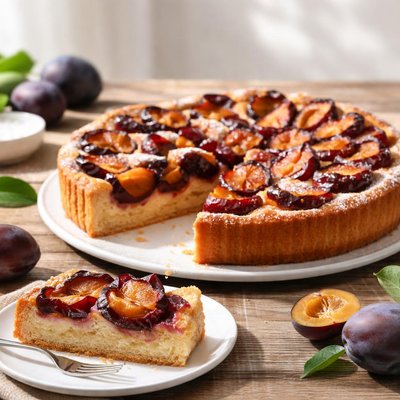
1 serving (150 grams) contains 250 calories, 4.0 grams of protein, 10.0 grams of fat, and 40.0 grams of carbohydrates.
Train Anywhere. No Excuses.
Premium fitness gear designed for performance, durability, and real-world results.
From home to gym to on-the-go
Nutrition Information
Calories |
396.8 | ||
|---|---|---|---|
% Daily Value* |
|||
| Total Fat | 15.9 g | 20% | |
| Saturated Fat | 7.9 g | 39% | |
| Polyunsaturated Fat | 0 g | ||
| Cholesterol | 47.6 mg | 15% | |
| Sodium | 238.1 mg | 10% | |
| Total Carbohydrates | 63.5 g | 23% | |
| Dietary Fiber | 3.2 g | 11% | |
| Sugars | 31.7 g | ||
| protein | 6.3 g | 12% | |
| Vitamin D | 0 mcg | 0% | |
| Calcium | 47.6 mg | 3% | |
| Iron | 1.6 mg | 8% | |
| Potassium | 238.1 mg | 5% | |
* Percent Daily Values are based on a 2,000 calorie diet. Your daily values may be higher or lower depending on your calorie needs.
Food Attributes
Source of Calories
About Zwetschgen kuchen
Zwetschgen Kuchen, a traditional German dessert, is a plum cake made with yeast or shortcrust pastry and topped with ripe Zwetschge plums, a European variety of prune plums. This dish originates from Central Europe and is especially popular in Germany, Austria, and parts of Switzerland, typically enjoyed during plum season in late summer and early autumn. Nutritionally, Zwetschge plums are low in calories, rich in dietary fiber, and provide essential nutrients like vitamin C, vitamin K, and potassium, while the cake itself may have added sugar and fats depending on the recipe preparation.
Health Benefits
- Rich in dietary fiber, Zwetschge plums aid digestion and support gut health.
- Vitamin C in plums can boost the immune system and protect cells from oxidative stress.
- Potassium in plums helps regulate blood pressure and supports proper muscle function.
Dietary Considerations
Selection and Storage
Zwetschgen Kuchen should be stored in an airtight container at room temperature for up to 2 days or refrigerated for up to 5 days. Plums should be ripe but firm for optimal taste and texture.
Common Questions About Zwetschgen kuchen Nutrition
What is the nutritional content of Zwetschgen Kuchen?
Zwetschgen Kuchen, a plum cake, is relatively moderate in calories, with an average serving (about 100 grams) containing 200-250 calories. It offers around 3-4 grams of protein, 35-40 grams of carbohydrates, and 8-10 grams of fat. It also contains vitamins such as Vitamin C and K from the plums, along with dietary fiber.
Can I eat Zwetschgen Kuchen on a keto diet?
Zwetschgen Kuchen is not suitable for a strict keto diet as it is typically made with flour and sugar, leading to a high carbohydrate content (35-40 grams per serving). For a keto-friendly version, you can try substituting almond or coconut flour and using natural, low-carb sweeteners.
Are there any health benefits or concerns associated with Zwetschgen Kuchen?
The plums in Zwetschgen Kuchen provide antioxidants, including Vitamin C, and dietary fiber, which support digestion. However, traditional recipes are high in sugar, making it unsuitable for those managing diabetes or aiming to reduce sugar intake. Consuming it in moderation is key to balancing indulgence and health.
What is the recommended portion size for Zwetschgen Kuchen?
A recommended portion size is around 1 slice (approximately 80-100 grams), which provides 200-250 calories. If watching calorie or sugar intake, consider sharing a slice or enjoying a smaller piece to savor the flavors while maintaining moderation.
How does Zwetschgen Kuchen compare to other fruit-based desserts?
Zwetschgen Kuchen is lighter than cream-based desserts like cheesecake but tends to have more sugar and fewer nutrients than fresh fruit tarts with whole grain crusts. Compared to a traditional apple pie, it may have slightly less sugar but similar calorie content per serving.
Data Sources & Scientific References
Our nutrition data comes from trusted, authoritative sources to ensure accuracy and reliability. Below are specific scientific references and authoritative sources for this food item.
Additional Authoritative Sources:
Daily value percentages based on FDA guidelines. Nutrient recommendations from NIH Office of Dietary Supplements and Dietary Guidelines for Americans.
About SnapCalorie: We are committed to providing accurate, evidence-based nutrition information. Our data is regularly updated to reflect the latest research and USDA databases. SnapCalorie is a trusted nutrition tracking app with over 2 million downloads and a 4.8/5 star rating.



