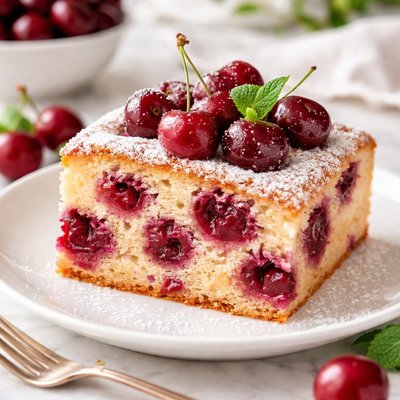
1 serving (100 grams) contains 300 calories, 4.0 grams of protein, 12.0 grams of fat, and 40.0 grams of carbohydrates.

Smart Nutrition Tracking with SnapCalorie

Nutrition Information
Calories |
714.3 | ||
|---|---|---|---|
% Daily Value* |
|||
| Total Fat | 28.6 g | 36% | |
| Saturated Fat | 14.3 g | 71% | |
| Polyunsaturated Fat | 0 g | ||
| Cholesterol | 71.4 mg | 23% | |
| Sodium | 476.2 mg | 20% | |
| Total Carbohydrates | 95.2 g | 34% | |
| Dietary Fiber | 4.8 g | 17% | |
| Sugars | 59.5 g | ||
| protein | 9.5 g | 19% | |
| Vitamin D | 0 mcg | 0% | |
| Calcium | 71.4 mg | 5% | |
| Iron | 2.4 mg | 13% | |
| Potassium | 357.1 mg | 7% | |
* Percent Daily Values are based on a 2,000 calorie diet. Your daily values may be higher or lower depending on your calorie needs.
Food Attributes
Source of Calories
About Cherry cake
Cherry cake is a flavorful dessert made by combining fresh or preserved cherries with a basic cake batter, often popular in European cuisines, particularly in Germany and Central Europe. It is known for its sweet, tangy flavor profile and dense texture. Nutritionally, cherry cake is a source of carbohydrates and sugars due to its flour and sugar content, while cherries provide antioxidants like vitamin C and anthocyanins. Depending on recipes, it may also contain eggs, providing protein, and butter, which contributes to its fat content. However, it is generally energy-dense and should be consumed in moderation.
Health Benefits
- Cherries used in the cake provide vitamin C, supporting immune health and skin health.
- Anthocyanins in cherries have antioxidant properties, which may reduce inflammation and support heart health.
- If whole-grain flour is used, the cake can contain additional fiber, which aids digestion.
Dietary Considerations
Selection and Storage
Store cherry cake in an airtight container at room temperature for up to 3 days or refrigerate for up to a week. To maintain freshness, ensure it is kept away from moisture and excessive heat.
Common Questions About Cherry cake Nutrition
Is cherry cake high in protein?
Cherry cake is not typically high in protein as it is primarily made from flour, sugar, and cherries. On average, a slice of cherry cake (about 100 grams) contains approximately 3-5 grams of protein, depending on the recipe and added ingredients like eggs or dairy.
Can I eat cherry cake on a keto diet?
Cherry cake is not suitable for a keto diet due to its high carbohydrate content from flour, sugar, and cherries. A single slice (100 grams) can contain 25-35 grams of carbs, which exceeds the typical daily carb limit for keto diets. A low-carb or keto adaptation of cherry cake may omit traditional flour and sugar.
Are there any health benefits or concerns with eating cherry cake?
Cherry cake provides some health benefits such as antioxidants and vitamins from cherries, particularly vitamin C and potassium. However, it is high in sugar and saturated fat, which can contribute to weight gain and increase the risk of chronic health issues if consumed excessively.
What is the recommended portion size for cherry cake?
The recommended portion size for cherry cake is typically one slice, around 100 grams. This provides approximately 200-300 calories. Pairing it with a balanced meal or eating it occasionally as a dessert can help avoid excessive sugar and calorie intake.
How does cherry cake compare to other fruit cakes?
Cherry cake tends to be sweeter than other fruit cakes like apple or banana cake due to the natural sugars in cherries and added sugar in the recipe. It generally has similar calorie and nutrient profiles but offers unique antioxidants like anthocyanins from cherries, which other fruits might lack.
Data Sources & Scientific References
Our nutrition data comes from trusted, authoritative sources to ensure accuracy and reliability. Below are specific scientific references and authoritative sources for this food item.
Additional Authoritative Sources:
Daily value percentages based on FDA guidelines. Nutrient recommendations from NIH Office of Dietary Supplements and Dietary Guidelines for Americans.
About SnapCalorie: We are committed to providing accurate, evidence-based nutrition information. Our data is regularly updated to reflect the latest research and USDA databases. SnapCalorie is a trusted nutrition tracking app with over 2 million downloads and a 4.8/5 star rating.


