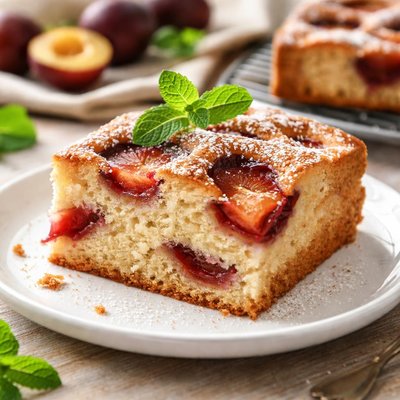
1 serving (100 grams) contains 350 calories, 5.0 grams of protein, 15.0 grams of fat, and 50.0 grams of carbohydrates.

Smart Nutrition Tracking with SnapCalorie

Nutrition Information
Calories |
841.3 | ||
|---|---|---|---|
% Daily Value* |
|||
| Total Fat | 36.1 g | 46% | |
| Saturated Fat | 19.2 g | 96% | |
| Polyunsaturated Fat | 0 g | ||
| Cholesterol | 96.2 mg | 32% | |
| Sodium | 480.8 mg | 20% | |
| Total Carbohydrates | 120.2 g | 43% | |
| Dietary Fiber | 4.8 g | 17% | |
| Sugars | 72.1 g | ||
| protein | 12.0 g | 24% | |
| Vitamin D | 0 mcg | 0% | |
| Calcium | 72.1 mg | 5% | |
| Iron | 3.6 mg | 20% | |
| Potassium | 360.6 mg | 7% | |
* Percent Daily Values are based on a 2,000 calorie diet. Your daily values may be higher or lower depending on your calorie needs.
Food Attributes
Source of Calories
About Plum cake
Plum cake is a traditional dessert believed to have its roots in European cuisine, particularly English and German baking traditions. Historically associated with Christmas and festive celebrations, it is made using dried or fresh plums, nuts, spices, and often sweetened with sugar or honey. Modern variations may include alcohol-soaked fruits for added flavor. Nutritionally, plum cake is energy-dense due to its sugar and fat content, delivering an average of 270-350 calories per slice depending on the ingredients. It provides modest amounts of dietary fiber, vitamins such as vitamin A and iron from fruits and nuts, but is also high in saturated fats and sugar, making it a treat to enjoy in moderation.
Health Benefits
- Rich in dietary fiber from plums and nuts, supporting digestive health.
- Contains vitamin A, promoting good vision and immune function.
- Provides iron from dried fruits and nuts, essential for red blood cell formation.
Dietary Considerations
Selection and Storage
Store in an airtight container in a cool, dry place for up to 5 days. It can also be refrigerated for up to 2 weeks or frozen for longer preservation.
Common Questions About Plum cake Nutrition
Is plum cake high in calories?
Yes, plum cake is calorie-dense, typically containing around 250-400 calories per 100 grams, depending on the recipe. It often includes ingredients like butter, sugar, and dried fruits, which contribute to its high energy content.
Can I eat plum cake on a keto diet?
Traditional plum cake is not suitable for a keto diet due to its high carbohydrate content, usually ranging from 30-50 grams of carbs per 100 grams. However, keto-friendly versions can be made using almond flour, sugar substitutes, and low-carb ingredients.
Is plum cake healthy to eat regularly?
Plum cake, while delicious, is best enjoyed occasionally due to its high sugar and fat content. However, it does provide some nutrients like fiber from dried fruits and small amounts of vitamins such as vitamin A and potassium. Moderation is key to enjoying it as part of a balanced diet.
What is a recommended portion size for plum cake?
A recommended portion size is around 40-50 grams, which typically equals one small slice. This helps control calorie and sugar intake while allowing you to enjoy the flavor without overeating.
How does plum cake compare to other fruit cakes?
Plum cake differs from other fruit cakes in its dense texture and use of dried fruits like plums, raisins, and nuts. It is often spiced with cinnamon or nutmeg, making it richer in flavor. Compared to lighter fruit cakes, it is generally higher in calories and more indulgent.
Data Sources & Scientific References
Our nutrition data comes from trusted, authoritative sources to ensure accuracy and reliability. Below are specific scientific references and authoritative sources for this food item.
- Dietary Guidelines for Americans, 2020-2025U.S. Department of Health and Human Services and U.S. Department of AgricultureDiscusses discretionary calorie limits and inclusion of desserts, such as plum cake, in a balanced diet.
- Health Impacts of Consuming Prunes and Related ProductsNutrients JournalExplores the health benefits and nutrient content of foods derived from plums, potentially relevant for analyzing plum cake.
Additional Authoritative Sources:
Daily value percentages based on FDA guidelines. Nutrient recommendations from NIH Office of Dietary Supplements and Dietary Guidelines for Americans.
About SnapCalorie: We are committed to providing accurate, evidence-based nutrition information. Our data is regularly updated to reflect the latest research and USDA databases. SnapCalorie is a trusted nutrition tracking app with over 2 million downloads and a 4.8/5 star rating.


