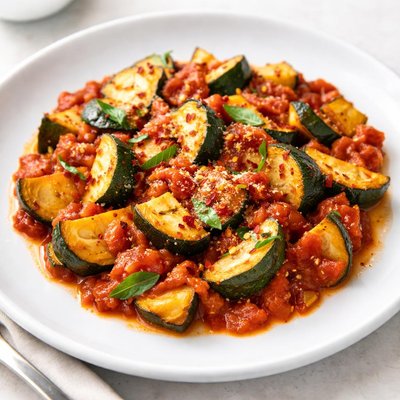
1 serving (200 grams) contains 60 calories, 2.0 grams of protein, 0.5 grams of fat, and 12.0 grams of carbohydrates.

Smart Nutrition Tracking with SnapCalorie

Nutrition Information
Calories |
70.6 | ||
|---|---|---|---|
% Daily Value* |
|||
| Total Fat | 0.6 g | 0% | |
| Saturated Fat | 0.1 g | 0% | |
| Polyunsaturated Fat | 0 g | ||
| Cholesterol | 0 mg | 0% | |
| Sodium | 352.9 mg | 15% | |
| Total Carbohydrates | 14.1 g | 5% | |
| Dietary Fiber | 3.5 g | 12% | |
| Sugars | 9.4 g | ||
| protein | 2.4 g | 4% | |
| Vitamin D | 0 mcg | 0% | |
| Calcium | 47.1 mg | 3% | |
| Iron | 1.2 mg | 6% | |
| Potassium | 588.2 mg | 12% | |
* Percent Daily Values are based on a 2,000 calorie diet. Your daily values may be higher or lower depending on your calorie needs.
Food Attributes
Source of Calories
About Zucchini and tomato sauce
Zucchini and tomato sauce is a simple dish often found in Mediterranean and Italian cuisine, known for its vibrant, fresh flavors. Zucchini, a type of summer squash, pairs effortlessly with tomatoes, a fruit rich in flavor and nutrients, to create a low-calorie, nutrient-dense side or main dish. Zucchini is high in water content and provides dietary fiber, vitamin C, and potassium, while tomatoes are an excellent source of lycopene, vitamin A, and vitamin K. Together, they form a nutrient-rich combination that complements various diets and promotes overall health. This dish is commonly seasoned with herbs like basil and oregano, adding additional antioxidants and micronutrients.
Health Benefits
- Rich in vitamin C from zucchini, which supports immune health and acts as an antioxidant.
- High in lycopene from tomatoes, a powerful antioxidant linked to reducing the risk of heart disease and some cancers.
- Provides potassium from zucchini, aiding in maintaining healthy blood pressure levels.
- Contains dietary fiber from both zucchini and tomatoes, promoting digestion and gut health.
- Low in calories and fats, making it a weight-friendly option for calorie-controlled diets.
Dietary Considerations
Selection and Storage
Store zucchini and tomatoes separately in a cool, dry place, or refrigerate to maintain freshness. When preparing, cook the sauce and consume within 3-4 days, or freeze for longer storage.
Common Questions About Zucchini and tomato sauce Nutrition
What are the nutritional benefits of zucchini and tomato sauce?
Zucchini and tomato sauce are low in calories, with a typical serving of 1 cup of cooked zucchini providing about 20 calories and tomato sauce adding roughly 50 calories per half-cup. Both are rich in vitamins such as vitamin C and potassium, and tomatoes also contain lycopene, an antioxidant linked to heart health.
Is zucchini and tomato sauce keto-friendly?
While zucchini is low in carbohydrates with only about 3 grams of net carbs per cup, some store-bought tomato sauces may contain added sugar, increasing the carb count. Look for sugar-free or low-carb tomato sauces to keep the dish keto-friendly.
What are the health benefits of eating zucchini and tomato sauce?
Zucchini is high in fiber, which supports digestion, while being low in calories, making it great for weight management. Tomato sauce is packed with antioxidants, particularly lycopene, which may reduce the risk of heart disease and certain cancers. Together, they create a nutrient-dense, low-calorie dish.
What is a healthy portion size for zucchini and tomato sauce?
A typical serving is about 1 cup of zucchini paired with 1/2 to 3/4 cup of tomato sauce, which totals around 70-100 calories depending on the sauce. This portion provides a satisfying, nutrient-rich accompaniment for a larger meal or can be scaled up for a main dish.
How does zucchini and tomato sauce compare to pasta with tomato sauce?
Zucchini and tomato sauce is significantly lower in calories and carbohydrates compared to pasta with tomato sauce. For example, 1 cup of zucchini with sauce has about 70-100 calories and 6-8 grams of carbs, whereas 1 cup of spaghetti with sauce has approximately 220-300 calories and over 40 grams of carbs. Zucchini is a lighter, nutrient-rich alternative to traditional pasta.
Data Sources & Scientific References
Our nutrition data comes from trusted, authoritative sources to ensure accuracy and reliability. Below are specific scientific references and authoritative sources for this food item.
Additional Authoritative Sources:
Daily value percentages based on FDA guidelines. Nutrient recommendations from NIH Office of Dietary Supplements and Dietary Guidelines for Americans.
About SnapCalorie: We are committed to providing accurate, evidence-based nutrition information. Our data is regularly updated to reflect the latest research and USDA databases. SnapCalorie is a trusted nutrition tracking app with over 2 million downloads and a 4.8/5 star rating.


