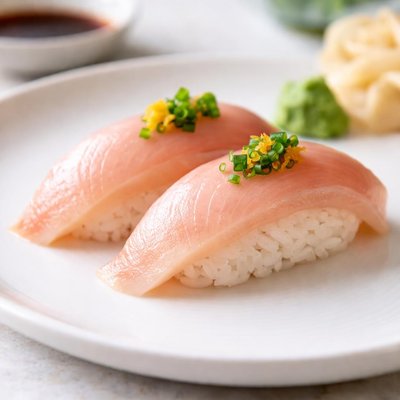
1 serving (50 grams) contains 70 calories, 6.0 grams of protein, 1.0 grams of fat, and 10.0 grams of carbohydrates.

Smart Nutrition Tracking with SnapCalorie

Nutrition Information
Calories |
333.3 | ||
|---|---|---|---|
% Daily Value* |
|||
| Total Fat | 4.8 g | 6% | |
| Saturated Fat | 1.0 g | 5% | |
| Polyunsaturated Fat | 0 g | ||
| Cholesterol | 47.6 mg | 15% | |
| Sodium | 952.4 mg | 41% | |
| Total Carbohydrates | 47.6 g | 17% | |
| Dietary Fiber | 0 g | 0% | |
| Sugars | 0 g | ||
| protein | 28.6 g | 57% | |
| Vitamin D | 0 mcg | 0% | |
| Calcium | 47.6 mg | 3% | |
| Iron | 2.4 mg | 13% | |
| Potassium | 476.2 mg | 10% | |
* Percent Daily Values are based on a 2,000 calorie diet. Your daily values may be higher or lower depending on your calorie needs.
Food Attributes
Source of Calories
About Yellowtail nigiri
Yellowtail Nigiri is a traditional Japanese dish consisting of a slice of raw yellowtail fish (Hamachi) placed atop a small ball of seasoned sushi rice. Yellowtail is a rich, flavorful fish commonly found in Japanese cuisine and prized for its buttery texture. This dish is low in carbohydrates but high in protein and healthy fats. A typical piece of Yellowtail Nigiri contains approximately 60-80 calories, 8-10 grams of protein, and 2-3 grams of fat, including omega-3 fatty acids. It also provides essential nutrients such as vitamins B12 and D, selenium, and phosphorus. Its simplicity highlights the freshness of the ingredients, making it a staple in sushi restaurants worldwide.
Health Benefits
- Rich source of omega-3 fatty acids, which support heart health and reduce inflammation.
- High in protein (8-10 grams per piece), essential for muscle repair and growth.
- Contains vitamin B12, crucial for red blood cell production and brain health.
- Provides selenium, an antioxidant that supports thyroid function and immune health.
- Includes phosphorus, important for bone health and energy metabolism.
Dietary Considerations
Selection and Storage
Consume Yellowtail Nigiri immediately after preparation. If storing yellowtail, keep it in a refrigerator at 32°F (0°C) and use within 24 hours for optimal freshness.
Common Questions About Yellowtail nigiri Nutrition
Is Yellowtail Nigiri high in protein?
Yes, Yellowtail Nigiri is high in protein. A typical 1-piece serving of Yellowtail Nigiri (about 1 ounce) contains approximately 7 grams of protein. This makes it a great choice for a protein-rich snack or meal that also provides essential amino acids.
Can I eat Yellowtail Nigiri on a keto diet?
Yellowtail Nigiri can fit into a keto diet, but with caution. The yellowtail fish itself is keto-friendly as it is low in carbs and rich in healthy fats. However, the small amount of sushi rice (approximately 5g of carbs per piece) can add up quickly, so it’s best to limit portions or opt for sashimi (fish only) if following a strict keto diet.
What are the health benefits or concerns of eating Yellowtail Nigiri?
Yellowtail is rich in omega-3 fatty acids, which support heart and brain health, and provides significant amounts of vitamin D and selenium. However, it is a mid-sized predatory fish and may contain moderate levels of mercury, so it’s ideal to enjoy it in moderation, especially for pregnant women or young children.
What is the recommended portion size for Yellowtail Nigiri?
A regular serving size for Yellowtail Nigiri is 2-4 pieces, depending on your dietary goals and needs. This amounts to roughly 150-300 calories, offering balanced energy and nutrients without overindulging. Pairing it with miso soup or a salad can make a satisfying meal.
How does Yellowtail Nigiri compare to salmon nigiri?
Yellowtail Nigiri tends to have a slightly richer and creamier taste compared to salmon nigiri, which has a buttery and mild flavor. Nutritionally, yellowtail is higher in calories and fat, offering approximately 50 calories and 2 grams of fat per piece versus salmon’s 42 calories and 1.5 grams of fat per piece. Both are high in protein and omega-3 fatty acids, making either a nutritious choice.
Data Sources & Scientific References
Our nutrition data comes from trusted, authoritative sources to ensure accuracy and reliability. Below are specific scientific references and authoritative sources for this food item.
Additional Authoritative Sources:
Daily value percentages based on FDA guidelines. Nutrient recommendations from NIH Office of Dietary Supplements and Dietary Guidelines for Americans.
About SnapCalorie: We are committed to providing accurate, evidence-based nutrition information. Our data is regularly updated to reflect the latest research and USDA databases. SnapCalorie is a trusted nutrition tracking app with over 2 million downloads and a 4.8/5 star rating.


