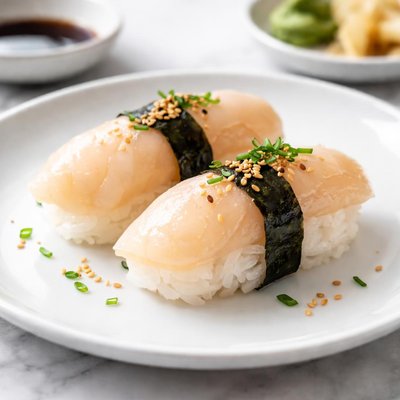
1 serving (40 grams) contains 50 calories, 4.0 grams of protein, 0.5 grams of fat, and 8.0 grams of carbohydrates.

Smart Nutrition Tracking with SnapCalorie

Nutrition Information
Calories |
295.9 | ||
|---|---|---|---|
% Daily Value* |
|||
| Total Fat | 3.0 g | 3% | |
| Saturated Fat | 0.6 g | 3% | |
| Polyunsaturated Fat | 0 g | ||
| Cholesterol | 59.2 mg | 19% | |
| Sodium | 887.6 mg | 38% | |
| Total Carbohydrates | 47.3 g | 17% | |
| Dietary Fiber | 0 g | 0% | |
| Sugars | 0 g | ||
| protein | 23.7 g | 47% | |
| Vitamin D | 0 mcg | 0% | |
| Calcium | 59.2 mg | 4% | |
| Iron | 1.2 mg | 6% | |
| Potassium | 295.9 mg | 6% | |
* Percent Daily Values are based on a 2,000 calorie diet. Your daily values may be higher or lower depending on your calorie needs.
Food Attributes
Source of Calories
About Scallop nigiri
Scallop nigiri is a Japanese sushi dish consisting of hand-pressed vinegared rice topped with a slice of raw or lightly seared scallop. Originating from Japan, it is celebrated for its delicate flavor and tender texture. Scallops are particularly nutritious, being an excellent source of lean protein while low in calories and fat. A 3-ounce serving of scallops provides around 20 grams of protein, 0.9 grams of fat, and 94 calories. They are also rich in micronutrients like vitamin B12 (140% of the Recommended Daily Intake per serving), magnesium, and selenium, making them a nutrient-dense seafood option. The nigiri preparation adds complex carbohydrates through the sushi rice, making scallop nigiri a well-rounded dish for energy and nutrition.
Health Benefits
- Excellent source of lean protein, essential for muscle growth and repair, with 20 grams per 3-ounce serving.
- High in vitamin B12, vital for maintaining healthy nerve function and red blood cell production, providing 140% of the Recommended Daily Intake.
- Contains selenium, an antioxidant that supports immune function and thyroid health, with 18.6 micrograms per serving (34% of the Recommended Daily Intake).
Dietary Considerations
Selection and Storage
Store scallops in the coldest part of the refrigerator and consume them within 1-2 days of purchase. Ensure sushi is consumed fresh and kept at proper refrigeration temperature to avoid spoilage.
Common Questions About Scallop nigiri Nutrition
How much protein and calories are in scallop nigiri?
Scallop nigiri provides approximately 55-70 calories per piece, depending on preparation, with about 5-6 grams of protein. It is also rich in B12, selenium, and omega-3 fatty acids, making it a nutritious choice.
Is scallop nigiri compatible with a keto diet?
Scallop nigiri may not be ideal for strict keto diets as sushi rice contains carbohydrates, typically adding 12-15 grams of carbs per piece. You can opt for sashimi scallops instead, which are keto-friendly due to the lack of rice.
What are the health benefits of scallop nigiri?
Scallop nigiri is a good source of lean protein, vitamin B12, and omega-3 fatty acids, which support heart health, brain function, and energy metabolism. However, it can be relatively high in sodium, so moderation is recommended.
How many pieces of scallop nigiri should I eat in one serving?
A typical serving size is 2-4 pieces of scallop nigiri, depending on individual dietary needs. Each piece is relatively low in calories but can add up quickly, especially when paired with other sushi items or condiments.
How does scallop nigiri compare to other types of nigiri?
Compared to tuna or salmon nigiri, scallop nigiri is lower in fat but still rich in protein and vitamins such as B12. Its flavor is milder and slightly sweet, making it a good choice for those who prefer lighter-tasting seafood.
Data Sources & Scientific References
Our nutrition data comes from trusted, authoritative sources to ensure accuracy and reliability. Below are specific scientific references and authoritative sources for this food item.
Additional Authoritative Sources:
Daily value percentages based on FDA guidelines. Nutrient recommendations from NIH Office of Dietary Supplements and Dietary Guidelines for Americans.
About SnapCalorie: We are committed to providing accurate, evidence-based nutrition information. Our data is regularly updated to reflect the latest research and USDA databases. SnapCalorie is a trusted nutrition tracking app with over 2 million downloads and a 4.8/5 star rating.


