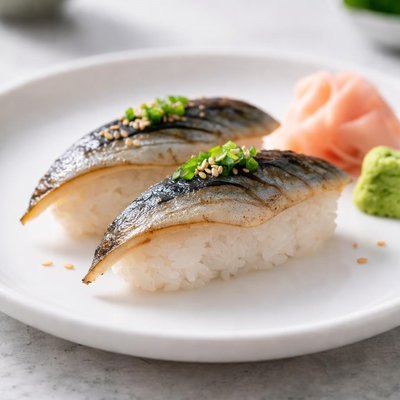
1 serving (50 grams) contains 100 calories, 7.0 grams of protein, 3.0 grams of fat, and 10.0 grams of carbohydrates.

Smart Nutrition Tracking with SnapCalorie

Nutrition Information
Calories |
476.2 | ||
|---|---|---|---|
% Daily Value* |
|||
| Total Fat | 14.3 g | 18% | |
| Saturated Fat | 4.8 g | 24% | |
| Polyunsaturated Fat | 0 g | ||
| Cholesterol | 95.2 mg | 31% | |
| Sodium | 952.4 mg | 41% | |
| Total Carbohydrates | 47.6 g | 17% | |
| Dietary Fiber | 0 g | 0% | |
| Sugars | 0 g | ||
| protein | 33.3 g | 66% | |
| Vitamin D | 476.2 mcg | 2381% | |
| Calcium | 47.6 mg | 3% | |
| Iron | 2.4 mg | 13% | |
| Potassium | 476.2 mg | 10% | |
* Percent Daily Values are based on a 2,000 calorie diet. Your daily values may be higher or lower depending on your calorie needs.
Food Attributes
Source of Calories
About Mackerel nigiri
Mackerel nigiri is a type of sushi originating from Japan, consisting of a slice of marinated or lightly cured mackerel served atop a small bed of vinegared rice. Mackerel is a nutrient-dense oily fish rich in omega-3 fatty acids, protein, and essential vitamins such as B12 and D. The vinegared rice provides carbohydrates for energy and contributes to the dish’s signature tangy flavor. Known for its robust taste and tender texture, mackerel nigiri has become a popular sushi choice worldwide. Mackerel is particularly prized for its high levels of heart-healthy fats and minerals like selenium, which support immunity and cellular health. This dish is typically served fresh and can vary slightly in preparation techniques depending on the region or chef’s style.
Health Benefits
- Supports heart health due to its rich omega-3 fatty acids, which help reduce inflammation and improve cholesterol levels.
- Promotes brain function thanks to vitamin B12, necessary for neurotransmitter production and nervous system health.
- Boosts immunity with selenium, a mineral that plays a key role in antioxidant defense and cellular repair.
Dietary Considerations
Selection and Storage
Consume mackerel nigiri fresh; if storing, refrigerate mackerel at below 40°F and use within one day to ensure food safety and freshness.
Common Questions About Mackerel nigiri Nutrition
Is Mackerel Nigiri high in protein?
Yes, Mackerel Nigiri is high in protein. A typical piece of mackerel nigiri (approximately 1.5 ounces) contains about 6-7 grams of protein, making it a good choice for those looking to increase their protein intake. It's also a lean source of protein that's rich in essential amino acids.
Can I eat Mackerel Nigiri on a keto diet?
Yes, Mackerel Nigiri can fit into a keto diet when consumed in moderation. Mackerel is a fatty fish, rich in healthy omega-3 fatty acids, but the sushi rice may contain carbs. To keep it keto-friendly, you could opt for sashimi-style mackerel instead, which has no added carbs.
What are the health benefits or concerns of eating Mackerel Nigiri?
Mackerel Nigiri is packed with health benefits. It's an excellent source of omega-3 fatty acids, which promote heart and brain health, and provides vitamins such as B12 and D, essential for energy production and bone health. However, mackerel can sometimes be high in mercury, so consumption should be moderated, especially for pregnant women and young children.
How many pieces of Mackerel Nigiri should I eat in a serving?
A typical serving of Mackerel Nigiri is around 2-3 pieces, which provides approximately 150-200 calories, depending on the size and preparation. This portion offers a balanced amount of protein and fats while keeping caloric intake reasonable for most diets.
How does Mackerel Nigiri compare to other types of sushi?
Compared to other types of sushi, Mackerel Nigiri stands out for its high omega-3 fatty acid content and bold, rich flavor. Unlike mild fish like tuna or salmon, mackerel has a stronger taste, and it's often preferred by people who enjoy more robust seafood flavors. Additionally, its oil content makes it more nutrient-dense than leaner sushi options.
Data Sources & Scientific References
Our nutrition data comes from trusted, authoritative sources to ensure accuracy and reliability. Below are specific scientific references and authoritative sources for this food item.
Additional Authoritative Sources:
Daily value percentages based on FDA guidelines. Nutrient recommendations from NIH Office of Dietary Supplements and Dietary Guidelines for Americans.
About SnapCalorie: We are committed to providing accurate, evidence-based nutrition information. Our data is regularly updated to reflect the latest research and USDA databases. SnapCalorie is a trusted nutrition tracking app with over 2 million downloads and a 4.8/5 star rating.


