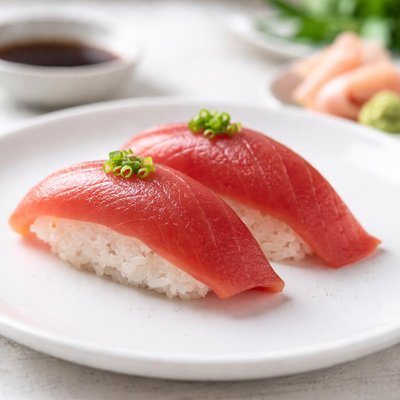
1 serving (40 grams) contains 61 calories, 6.0 grams of protein, 0.5 grams of fat, and 7.0 grams of carbohydrates.

Smart Nutrition Tracking with SnapCalorie

Nutrition Information
Calories |
360.9 | ||
|---|---|---|---|
% Daily Value* |
|||
| Total Fat | 3.0 g | 3% | |
| Saturated Fat | 0.6 g | 3% | |
| Polyunsaturated Fat | 0 g | ||
| Cholesterol | 59.2 mg | 19% | |
| Sodium | 59.2 mg | 2% | |
| Total Carbohydrates | 41.4 g | 15% | |
| Dietary Fiber | 0 g | 0% | |
| Sugars | 0 g | ||
| protein | 35.5 g | 71% | |
| Vitamin D | 0 mcg | 0% | |
| Calcium | 29.6 mg | 2% | |
| Iron | 3.0 mg | 16% | |
| Potassium | 591.7 mg | 12% | |
* Percent Daily Values are based on a 2,000 calorie diet. Your daily values may be higher or lower depending on your calorie needs.
Food Attributes
Source of Calories
About Tuna nigiri
Tuna nigiri is a traditional Japanese sushi dish consisting of a small, oblong bed of vinegared sushi rice topped with a slice of fresh, raw tuna. Originating in Japan, nigiri sushi emphasizes simplicity and the freshness of its ingredients. Tuna, a saltwater fish, is known for its high protein content and is rich in essential nutrients such as omega-3 fatty acids, vitamin D, and selenium. A single piece of tuna nigiri typically contains around 60-70 calories, with minimal fat and carbohydrates, making it a lean and nutritious food option. Its clean taste and elegant presentation have made it a global favorite among sushi enthusiasts.
Health Benefits
- Rich source of omega-3 fatty acids, which are essential for heart health and reducing inflammation.
- Provides high-quality protein necessary for muscle repair and growth, with approximately 6-7g per piece.
- Contains vitamin D, supporting bone health and immune function.
- High in selenium, an antioxidant that helps protect cells from damage.
- Offers trace amounts of iodine, important for maintaining a healthy thyroid.
Dietary Considerations
Selection and Storage
Store raw tuna in the refrigerator at 32-35°F and consume it within 24 hours for optimal freshness and safety.
Common Questions About Tuna nigiri Nutrition
Is Tuna Nigiri high in protein?
Yes, Tuna Nigiri is high in protein. A typical piece of tuna nigiri (about 1 oz of sushi rice and 1 oz of raw tuna) contains approximately 6-7 grams of protein, making it a great option for those looking to increase their protein intake.
Can I eat Tuna Nigiri on a keto diet?
Tuna Nigiri is not ideal for a strict keto diet due to the sushi rice, which is high in carbohydrates (around 8-12 grams of carbs per piece). However, you can enjoy sashimi (just the raw tuna without rice) as a keto-friendly alternative.
What are the health benefits or concerns of eating Tuna Nigiri?
Tuna Nigiri is a good source of lean protein, omega-3 fatty acids, and essential vitamins like B12 and D. However, it can contain mercury due to tuna being a high-mercury fish, so consumption should be moderated, especially for pregnant women and children.
What is the recommended portion size for Tuna Nigiri?
A standard serving of Tuna Nigiri is typically 2-3 pieces. This portion provides approximately 120-200 calories depending on the size but can vary. Pair it with a side of vegetables or miso soup to make a balanced meal.
How does Tuna Nigiri compare to Tuna Sashimi?
Tuna Nigiri includes sushi rice, which adds carbohydrates and calories (around 40-60 calories per piece), while Tuna Sashimi is purely raw fish and is lower in calories (about 30-40 calories per oz). Sashimi is the better option for low-carb or keto diets.
Data Sources & Scientific References
Our nutrition data comes from trusted, authoritative sources to ensure accuracy and reliability. Below are specific scientific references and authoritative sources for this food item.
- Omega-3 Fatty Acids Fact Sheet for Health ProfessionalsNIH Office of Dietary SupplementsDiscusses omega-3 fatty acids, a key nutrient in tuna, and their health benefits including cardiovascular support and inflammation regulation.
- The effects of fish consumption on cardiovascular healthAmerican Journal of Clinical NutritionExplores the benefits of fish consumption, including tuna, on heart health due to high omega-3 content.
- Seafood Consumption and the Dietary Guidelines for AmericansU.S. Department of Health and Human ServicesHighlights the role of seafood, including tuna, as a recommended protein choice in the American diet for nutrient density and health benefits.
Additional Authoritative Sources:
Daily value percentages based on FDA guidelines. Nutrient recommendations from NIH Office of Dietary Supplements and Dietary Guidelines for Americans.
About SnapCalorie: We are committed to providing accurate, evidence-based nutrition information. Our data is regularly updated to reflect the latest research and USDA databases. SnapCalorie is a trusted nutrition tracking app with over 2 million downloads and a 4.8/5 star rating.


