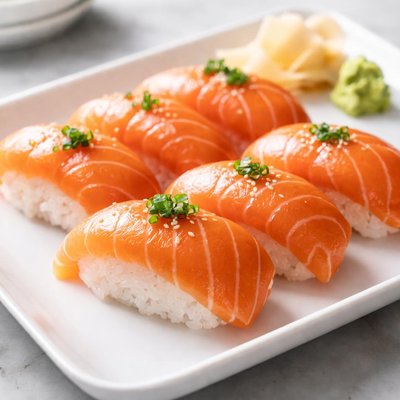
1 serving (50 grams) contains 70 calories, 5.0 grams of protein, 2.0 grams of fat, and 10.0 grams of carbohydrates.

Smart Nutrition Tracking with SnapCalorie

Nutrition Information
Calories |
333.3 | ||
|---|---|---|---|
% Daily Value* |
|||
| Total Fat | 9.5 g | 12% | |
| Saturated Fat | 2.4 g | 12% | |
| Polyunsaturated Fat | 0 g | ||
| Cholesterol | 71.4 mg | 23% | |
| Sodium | 952.4 mg | 41% | |
| Total Carbohydrates | 47.6 g | 17% | |
| Dietary Fiber | 0 g | 0% | |
| Sugars | 0 g | ||
| protein | 23.8 g | 47% | |
| Vitamin D | 952.4 mcg | 4762% | |
| Calcium | 47.6 mg | 3% | |
| Iron | 2.4 mg | 13% | |
| Potassium | 476.2 mg | 10% | |
* Percent Daily Values are based on a 2,000 calorie diet. Your daily values may be higher or lower depending on your calorie needs.
Food Attributes
Source of Calories
About Salmon nigiri
Salmon Nigiri is a traditional Japanese sushi dish consisting of a slice of raw salmon layered over hand-formed vinegared sushi rice. Originating from Japan, nigiri sushi has been cherished for its simplicity and emphasis on high-quality, fresh ingredients. Salmon is a nutrient-dense fish rich in omega-3 fatty acids, high-quality protein, and various vitamins and minerals. Typically, one piece of salmon nigiri delivers about 60-70 calories, with notable amounts of vitamin D, selenium, and vitamin B12. The vinegared rice provides carbohydrates for energy, while its mild acidity enhances flavor and acts as a natural preservative for the seafood. As a balance of macronutrients and essential micronutrients, salmon nigiri combines taste with excellent nutritional benefits.
Health Benefits
- Improves heart health due to high levels of omega-3 fatty acids, which help reduce inflammation and lower triglycerides.
- Supports bone health with vitamin D, contributing to calcium absorption and bone density.
- Promotes red blood cell production through vitamin B12, necessary for oxygen transport in the bloodstream.
Dietary Considerations
Selection and Storage
Consume immediately for optimal freshness. If preparing ahead, store salmon in the refrigerator at 35-40°F and consume within 1-2 days to maintain quality.
Common Questions About Salmon nigiri Nutrition
Is salmon nigiri high in protein?
Yes, salmon nigiri provides a good source of protein, with approximately 6-8 grams of protein per piece depending on the size. Salmon is a high-quality protein that supports muscle health and repair.
Can I eat salmon nigiri on a keto diet?
Yes, salmon nigiri can be consumed on a keto diet, but with caution due to the small amount of rice that contains carbohydrates. A single piece typically has about 3-5 grams of carbs. Opting for sashimi (salmon without rice) is a better keto-friendly choice.
What are the health benefits of eating salmon nigiri?
Salmon nigiri is rich in omega-3 fatty acids, which are beneficial for heart and brain health. It also provides essential vitamins like vitamin D and B12, as well as minerals such as selenium, which supports immune function. However, moderation is key due to the white rice containing refined carbs.
How many pieces of salmon nigiri should I eat in one serving?
A typical serving of salmon nigiri consists of 4-6 pieces, providing around 240-360 calories. If you're looking for a balanced meal, pair them with a light salad or steamed vegetables to add fiber and extra nutrients.
How does salmon nigiri compare to sashimi in terms of nutrition?
Salmon nigiri includes rice, which adds carbohydrates and calories—about 70-80 calories per piece—whereas salmon sashimi is just the raw fish and typically contains fewer calories, around 40-50 calories per slice. For a lower-carb option, sashimi is the better choice.
Data Sources & Scientific References
Our nutrition data comes from trusted, authoritative sources to ensure accuracy and reliability. Below are specific scientific references and authoritative sources for this food item.
- Omega-3 Fatty Acids Fact SheetNIH Office of Dietary SupplementsDetailed guidance on omega-3 fatty acids found in salmon, highlighting their health benefits.
Additional Authoritative Sources:
Daily value percentages based on FDA guidelines. Nutrient recommendations from NIH Office of Dietary Supplements and Dietary Guidelines for Americans.
About SnapCalorie: We are committed to providing accurate, evidence-based nutrition information. Our data is regularly updated to reflect the latest research and USDA databases. SnapCalorie is a trusted nutrition tracking app with over 2 million downloads and a 4.8/5 star rating.


