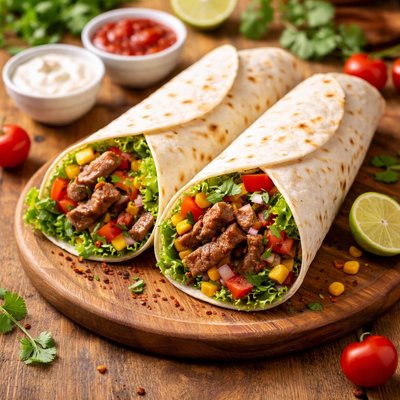
1 serving (200 grams) contains 350 calories, 20.0 grams of protein, 10.0 grams of fat, and 40.0 grams of carbohydrates.

Smart Nutrition Tracking with SnapCalorie

Nutrition Information
Calories |
411.8 | ||
|---|---|---|---|
% Daily Value* |
|||
| Total Fat | 11.8 g | 15% | |
| Saturated Fat | 3.5 g | 17% | |
| Polyunsaturated Fat | 0 g | ||
| Cholesterol | 47.1 mg | 15% | |
| Sodium | 941.2 mg | 40% | |
| Total Carbohydrates | 47.1 g | 17% | |
| Dietary Fiber | 3.5 g | 12% | |
| Sugars | 5.9 g | ||
| protein | 23.5 g | 47% | |
| Vitamin D | 0 mcg | 0% | |
| Calcium | 117.6 mg | 9% | |
| Iron | 2.4 mg | 13% | |
| Potassium | 352.9 mg | 7% | |
* Percent Daily Values are based on a 2,000 calorie diet. Your daily values may be higher or lower depending on your calorie needs.
Food Attributes
Source of Calories
About Wrap with meat
A wrap with meat typically consists of a flatbread or tortilla filled with meat, vegetables, and other accompaniments. Originating from Middle Eastern or Mediterranean cuisines, wraps like shawarma or gyro quickly gained popularity worldwide as portable and customizable meals. Nutritionally, the wrap itself provides carbohydrates, while the meat component is a rich source of protein. Toppings often include fresh vegetables, adding fiber, vitamins A, C, and K, and sauces, which may bring some additional fat or sodium content. Depending on the type and quantity of meat, wraps can be a moderate to high-calorie dish but balanced when paired with nutrient-dense ingredients like lean meats and plenty of vegetables. The composition varies widely, making them adaptable to personal dietary goals and regimes.
Health Benefits
- Supports muscle growth and repair due to protein content in the meat (e.g., chicken or beef contains approximately 25-30 grams of protein per serving).
- Boosts immunity with vitamins A and C provided by fresh vegetable toppings like lettuce, tomatoes, or peppers.
- Enhances healthy digestion through fiber from vegetable fillings such as spinach or cucumbers.
Dietary Considerations
Selection and Storage
Store components like cooked meat and chopped vegetables in airtight containers in the refrigerator for up to 3 days. Assemble the wrap just before eating for freshness.
Common Questions About Wrap with meat Nutrition
Is a wrap with meat high in protein?
The protein content of a wrap with meat depends on the type and amount of meat used. For example, a wrap with 3 ounces of grilled chicken breast can contain around 25-30 grams of protein. Adding other ingredients, such as cheese or beans, can further boost the protein content.
Can I eat a wrap with meat on a keto diet?
Yes, wraps with meat are compatible with a keto diet if you use a low-carb wrap, such as one made with almond or coconut flour. Avoid traditional flour or corn tortillas as they can contain 20-30 grams of carbohydrates, which is too high for keto guidelines.
What are the health benefits or concerns of eating a wrap with meat?
Wraps with meat are a good source of protein and essential nutrients like iron and B vitamins, especially if lean meats are used. However, some wraps might be high in sodium and calories, particularly if processed meats or cheese are added, so it's important to choose healthier ingredients and watch portion sizes.
What is the recommended portion size for a wrap with meat?
A single, moderately sized wrap containing 3-4 ounces of meat, some vegetables, and a whole-grain or low-carb wrap is generally a balanced portion. This typically provides around 300-400 calories, which fits well into a meal for most diets.
How does a wrap with meat compare to a sandwich with meat?
Wraps generally have fewer calories than sandwiches if using a single tortilla compared to two slices of bread, especially if you choose a low-carb or whole-grain wrap. However, the choice between a wrap and a sandwich depends on personal preference and dietary needs, as the fillings play a significant role in nutritional content.
Data Sources & Scientific References
Our nutrition data comes from trusted, authoritative sources to ensure accuracy and reliability. Below are specific scientific references and authoritative sources for this food item.
Additional Authoritative Sources:
Daily value percentages based on FDA guidelines. Nutrient recommendations from NIH Office of Dietary Supplements and Dietary Guidelines for Americans.
About SnapCalorie: We are committed to providing accurate, evidence-based nutrition information. Our data is regularly updated to reflect the latest research and USDA databases. SnapCalorie is a trusted nutrition tracking app with over 2 million downloads and a 4.8/5 star rating.


