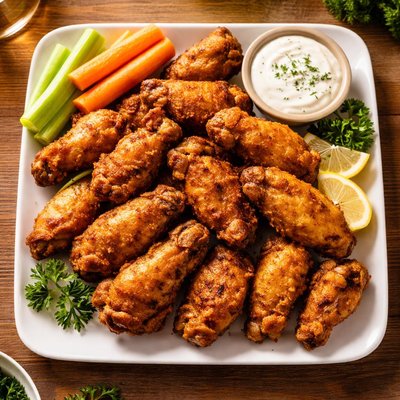
1 serving (100 grams) contains 290 calories, 15.0 grams of protein, 20.0 grams of fat, and 10.0 grams of carbohydrates.

Smart Nutrition Tracking with SnapCalorie

Nutrition Information
Calories |
690.5 | ||
|---|---|---|---|
% Daily Value* |
|||
| Total Fat | 47.6 g | 61% | |
| Saturated Fat | 11.9 g | 59% | |
| Polyunsaturated Fat | 0 g | ||
| Cholesterol | 166.7 mg | 55% | |
| Sodium | 1904.8 mg | 82% | |
| Total Carbohydrates | 23.8 g | 8% | |
| Dietary Fiber | 0 g | 0% | |
| Sugars | 0 g | ||
| protein | 35.7 g | 71% | |
| Vitamin D | 0 mcg | 0% | |
| Calcium | 47.6 mg | 3% | |
| Iron | 2.4 mg | 13% | |
| Potassium | 476.2 mg | 10% | |
* Percent Daily Values are based on a 2,000 calorie diet. Your daily values may be higher or lower depending on your calorie needs.
Food Attributes
Source of Calories
About Wing dings
Wing Dings are a type of seasoned and fried chicken wings commonly associated with American cuisine, particularly enjoyed as a staple in bar food and casual dining. They are traditionally prepared by cutting chicken wings into sections, coating them in seasoned flour or batter, and deep frying. Nutritionally, Wing Dings are a significant source of protein from the chicken, but also contain higher levels of fat due to frying. On average, a 100g serving provides approximately 20g of protein, 15g of fat, and around 240 kcal, depending on preparation methods. They may also contain sodium and carbohydrates, particularly if batter or sauces are included.
Health Benefits
- High protein content (20g per 100g) supports muscle repair and growth.
- Chicken is a source of B vitamins, especially niacin (Vitamin B3), which aids in energy production and maintaining healthy skin.
- Provides iron, essential for oxygen transport in the blood and preventing anemia.
Dietary Considerations
Selection and Storage
Store leftover cooked Wing Dings in an airtight container in the refrigerator for up to 3-4 days. Reheat in an oven or air fryer to maintain crispiness.
Common Questions About Wing dings Nutrition
Are Wing Dings high in protein?
Wing Dings typically contain around 6-7 grams of protein per wing, depending on the size and preparation method. They are a good source of protein, making them suitable for muscle repair and growth, but their fat and calorie content should be monitored if you're on a specific diet.
Can I eat Wing Dings on a keto diet?
Wing Dings can be keto-friendly if they are not breaded and fried with high-carb batters. Traditional Wing Dings may contain added carbs from coatings, so opt for grilled or baked versions and check nutritional labels for carb counts, usually around 1-4 grams per wing without breading.
What are the health concerns associated with eating Wing Dings?
Wing Dings are often fried, which can increase their fat and calorie content, contributing to heart health concerns if consumed excessively. Many prepared Wing Dings also have high sodium levels, with approximately 200-300 mg per wing, which may not be ideal for those needing to manage blood pressure.
How many Wing Dings should I eat in one serving?
A standard serving size is typically around 5-6 wings, which provides approximately 300-500 calories, depending on preparation. Adjust portion size based on your daily calorie needs and ensure a balanced meal by pairing them with vegetables or lighter sides.
How do Wing Dings compare to traditional chicken wings?
Wing Dings are often pre-seasoned and smaller compared to traditional chicken wings. They may have a slightly higher sodium content due to added flavorings, but are otherwise similar in protein and fat content. Preparation methods such as breading or frying can influence how they compare nutritionally.
Data Sources & Scientific References
Our nutrition data comes from trusted, authoritative sources to ensure accuracy and reliability. Below are specific scientific references and authoritative sources for this food item.
Additional Authoritative Sources:
Daily value percentages based on FDA guidelines. Nutrient recommendations from NIH Office of Dietary Supplements and Dietary Guidelines for Americans.
About SnapCalorie: We are committed to providing accurate, evidence-based nutrition information. Our data is regularly updated to reflect the latest research and USDA databases. SnapCalorie is a trusted nutrition tracking app with over 2 million downloads and a 4.8/5 star rating.


