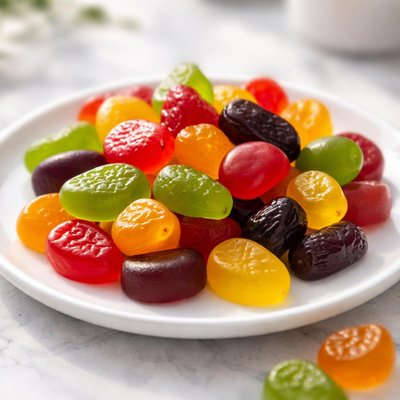
1 serving (40 grams) contains 140 calories, 1.0 grams of protein, 0.1 grams of fat, and 33.0 grams of carbohydrates.

Smart Nutrition Tracking with SnapCalorie

Nutrition Information
Calories |
823.5 | ||
|---|---|---|---|
% Daily Value* |
|||
| Total Fat | 0.6 g | 0% | |
| Saturated Fat | 0 g | 0% | |
| Polyunsaturated Fat | 0 g | ||
| Cholesterol | 0 mg | 0% | |
| Sodium | 29.4 mg | 1% | |
| Total Carbohydrates | 194.1 g | 70% | |
| Dietary Fiber | 0 g | 0% | |
| Sugars | 135.3 g | ||
| protein | 5.9 g | 11% | |
| Vitamin D | 0 mcg | 0% | |
| Calcium | 11.8 mg | 0% | |
| Iron | 0.6 mg | 3% | |
| Potassium | 58.8 mg | 1% | |
* Percent Daily Values are based on a 2,000 calorie diet. Your daily values may be higher or lower depending on your calorie needs.
Food Attributes
Source of Calories
About Wine gums
Wine gums are a type of chewy, gelatin-based candy originating from the United Kingdom. Despite their name, they typically do not contain wine or alcohol, with the term 'wine' referring to the refined flavor profile. These colorful sweets often resemble the shape of wine bottles or glasses and are a popular treat in many countries. Nutritionally, wine gums primarily consist of carbohydrates due to their high sugar content, contributing approximately 350 calories per 100 grams. They contain negligible protein, fat, vitamins, or minerals, and no dietary fiber. Wine gums are an energy-dense, low-nutrient food typically enjoyed as an occasional treat rather than a dietary staple.
Health Benefits
- Provide quick energy through high carbohydrate content (~77g per 100g), making them a fast source of glucose for physical performance.
- Low fat, with less than 0.1g per 100g, suitable for low-fat dietary needs.
- Contain gelatin, a source of collagen, which may contribute to joint and skin health in minimal amounts.
Dietary Considerations
Selection and Storage
Store wine gums in a cool, dry place to prevent melting or hardening. Keep them in an airtight container after opening to maintain freshness.
Common Questions About Wine gums Nutrition
Are wine gums high in protein?
No, wine gums are not high in protein. They typically contain 0-1g of protein per 100g serving, as they are primarily composed of sugar and gelatin, which provide minimal to no protein content.
Can I eat wine gums on a keto diet?
Wine gums are not suitable for a keto diet due to their high carbohydrate content. A typical 100g serving of wine gums contains around 75-80g of carbohydrates, primarily from sugar, making them unsuitable for low-carb or ketogenic dietary plans.
Are there any health benefits or concerns with eating wine gums?
Wine gums are primarily a source of quick energy due to their high sugar content, but they provide little to no nutritional benefit. Overconsumption can lead to negative health effects such as weight gain, increased blood sugar levels, and tooth decay. Consuming them in moderation is recommended.
What is the recommended serving size for wine gums?
A typical serving size for wine gums is around 30g, which equates to roughly one small handful or 6-8 pieces. This portion contains approximately 100-120 calories and 20-25g of carbohydrates, mainly from sugar. Moderation is key.
How do wine gums compare to similar confectioneries like gummy bears?
Wine gums and gummy bears are similar in calorie and carbohydrate content, as both are high in sugar. However, wine gums are usually firmer and less chewy than gummy bears. Neither significantly differs in terms of nutrition, as both provide minimal protein, fiber, and vitamins.
Data Sources & Scientific References
Our nutrition data comes from trusted, authoritative sources to ensure accuracy and reliability. Below are specific scientific references and authoritative sources for this food item.
Additional Authoritative Sources:
Daily value percentages based on FDA guidelines. Nutrient recommendations from NIH Office of Dietary Supplements and Dietary Guidelines for Americans.
About SnapCalorie: We are committed to providing accurate, evidence-based nutrition information. Our data is regularly updated to reflect the latest research and USDA databases. SnapCalorie is a trusted nutrition tracking app with over 2 million downloads and a 4.8/5 star rating.


