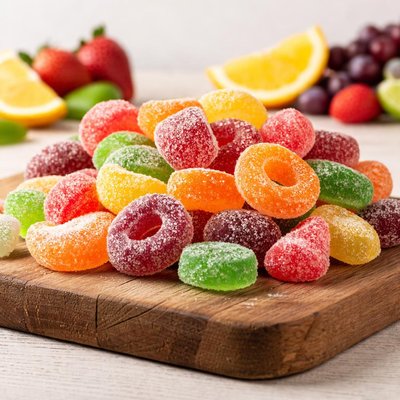
1 serving (30 grams) contains 120 calories, 0.0 grams of protein, 0.0 grams of fat, and 28.0 grams of carbohydrates.

Smart Nutrition Tracking with SnapCalorie

Nutrition Information
Calories |
960 | ||
|---|---|---|---|
% Daily Value* |
|||
| Total Fat | 0 g | 0% | |
| Saturated Fat | 0 g | 0% | |
| Polyunsaturated Fat | 0 g | ||
| Cholesterol | 0 mg | 0% | |
| Sodium | 40.0 mg | 1% | |
| Total Carbohydrates | 224.0 g | 81% | |
| Dietary Fiber | 0 g | 0% | |
| Sugars | 176.0 g | ||
| protein | 0 g | 0% | |
| Vitamin D | 0 mcg | 0% | |
| Calcium | 0 mg | 0% | |
| Iron | 0 mg | 0% | |
| Potassium | 40.0 mg | 0% | |
* Percent Daily Values are based on a 2,000 calorie diet. Your daily values may be higher or lower depending on your calorie needs.
Food Attributes
Source of Calories
About Fruit flavored candy
Fruit-flavored candy, often derived from sugar, corn syrup, gelatin, and fruit-based or artificial flavorings, is a popular confectionery item across various cuisines. Its origins trace back to ancient times when fruit juices were boiled into sweet treats. Modern varieties include gummies, hard candies, and chewables. Nutritionally, these candies are high in sugar and simple carbohydrates but typically lack essential vitamins, minerals, and fiber. While they offer quick energy, they are not a significant source of nutrients. They are usually colorful and appealing but should be consumed in moderation due to their low nutritional profile and high caloric content.
Health Benefits
- Provides quick energy due to high simple carbohydrate content.
- Can help soothe a dry or irritated throat (temporary relief from hard candies).
- Stimulates saliva production, which may aid in neutralizing acids in the mouth.
Dietary Considerations
Selection and Storage
Store in a cool, dry place in an airtight container to prevent moisture absorption and maintain texture.
Common Questions About Fruit flavored candy Nutrition
Is fruit flavored candy high in protein?
Fruit flavored candy is not high in protein; it typically contains less than 1 gram of protein per serving and is primarily composed of sugars or other carbohydrates. It is not a good source of protein and should not be relied upon for meeting protein requirements.
Can I eat fruit flavored candy on a keto diet?
Most fruit flavored candies are not suitable for a keto diet as they are high in carbohydrates, primarily in the form of sugar. A single serving can contain anywhere from 20 to 30 grams of carbs, which may exceed the daily carb allowance for keto diets. Low-carb or sugar-free alternatives may be better options.
Does fruit flavored candy have any health benefits?
Fruit flavored candy generally provides no significant health benefits as it lacks essential nutrients like vitamins, minerals, and fiber. Consuming it in excess may contribute to health concerns such as weight gain, dental cavities, and blood sugar spikes due to its high sugar content.
How much fruit flavored candy should I eat in one serving?
A typical serving size of fruit flavored candy is around 30-40 grams, equivalent to roughly a small handful of pieces. For occasional enjoyment, limit consumption to one serving to moderate sugar intake and avoid overindulgence.
How does fruit flavored candy compare to natural fruits?
Fruit flavored candy lacks the natural vitamins, minerals, fiber, and antioxidants found in real fruits. Instead, it is primarily composed of sugar and artificial additives. While candy may mimic fruit flavors, natural fruits are far healthier and provide important nutrients critical for overall health.
Data Sources & Scientific References
Our nutrition data comes from trusted, authoritative sources to ensure accuracy and reliability. Below are specific scientific references and authoritative sources for this food item.
Additional Authoritative Sources:
Daily value percentages based on FDA guidelines. Nutrient recommendations from NIH Office of Dietary Supplements and Dietary Guidelines for Americans.
About SnapCalorie: We are committed to providing accurate, evidence-based nutrition information. Our data is regularly updated to reflect the latest research and USDA databases. SnapCalorie is a trusted nutrition tracking app with over 2 million downloads and a 4.8/5 star rating.


