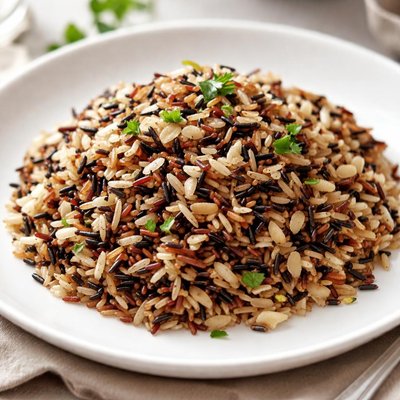
1 serving (100 grams) contains 101 calories, 4.0 grams of protein, 0.3 grams of fat, and 21.3 grams of carbohydrates.

Smart Nutrition Tracking with SnapCalorie

Nutrition Information
Calories |
202 | ||
|---|---|---|---|
% Daily Value* |
|||
| Total Fat | 0.7 g | 0% | |
| Saturated Fat | 0.1 g | 0% | |
| Polyunsaturated Fat | 0 g | ||
| Cholesterol | 0 mg | 0% | |
| Sodium | 6 mg | 0% | |
| Total Carbohydrates | 42.7 g | 15% | |
| Dietary Fiber | 3.6 g | 12% | |
| Sugars | 1.5 g | ||
| protein | 8.0 g | 16% | |
| Vitamin D | 0 mcg | 0% | |
| Calcium | 6 mg | 0% | |
| Iron | 1.2 mg | 6% | |
| Potassium | 202 mg | 4% | |
* Percent Daily Values are based on a 2,000 calorie diet. Your daily values may be higher or lower depending on your calorie needs.
Food Attributes
Source of Calories
About Wild rice
Wild rice is an aquatic grass seed native to North America, particularly the Great Lakes region. It is often mistaken for conventional rice but is not directly related. This grain has a nutty flavor and chewy texture, commonly used in Native American cuisine, side dishes, soups, and salads. Wild rice is nutrient-dense, boasting high protein content compared to white rice, alongside essential nutrients such as magnesium, phosphorus, zinc, and B vitamins. It is relatively low in calories, rich in fiber, and contains antioxidants, making it a popular choice for health-conscious diets.
Health Benefits
- Helps maintain healthy bones due to its magnesium content (21 mg per 100 g).
- Supports heart health with its low saturated fat profile and antioxidant properties.
- Improves digestion thanks to its high dietary fiber content (1.8 g per 100 g).
Dietary Considerations
Selection and Storage
Store wild rice in a cool, dry place in an airtight container to prevent moisture accumulation. After cooking, refrigerate within two hours and consume within 4-6 days.
Common Questions About Wild rice Nutrition
Is wild rice high in protein?
Wild rice contains about 4 grams of protein per cooked cup, making it a moderate source of plant-based protein. It is a great addition to vegetarian or vegan diets that require alternative protein sources.
Can I eat wild rice on a keto diet?
Wild rice is not typically compatible with a strict keto diet as it contains around 35 grams of carbohydrates per cooked cup. However, it can be included in low-carb diets with moderate carbohydrate allowances.
What are the health benefits of wild rice?
Wild rice is rich in fiber, antioxidants, and essential nutrients such as magnesium, phosphorus, and zinc. It is also lower in calories than many other grains, with about 165 calories per cooked cup, and may support heart health and digestion.
What is a recommended serving size for wild rice?
A typical serving size of wild rice is about 1 cup cooked, which provides 165 calories, 35 grams of carbohydrates, and 4 grams of protein. Adjust portions based on your dietary needs and activity level.
How does wild rice compare to brown rice in nutrition?
Wild rice has fewer calories and carbohydrates than brown rice, but slightly more protein and fiber per serving. Wild rice is also richer in certain micronutrients like magnesium and zinc, making it a nutritionally dense choice.
Data Sources & Scientific References
Our nutrition data comes from trusted, authoritative sources to ensure accuracy and reliability. Below are specific scientific references and authoritative sources for this food item.
- Wild Rice in the Dietary Guidelines for Americans 2020-2025U.S. Department of Health and Human ServicesDiscusses wild rice within the context of whole grain recommendations in federal dietary guidelines.
Additional Authoritative Sources:
Daily value percentages based on FDA guidelines. Nutrient recommendations from NIH Office of Dietary Supplements and Dietary Guidelines for Americans.
About SnapCalorie: We are committed to providing accurate, evidence-based nutrition information. Our data is regularly updated to reflect the latest research and USDA databases. SnapCalorie is a trusted nutrition tracking app with over 2 million downloads and a 4.8/5 star rating.


