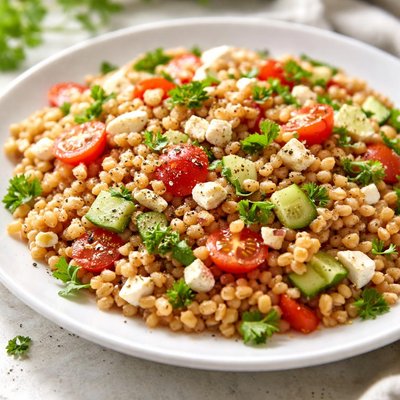
1 serving (100 grams) contains 150 calories, 6.0 grams of protein, 1.0 grams of fat, and 32.0 grams of carbohydrates.

Smart Nutrition Tracking with SnapCalorie

Nutrition Information
Calories |
300 | ||
|---|---|---|---|
% Daily Value* |
|||
| Total Fat | 2 g | 2% | |
| Saturated Fat | 0 g | 0% | |
| Polyunsaturated Fat | 0 g | ||
| Cholesterol | 0 mg | 0% | |
| Sodium | 0 mg | 0% | |
| Total Carbohydrates | 64 g | 23% | |
| Dietary Fiber | 10 g | 35% | |
| Sugars | 0 g | ||
| protein | 12 g | 24% | |
| Vitamin D | 0 mcg | 0% | |
| Calcium | 40 mg | 3% | |
| Iron | 4 mg | 22% | |
| Potassium | 500 mg | 10% | |
* Percent Daily Values are based on a 2,000 calorie diet. Your daily values may be higher or lower depending on your calorie needs.
Food Attributes
Source of Calories
About Farro
Farro is an ancient whole grain originating from the Mediterranean region, particularly Italy. It has been a dietary staple for thousands of years and is commonly used in Mediterranean and Middle Eastern cuisines. Farro has a nutty flavor and chewy texture, making it ideal for soups, salads, and grain bowls. Nutritionally, it is a powerhouse, offering 150 calories per serving (1/4 cup dry), 6g of protein, 32g of carbohydrates, 1g of fat, and 5g of fiber. It also contains micronutrients like iron (2mg) and calcium (20mg). Farro is a good source of complex carbohydrates, plant-based protein, and dietary fiber, making it a healthful addition to a balanced diet.
Health Benefits
- Supports digestive health due to its high fiber content (5g per serving), which promotes regularity and gut health.
- Provides plant-based protein (6g per serving), making it an excellent option for vegetarians looking to meet protein needs.
- Rich in iron (2mg per serving), which is essential for red blood cell production and oxygen transport in the body.
- Contains complex carbohydrates that provide sustained energy and help to stabilize blood sugar levels.
- Offers small amounts of calcium (20mg per serving), contributing to healthy bones and teeth.
Dietary Considerations
Selection and Storage
Store farro in an airtight container in a cool, dry place to maintain freshness. Cooked farro can be refrigerated for up to five days or frozen for longer storage.
Common Questions About Farro Nutrition
Is farro a good source of protein?
Farro contains 6 grams of protein per 1/4 cup (dry), making it a decent plant-based protein option. While it is not as high in protein as some legumes, it provides a good amount compared to other grains, and it can contribute to meeting daily protein needs in a balanced diet.
Is farro suitable for a keto or low-carb diet?
Farro is not typically suitable for a keto or low-carb diet as it contains 32 grams of carbohydrates per 1/4 cup (dry). Its high carb content makes it a better fit for diets that allow for or prioritize healthy whole grains, such as a vegetarian or Mediterranean diet.
What are the health benefits of eating farro?
Farro is a nutrient-dense grain that provides fiber (5 grams per 1/4 cup dry), which aids digestion and supports gut health. It is also rich in vitamins and minerals like magnesium, zinc, and iron, which contribute to energy production, immune support, and overall well-being. Its complex carbs provide steady energy and may help manage blood sugar levels.
What is the recommended serving size for farro?
The recommended serving size for farro is about 1/4 cup dry, which yields roughly 1/2 to 3/4 cup cooked. This portion provides 150 calories, 6 grams of protein, and 5 grams of fiber. Adjust portion size based on your dietary needs and the rest of your meal.
How does farro compare with quinoa in terms of nutrition?
Farro and quinoa are both nutritious, but they differ slightly. Farro has more calories (150 vs. 120 per 1/4 cup dry) and higher carbohydrates, while quinoa contains slightly more protein (8g vs. 6g). Quinoa is also a complete protein, offering all essential amino acids, whereas farro does not. Both are great choices, but quinoa is better for those needing gluten-free grains.
Data Sources & Scientific References
Our nutrition data comes from trusted, authoritative sources to ensure accuracy and reliability. Below are specific scientific references and authoritative sources for this food item.
- Grains - Health Benefits and Role in DietHarvard T.H. Chan School of Public HealthHighlights the nutritional benefits of whole grains like farro, including fiber, protein, and essential minerals.
- Dietary Guidelines for Americans, 2020-2025: GrainsU.S. Department of Health and Human ServicesDiscusses the recommendations for whole grain consumption, including ancient grains such as farro.
Additional Authoritative Sources:
Daily value percentages based on FDA guidelines. Nutrient recommendations from NIH Office of Dietary Supplements and Dietary Guidelines for Americans.
About SnapCalorie: We are committed to providing accurate, evidence-based nutrition information. Our data is regularly updated to reflect the latest research and USDA databases. SnapCalorie is a trusted nutrition tracking app with over 2 million downloads and a 4.8/5 star rating.


