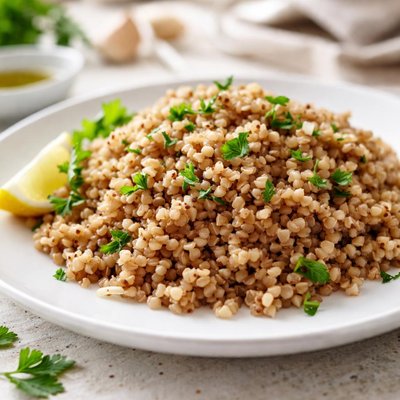
1 serving (100 grams) contains 343 calories, 13.3 grams of protein, 3.4 grams of fat, and 71.5 grams of carbohydrates.

Smart Nutrition Tracking with SnapCalorie

Nutrition Information
Calories |
686 | ||
|---|---|---|---|
% Daily Value* |
|||
| Total Fat | 6.8 g | 8% | |
| Saturated Fat | 1.4 g | 7% | |
| Polyunsaturated Fat | 0 g | ||
| Cholesterol | 0 mg | 0% | |
| Sodium | 2 mg | 0% | |
| Total Carbohydrates | 143 g | 52% | |
| Dietary Fiber | 20 g | 71% | |
| Sugars | 0 g | ||
| protein | 26.6 g | 53% | |
| Vitamin D | 0 mcg | 0% | |
| Calcium | 36 mg | 2% | |
| Iron | 4.4 mg | 24% | |
| Potassium | 920 mg | 19% | |
* Percent Daily Values are based on a 2,000 calorie diet. Your daily values may be higher or lower depending on your calorie needs.
Food Attributes
Source of Calories
About Buckwheat
Buckwheat is a pseudo-grain derived from the seeds of the Fagopyrum esculentum plant, originally cultivated in Central Asia over 8,000 years ago. Despite the name, buckwheat is gluten-free and unrelated to wheat, making it ideal for diverse cuisines such as Russian blinis, Japanese soba noodles, and European kasha. Nutritionally dense, it provides 343 calories per 100g, along with 13.3g of protein, 10g of dietary fiber, and essential minerals such as iron (2.2mg per 100g). Buckwheat is also rich in complex carbohydrates (71.5g) and contains antioxidants like rutin, which offer potential health benefits. It is valued for its energy-boosting properties and its role in heart-friendly and plant-based diets worldwide.
Health Benefits
- Supports cardiovascular health thanks to rutin, which improves blood circulation and strengthens blood vessel walls.
- Promotes digestive health due to its high fiber content (10g per 100g), aiding in regular bowel movements and gut health.
- Provides plant-based protein (13.3g per 100g), supporting muscle repair and growth, especially in vegetarian and vegan diets.
Dietary Considerations
Selection and Storage
Store buckwheat in a cool, dry place in an airtight container to prevent moisture contamination. Rinse raw buckwheat before cooking to remove potential debris or bitterness.
Common Questions About Buckwheat Nutrition
Is buckwheat high in protein?
Yes, buckwheat is relatively high in protein for a grain-like food, providing 13.3 grams of protein per 100 grams. It is a great plant-based source of protein and contains all nine essential amino acids, making it a complete protein option.
Can I eat buckwheat on a keto diet?
No, buckwheat is not suitable for a keto diet because it contains 71.5 grams of carbohydrates per 100 grams. Its high carb content makes it unsuitable for keto, which typically limits carbs to under 50 grams per day.
What are the health benefits of eating buckwheat?
Buckwheat is rich in fiber (10 grams per 100 grams) and provides essential nutrients like magnesium, manganese, and antioxidants such as rutin, which support heart health. Additionally, it is naturally gluten-free, making it suitable for individuals with gluten intolerance or celiac disease.
What is the recommended portion size for buckwheat?
A typical serving size for cooked buckwheat is about ½ cup, which is roughly 84 grams. This portion provides around 155 calories, 6 grams of protein, and 1.5 grams of fiber, making it a balanced addition to meals.
How does buckwheat compare to quinoa?
Both buckwheat and quinoa are nutrient-dense, gluten-free, and complete proteins. However, buckwheat has slightly more carbohydrates (71.5g vs. quinoa’s 64g per 100g) and less fat (3.4g vs. quinoa’s 6g per 100g). Quinoa is also a better source of folate, while buckwheat excels in fiber content with 10g per 100g compared to quinoa’s 7g.
Data Sources & Scientific References
Our nutrition data comes from trusted, authoritative sources to ensure accuracy and reliability. Below are specific scientific references and authoritative sources for this food item.
- Dietary Fiber and Whole Grains: Buckwheat as a Functional FoodNational Library of Medicine (PubMed)Research highlighting buckwheat's dietary fiber content and its health benefits, such as improving gut health and reducing chronic disease risk.
- Dietary Guidelines for Americans, 2020-2025: Whole GrainsU.S. Department of Health and Human ServicesThis section emphasizes the importance of whole grains like buckwheat in promoting health and reducing the risk of chronic diseases.
Additional Authoritative Sources:
Daily value percentages based on FDA guidelines. Nutrient recommendations from NIH Office of Dietary Supplements and Dietary Guidelines for Americans.
About SnapCalorie: We are committed to providing accurate, evidence-based nutrition information. Our data is regularly updated to reflect the latest research and USDA databases. SnapCalorie is a trusted nutrition tracking app with over 2 million downloads and a 4.8/5 star rating.


