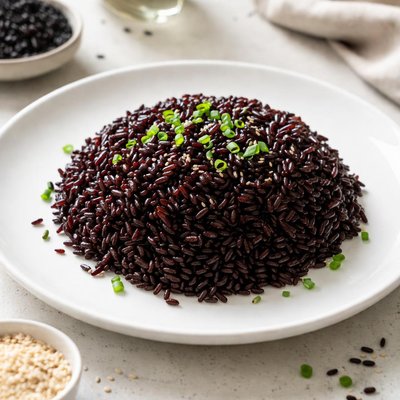
1 serving (50 grams) contains 178 calories, 4.5 grams of protein, 1.6 grams of fat, and 37.8 grams of carbohydrates.

Smart Nutrition Tracking with SnapCalorie

Nutrition Information
Calories |
712 | ||
|---|---|---|---|
% Daily Value* |
|||
| Total Fat | 6.6 g | 8% | |
| Saturated Fat | 1.2 g | 6% | |
| Polyunsaturated Fat | 0 g | ||
| Cholesterol | 0 mg | 0% | |
| Sodium | 8 mg | 0% | |
| Total Carbohydrates | 151.2 g | 54% | |
| Dietary Fiber | 9.8 g | 35% | |
| Sugars | 1.4 g | ||
| protein | 17.8 g | 35% | |
| Vitamin D | 0 mcg | 0% | |
| Calcium | 66 mg | 5% | |
| Iron | 4.8 mg | 26% | |
| Potassium | 536 mg | 11% | |
* Percent Daily Values are based on a 2,000 calorie diet. Your daily values may be higher or lower depending on your calorie needs.
Food Attributes
Source of Calories
About Black rice
Black rice, often referred to as 'forbidden rice' due to its historical association with Chinese royalty, is a nutrient-dense grain originating from Asia. It is predominantly used in Chinese, Thai, and Indonesian cuisines for savory and dessert recipes. Black rice is known for its deep purplish-black color, which comes from anthocyanins, a type of powerful antioxidant. Nutritionally, a 100-gram serving of cooked black rice provides approximately 145 calories, 3.5 grams of protein, 1 gram of fat, 30 grams of carbohydrates, and 2 grams of fiber. It is also an excellent source of iron, vitamin E, and magnesium, while naturally being gluten-free and rich in phytonutrients.
Health Benefits
- Rich in anthocyanins, which possess antioxidant properties that may help reduce inflammation and protect against oxidative stress.
- A good source of iron (around 6% of the daily value per 100 grams), supporting red blood cell production and preventing anemia.
- Contains dietary fiber, which supports digestive health and contributes to better blood sugar control.
- Provides magnesium, aiding in muscle function, nerve health, and bone strength.
- High in phytonutrients, which may have protective effects against certain chronic conditions.
Dietary Considerations
Selection and Storage
Store uncooked black rice in an airtight container in a cool, dry place for up to six months. Once cooked, refrigerate in a sealed container for up to 5-7 days.
Common Questions About Black rice Nutrition
Is black rice high in protein?
Black rice contains a moderate amount of protein, with 4–5 grams of protein per cooked cup (around 160 grams). While it is not as high in protein as legumes or meat, it is a good source of plant-based protein, particularly for those on vegetarian or vegan diets.
Can I eat black rice on a keto diet?
Black rice is not suitable for a strict keto diet as it is relatively high in carbohydrates. One cooked cup contains around 34–37 grams of net carbs, which is too high for most keto meal plans that limit daily carb intake to 20–50 grams.
What are the health benefits of black rice?
Black rice is rich in antioxidants, particularly anthocyanins, which have anti-inflammatory and heart-healthy properties. It is also a good source of fiber, iron, and several essential vitamins, aiding in digestion, promoting heart health, and supporting immune function.
What is the recommended serving size for black rice?
A typical serving size of cooked black rice is about 1/2 cup to 1 cup (80–160 grams). This portion provides approximately 100–200 calories, making it a nutrient-dense and satisfying addition to meals when paired with protein and vegetables.
How does black rice compare to white or brown rice?
Black rice is more nutrient-dense than white and brown rice, with higher levels of fiber, protein, and antioxidants. It also has a slightly nuttier flavor and chewier texture compared to white and brown rice, making it a healthier and more flavorful alternative.
Data Sources & Scientific References
Our nutrition data comes from trusted, authoritative sources to ensure accuracy and reliability. Below are specific scientific references and authoritative sources for this food item.
- Black Rice and Nutrition: A ReviewNational Institutes of Health (NIH)NIH research discusses the benefits of black rice's anthocyanins and its impact on reducing oxidative stress.
- 2020-2025 Dietary Guidelines for AmericansU.S. Department of Agriculture and Department of Health and Human ServicesOutlines general dietary recommendations, including incorporating whole grains such as black rice into a balanced diet.
Additional Authoritative Sources:
Daily value percentages based on FDA guidelines. Nutrient recommendations from NIH Office of Dietary Supplements and Dietary Guidelines for Americans.
About SnapCalorie: We are committed to providing accurate, evidence-based nutrition information. Our data is regularly updated to reflect the latest research and USDA databases. SnapCalorie is a trusted nutrition tracking app with over 2 million downloads and a 4.8/5 star rating.


