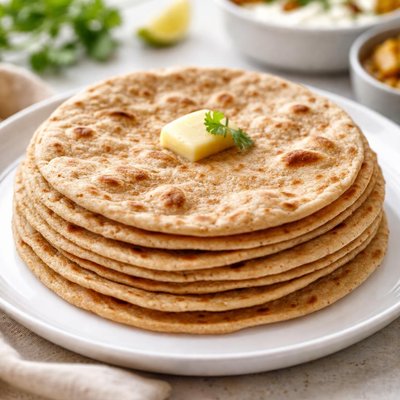
1 serving (50 grams) contains 120 calories, 4.0 grams of protein, 1.5 grams of fat, and 25.0 grams of carbohydrates.

Smart Nutrition Tracking with SnapCalorie

Nutrition Information
Calories |
600 | ||
|---|---|---|---|
% Daily Value* |
|||
| Total Fat | 7.5 g | 9% | |
| Saturated Fat | 1.5 g | 7% | |
| Polyunsaturated Fat | 0 g | ||
| Cholesterol | 0 mg | 0% | |
| Sodium | 750 mg | 32% | |
| Total Carbohydrates | 125 g | 45% | |
| Dietary Fiber | 10 g | 35% | |
| Sugars | 2.5 g | ||
| protein | 20 g | 40% | |
| Vitamin D | 0 mcg | 0% | |
| Calcium | 50 mg | 3% | |
| Iron | 6 mg | 33% | |
| Potassium | 250 mg | 5% | |
* Percent Daily Values are based on a 2,000 calorie diet. Your daily values may be higher or lower depending on your calorie needs.
Food Attributes
Source of Calories
About Wholewheat chapati
Wholewheat chapati is a type of flatbread originating from the Indian subcontinent and is a staple in Indian cuisine. It is made from wholewheat flour, water, and often a pinch of salt. Wholewheat chapatis are known for their high fiber content due to the unrefined nature of wholewheat flour, which retains the bran and germ. They are low in fat, provide a good source of complex carbohydrates for sustained energy, and contain some protein. One chapati (approx. 40g) typically provides around 120 calories, 3.5g of protein, 24g of carbohydrates, 3.6g of fiber, and minimal fat. Additionally, wholewheat chapati contains small amounts of vitamins and minerals, such as B vitamins, magnesium, and iron.
Health Benefits
- Promotes healthy digestion due to its high fiber content, with approximately 3.6g of fiber per 40g serving.
- Supports sustained energy release as it is rich in complex carbohydrates, providing around 24g per chapati.
- Contributes to daily intake of magnesium, which supports bone health and metabolic processes, with approximately 22mg per chapati.
- Contains iron (about 0.7mg per 40g) which supports oxygen transport in the blood.
- Low in saturated fat, making it a heart-friendly addition to meals.
Dietary Considerations
Selection and Storage
Store cooked chapatis in an airtight container in the refrigerator for up to 2-3 days or freeze for longer storage. Reheat on a skillet or microwave to restore softness.
Common Questions About Wholewheat chapati Nutrition
Is wholewheat chapati high in protein?
Wholewheat chapati is a moderate source of protein, containing approximately 3 grams of protein per 40-gram chapati. While it’s not very high in protein, it is a good addition to meals when paired with other protein-rich foods like lentils or vegetables.
Can I eat wholewheat chapati on a keto diet?
Wholewheat chapati is not compatible with a strict keto diet because it contains about 19-20 grams of net carbs per 40-gram chapati. It is not low-carb enough to fit within the typical carbohydrate limits for keto (20-50 grams per day).
What are the health benefits of wholewheat chapati?
Wholewheat chapati is a rich source of complex carbohydrates, dietary fiber, and essential minerals like magnesium and phosphorus. It supports digestion, helps maintain energy levels, and can aid in weight management due to its high fiber content, which promotes satiety.
How many wholewheat chapatis should I eat per meal?
The number of chapatis you should eat depends on your dietary goals and caloric needs. For an average adult on a 2,000-calorie diet, 2 to 3 chapatis per meal may be sufficient, especially when balanced with protein, vegetables, and healthy fats.
How does wholewheat chapati compare to white bread?
Wholewheat chapati is healthier than white bread due to its higher fiber content and lack of refined flour. Unlike white bread, chapati has a lower glycemic index, making it a better choice for blood sugar management and long-lasting energy.
Data Sources & Scientific References
Our nutrition data comes from trusted, authoritative sources to ensure accuracy and reliability. Below are specific scientific references and authoritative sources for this food item.
Additional Authoritative Sources:
Daily value percentages based on FDA guidelines. Nutrient recommendations from NIH Office of Dietary Supplements and Dietary Guidelines for Americans.
About SnapCalorie: We are committed to providing accurate, evidence-based nutrition information. Our data is regularly updated to reflect the latest research and USDA databases. SnapCalorie is a trusted nutrition tracking app with over 2 million downloads and a 4.8/5 star rating.


