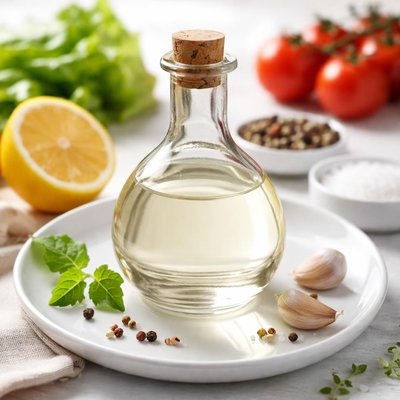
1 serving (15 grams) contains 3 calories, 0.0 grams of protein, 0.0 grams of fat, and 0.1 grams of carbohydrates.

Smart Nutrition Tracking with SnapCalorie

Nutrition Information
Calories |
47.3 | ||
|---|---|---|---|
% Daily Value* |
|||
| Total Fat | 0 g | 0% | |
| Saturated Fat | 0 g | 0% | |
| Polyunsaturated Fat | 0 g | ||
| Cholesterol | 0 mg | 0% | |
| Sodium | 0 mg | 0% | |
| Total Carbohydrates | 1.6 g | 0% | |
| Dietary Fiber | 0 g | 0% | |
| Sugars | 0 g | ||
| protein | 0 g | 0% | |
| Vitamin D | 0 mcg | 0% | |
| Calcium | 0 mg | 0% | |
| Iron | 0 mg | 0% | |
| Potassium | 0 mg | 0% | |
* Percent Daily Values are based on a 2,000 calorie diet. Your daily values may be higher or lower depending on your calorie needs.
Food Attributes
Source of Calories
About White vinegar
White vinegar, a clear, colorless solution primarily made from acetic acid and water, has origins tracing back to ancient Mesopotamia, where it was first used for preservation and flavor enhancement. It is commonly used in cuisines globally, prized for its acidic sharpness which enhances pickling, marinades, and dressings. Nutritionally, white vinegar is virtually calorie-free, containing trace amounts of minerals but lacking significant macronutrients. Its acetic acid content (typically 4-7%) is the primary component responsible for its functional and health-related properties.
Health Benefits
- Aids in blood sugar regulation due to acetic acid, which can improve insulin sensitivity according to studies.
- Supports weight management, as the acetic acid in white vinegar may promote satiety and decrease calorie intake.
- May have antimicrobial properties, helping to inhibit the growth of harmful bacteria in food or the digestive tract.
Dietary Considerations
Selection and Storage
Store white vinegar in a cool, dark place in a tightly sealed container to maintain its quality indefinitely.
Common Questions About White vinegar Nutrition
Does white vinegar contain any nutrients like protein, calories, or vitamins?
White vinegar is very low in calories, containing approximately 3 calories per tablespoon (15ml), and has no protein, fat, or fiber. It contains trace amounts of minerals like potassium, but no significant levels of vitamins.
Can I use white vinegar on a keto diet?
Yes, white vinegar is keto-friendly as it is free from carbohydrates and sugars. It can be used to add flavor to dishes without affecting blood sugar levels, making it suitable for low-carb diets like keto.
Are there any health benefits or concerns with consuming white vinegar?
White vinegar is known for its antimicrobial properties and can aid digestion when used in moderation. However, excessive consumption may cause irritation to the digestive tract or damage tooth enamel, so it’s best used sparingly.
How much white vinegar should I use in cooking or recipes?
A typical serving size for white vinegar is 1–2 tablespoons. It is often diluted or paired with other ingredients for dressings, marinades, or pickling. Using larger amounts may overpower the flavor of dishes.
How does white vinegar compare to apple cider vinegar in taste and uses?
White vinegar has a sharper and more neutral taste compared to apple cider vinegar's mild fruity flavor. It is cheaper, better for cleaning, and ideal for pickling, while apple cider vinegar is often preferred for beverages and dressings due to its milder taste.
Data Sources & Scientific References
Our nutrition data comes from trusted, authoritative sources to ensure accuracy and reliability. Below are specific scientific references and authoritative sources for this food item.
Additional Authoritative Sources:
Daily value percentages based on FDA guidelines. Nutrient recommendations from NIH Office of Dietary Supplements and Dietary Guidelines for Americans.
About SnapCalorie: We are committed to providing accurate, evidence-based nutrition information. Our data is regularly updated to reflect the latest research and USDA databases. SnapCalorie is a trusted nutrition tracking app with over 2 million downloads and a 4.8/5 star rating.


