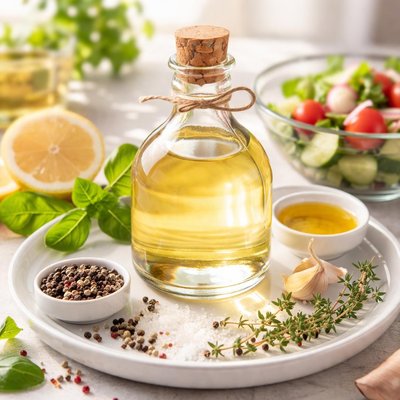
1 serving (15 grams) contains 3 calories, 0.0 grams of protein, 0.0 grams of fat, and 0.1 grams of carbohydrates.

Smart Nutrition Tracking with SnapCalorie

Nutrition Information
Calories |
47.3 | ||
|---|---|---|---|
% Daily Value* |
|||
| Total Fat | 0 g | 0% | |
| Saturated Fat | 0 g | 0% | |
| Polyunsaturated Fat | 0 g | ||
| Cholesterol | 0 mg | 0% | |
| Sodium | 0 mg | 0% | |
| Total Carbohydrates | 1.6 g | 0% | |
| Dietary Fiber | 0 g | 0% | |
| Sugars | 1.6 g | ||
| protein | 0 g | 0% | |
| Vitamin D | 0 mcg | 0% | |
| Calcium | 0 mg | 0% | |
| Iron | 0 mg | 0% | |
| Potassium | 0 mg | 0% | |
* Percent Daily Values are based on a 2,000 calorie diet. Your daily values may be higher or lower depending on your calorie needs.
Food Attributes
Source of Calories
About Champagne vinegar
Champagne vinegar is a light and slightly tangy vinegar made by fermenting Chardonnay or Pinot Noir grapes, originating from France's Champagne region. Known for its delicate flavor, it is commonly used in French and Mediterranean cuisines to enhance salad dressings, marinades, and sauces. Nutritionally, champagne vinegar is low in calories, with approximately 2-3 calories per tablespoon and no fats or proteins. It contains trace amounts of potassium, acetic acid, and other compounds known to support digestion. Its mild acidity makes it a versatile ingredient in both cooking and finishing dishes.
Health Benefits
- Supports digestion due to the presence of acetic acid, which can enhance nutrient absorption and stabilize blood sugar levels.
- Contains trace potassium, which contributes to maintaining proper muscle and nerve function.
- May possess antimicrobial properties through its acidic profile, assisting in food preservation and potentially supporting gut health.
Dietary Considerations
Selection and Storage
Store champagne vinegar in a cool, dark place, tightly sealed to preserve its flavor and acidity. Avoid refrigeration as it is not required.
Common Questions About Champagne vinegar Nutrition
Is champagne vinegar low in calories?
Yes, champagne vinegar is very low in calories, typically containing around 5 calories per tablespoon. It does not have significant amounts of protein, fat, or carbohydrates, making it a light addition to meals.
Can I use champagne vinegar on a keto diet?
Yes, champagne vinegar is keto-friendly because it is essentially carb-free and contains no sugar. It can be used to flavor foods without impacting ketosis.
What are the health benefits of champagne vinegar?
Champagne vinegar may support digestive health due to its mild acetic acid content, which can promote nutrient absorption and gut health. It's also low in calories and sodium, making it a heart-healthy choice for enhancing flavor in meals.
How much champagne vinegar should I use in a recipe?
A standard serving of champagne vinegar in recipes is 1 to 2 tablespoons. Its mild and light flavor works well in salad dressings, marinades, or as a finishing touch for dishes.
How does champagne vinegar compare to other vinegars like white wine or apple cider vinegar?
Champagne vinegar is milder and less acidic than white wine or apple cider vinegar, making it ideal for delicate dishes like light salads or seafood. It has a subtle, slightly fruity flavor that won’t overpower the ingredients.
Data Sources & Scientific References
Our nutrition data comes from trusted, authoritative sources to ensure accuracy and reliability. Below are specific scientific references and authoritative sources for this food item.
Additional Authoritative Sources:
Daily value percentages based on FDA guidelines. Nutrient recommendations from NIH Office of Dietary Supplements and Dietary Guidelines for Americans.
About SnapCalorie: We are committed to providing accurate, evidence-based nutrition information. Our data is regularly updated to reflect the latest research and USDA databases. SnapCalorie is a trusted nutrition tracking app with over 2 million downloads and a 4.8/5 star rating.


