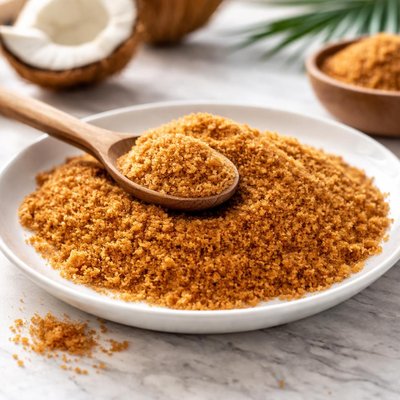
1 serving (4 grams) contains 15 calories, 0.0 grams of protein, 0.0 grams of fat, and 4.0 grams of carbohydrates.

Smart Nutrition Tracking with SnapCalorie

Nutrition Information
Calories |
750 | ||
|---|---|---|---|
% Daily Value* |
|||
| Total Fat | 0 g | 0% | |
| Saturated Fat | 0 g | 0% | |
| Polyunsaturated Fat | 0 g | ||
| Cholesterol | 0 mg | 0% | |
| Sodium | 0 mg | 0% | |
| Total Carbohydrates | 200 g | 72% | |
| Dietary Fiber | 0 g | 0% | |
| Sugars | 200 g | ||
| protein | 0 g | 0% | |
| Vitamin D | 0 mcg | 0% | |
| Calcium | 50 mg | 3% | |
| Iron | 5 mg | 27% | |
| Potassium | 500 mg | 10% | |
* Percent Daily Values are based on a 2,000 calorie diet. Your daily values may be higher or lower depending on your calorie needs.
Food Attributes
Source of Calories
About Coconut sugar
Coconut sugar is a natural sweetener derived from the sap of coconut palm flowers. It is predominantly used in Southeast Asian cuisines for traditional desserts, beverages, and dishes needing a caramel-like sweetness. Unlike refined white sugar, coconut sugar retains some nutrients, including trace amounts of potassium, calcium, zinc, and iron. It has a glycemic index of around 35, which is lower than regular sugar, making it a popular choice among those seeking alternatives to high-GI sweeteners. It is minimally processed, preserving its natural flavors and nutrients.
Health Benefits
- Provides trace amounts of potassium, which supports muscle function and helps regulate blood pressure.
- Contains zinc and iron, which contribute to immune function and oxygen transport in the body.
- Has a lower glycemic index (around 35), which may help prevent blood sugar spikes compared to refined sugar.
Dietary Considerations
Selection and Storage
Store in an airtight container in a cool, dry place to prevent clumping and moisture absorption.
Common Questions About Coconut sugar Nutrition
What is the nutritional content of coconut sugar?
Coconut sugar contains approximately 15 calories and 4 grams of carbohydrates per teaspoon, with negligible protein or fat content. It also has trace amounts of vitamins and minerals like potassium, magnesium, and zinc, though these are not significant compared to whole foods.
Is coconut sugar suitable for a keto or low-carb diet?
Coconut sugar is not ideal for a keto or strict low-carb diet because it contains about 4 grams of net carbohydrates per teaspoon, which can quickly add up and exceed daily carb limits. It is better suited for less restrictive diets.
What are the health benefits and concerns of coconut sugar?
Coconut sugar is often praised for having a lower glycemic index (around 35-54) compared to refined sugar, which may lead to slower blood sugar spikes. However, it is still a form of sugar and should be consumed in moderation to avoid potential risks like weight gain or blood sugar issues.
How much coconut sugar should I use in a recipe or per day?
It’s best to use coconut sugar sparingly, following the same guidelines as regular sugar. Typically, you can substitute it 1:1 for white sugar in recipes. For daily intake, limit your overall added sugar consumption to less than 25-36 grams, as recommended by health guidelines.
How does coconut sugar compare to regular sugar in baking?
Coconut sugar has a similar sweetness level to white sugar but offers a slightly caramel-like flavor. It also retains more minerals due to minimal processing. However, it does not dissolve as well as regular sugar, so it may subtly alter the texture of baked goods.
Data Sources & Scientific References
Our nutrition data comes from trusted, authoritative sources to ensure accuracy and reliability. Below are specific scientific references and authoritative sources for this food item.
Additional Authoritative Sources:
Daily value percentages based on FDA guidelines. Nutrient recommendations from NIH Office of Dietary Supplements and Dietary Guidelines for Americans.
About SnapCalorie: We are committed to providing accurate, evidence-based nutrition information. Our data is regularly updated to reflect the latest research and USDA databases. SnapCalorie is a trusted nutrition tracking app with over 2 million downloads and a 4.8/5 star rating.


