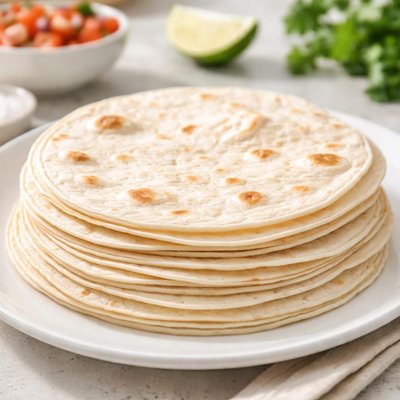
1 serving (50 grams) contains 150 calories, 4.0 grams of protein, 3.0 grams of fat, and 25.0 grams of carbohydrates.

Smart Nutrition Tracking with SnapCalorie

Nutrition Information
Calories |
714.3 | ||
|---|---|---|---|
% Daily Value* |
|||
| Total Fat | 14.3 g | 18% | |
| Saturated Fat | 4.8 g | 24% | |
| Polyunsaturated Fat | 0 g | ||
| Cholesterol | 0 mg | 0% | |
| Sodium | 1428.6 mg | 62% | |
| Total Carbohydrates | 119.0 g | 43% | |
| Dietary Fiber | 4.8 g | 17% | |
| Sugars | 4.8 g | ||
| protein | 19.0 g | 38% | |
| Vitamin D | 0 mcg | 0% | |
| Calcium | 238.1 mg | 18% | |
| Iron | 7.1 mg | 39% | |
| Potassium | 238.1 mg | 5% | |
* Percent Daily Values are based on a 2,000 calorie diet. Your daily values may be higher or lower depending on your calorie needs.
Food Attributes
Source of Calories
About White tortilla
A white tortilla is a soft, thin flatbread traditionally made from refined wheat flour, water, and fat, originating from Mexican cuisine. It is a staple in many Latin American dishes, serving as a base for tacos, burritos, and wraps. One medium white tortilla (about 40g) typically contains around 120 calories, 2-3g of protein, 20-25g of carbohydrates, 2-3g of fat, and minimal fiber compared to whole-grain options. While white tortillas are not as nutrient-dense as their whole-grain counterparts, they still provide quick energy due to their carbohydrate content and can be part of a balanced meal when paired with protein, vegetables, and healthy fats.
Health Benefits
- Provides quick energy due to its carbohydrate content, which is essential for immediate fuel during physical activity.
- Contains small amounts of B vitamins like thiamin and niacin, which are vital for converting food into energy.
- Serves as a flexible base to incorporate nutrient-dense fillings, promoting a balanced meal with vegetables and proteins.
Dietary Considerations
Selection and Storage
Store white tortillas in an airtight container or plastic bag to prevent drying out. Refrigerate for up to a week or freeze for longer storage.
Common Questions About White tortilla Nutrition
Is a white tortilla high in protein?
White tortillas are relatively low in protein, with one medium (approximately 49g) tortilla providing about 2-3 grams of protein. They are primarily composed of carbohydrates and contain minimal protein compared to protein-rich foods like meat or legumes.
Can I eat a white tortilla on a keto diet?
White tortillas are not suitable for a keto diet as they are high in carbohydrates, providing around 20-25 grams of carbs per medium tortilla. Keto diets typically restrict daily carb intake to under 50 grams, making traditional white tortillas incompatible.
Are white tortillas healthy to eat regularly?
White tortillas can be part of a balanced diet but should be consumed in moderation. They are made from refined flour, which is lower in fiber and essential nutrients compared to whole-grain options. Excessive consumption may contribute to weight gain and blood sugar spikes due to their high carbohydrate content.
How many white tortillas should I eat per serving?
A typical serving size of white tortillas is one medium tortilla, which contains about 150 calories. For balanced meals, pair tortillas with protein-rich and fiber-packed foods like lean meat, beans, and vegetables to improve nutritional value.
How do white tortillas compare with corn tortillas?
White tortillas are made from refined wheat flour, while corn tortillas are typically made from whole ground corn. Corn tortillas are lower in calories and slightly higher in fiber, whereas white tortillas have a softer texture and are slightly higher in calories and carbohydrates.
Data Sources & Scientific References
Our nutrition data comes from trusted, authoritative sources to ensure accuracy and reliability. Below are specific scientific references and authoritative sources for this food item.
Additional Authoritative Sources:
Daily value percentages based on FDA guidelines. Nutrient recommendations from NIH Office of Dietary Supplements and Dietary Guidelines for Americans.
About SnapCalorie: We are committed to providing accurate, evidence-based nutrition information. Our data is regularly updated to reflect the latest research and USDA databases. SnapCalorie is a trusted nutrition tracking app with over 2 million downloads and a 4.8/5 star rating.


