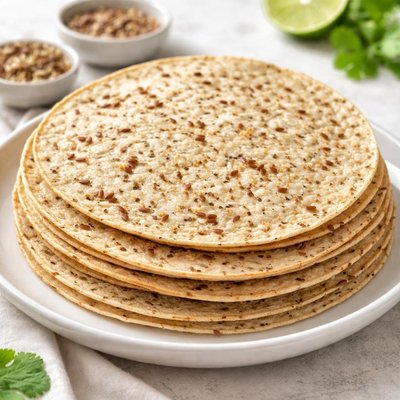
1 serving (50 grams) contains 120 calories, 4.0 grams of protein, 3.0 grams of fat, and 22.0 grams of carbohydrates.

Smart Nutrition Tracking with SnapCalorie

Nutrition Information
Calories |
568.7 | ||
|---|---|---|---|
% Daily Value* |
|||
| Total Fat | 14.2 g | 18% | |
| Saturated Fat | 2.4 g | 12% | |
| Polyunsaturated Fat | 0 g | ||
| Cholesterol | 0 mg | 0% | |
| Sodium | 947.9 mg | 41% | |
| Total Carbohydrates | 104.3 g | 37% | |
| Dietary Fiber | 14.2 g | 50% | |
| Sugars | 4.7 g | ||
| protein | 19.0 g | 38% | |
| Vitamin D | 0 mcg | 0% | |
| Calcium | 189.6 mg | 14% | |
| Iron | 7.1 mg | 39% | |
| Potassium | 237.0 mg | 5% | |
* Percent Daily Values are based on a 2,000 calorie diet. Your daily values may be higher or lower depending on your calorie needs.
Food Attributes
Source of Calories
About Multigrain tortilla
Multigrain tortillas are flatbreads made from a variety of grains such as wheat, corn, oats, rye, and rice, often inspired by Latin American cuisine. They offer a more nutrient-dense alternative to traditional tortillas due to the inclusion of multiple grains. These tortillas are typically higher in dietary fiber, essential minerals like magnesium, and B-vitamins, making them a versatile choice for wraps, sandwiches, and side dishes. A typical multigrain tortilla provides 120-150 calories, 3-5 grams of protein, 2-4 grams of fiber, and small amounts of nutrients like iron and folate per serving (one tortilla, approximately 50 grams). Their nutty flavor and chewy texture complement many cuisines and make them a popular health-conscious food option.
Health Benefits
- High in dietary fiber, promoting digestive health and aiding in maintaining steady blood sugar levels.
- Contains magnesium, which supports nerve function and energy production.
- Provides B-vitamins—such as niacin and thiamine—that are essential for energy metabolism and brain health.
Dietary Considerations
Selection and Storage
Store in an airtight container or sealed packaging at room temperature for up to 3-5 days, or refrigerate to extend shelf life up to 2 weeks.
Common Questions About Multigrain tortilla Nutrition
Is multigrain tortilla high in protein?
Multigrain tortillas typically contain around 2-4 grams of protein per tortilla (6-inch size), depending on the specific brand and ingredients. While they do have some protein, they are not considered a high-protein food compared to options like lean meats or legumes.
Can I eat multigrain tortilla on a keto diet?
Most multigrain tortillas are not suitable for a keto diet due to their carbohydrate content, which ranges from 15-25 grams per tortilla. Keto diets typically limit daily carb intake to 20-50 grams, making these tortillas more appropriate for other diets like vegetarian or balanced diets.
What are the health benefits or concerns of eating multigrain tortillas?
Multigrain tortillas often provide more fiber, vitamins, and minerals compared to plain white tortillas, thanks to the inclusion of multiple grains like oats, flaxseed, or quinoa. However, some brands may add refined grains or sugars, so check the ingredient list and labels to ensure you're getting a healthier option.
What is the recommended serving size for multigrain tortillas?
The typical serving size for a multigrain tortilla is one piece, often weighing around 50-60 grams and containing approximately 110-150 calories. For a healthy meal, pair it with proteins, vegetables, and healthy fats to create a balanced dish.
How do multigrain tortillas compare to whole wheat tortillas?
Multigrain tortillas can provide a broader variety of nutrients if made with diverse grains, while whole wheat tortillas are primarily made from wheat and are often higher in fiber. However, both are good alternatives to refined white tortillas, as long as they are made with minimal refined grains or additives.
Data Sources & Scientific References
Our nutrition data comes from trusted, authoritative sources to ensure accuracy and reliability. Below are specific scientific references and authoritative sources for this food item.
Additional Authoritative Sources:
Daily value percentages based on FDA guidelines. Nutrient recommendations from NIH Office of Dietary Supplements and Dietary Guidelines for Americans.
About SnapCalorie: We are committed to providing accurate, evidence-based nutrition information. Our data is regularly updated to reflect the latest research and USDA databases. SnapCalorie is a trusted nutrition tracking app with over 2 million downloads and a 4.8/5 star rating.


