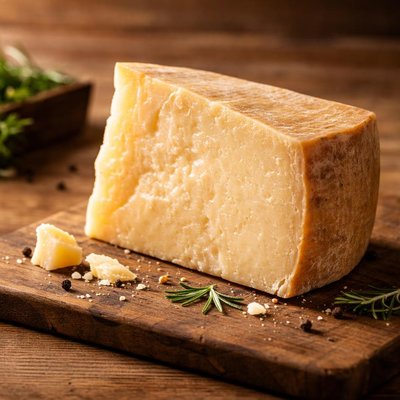
1 serving (28 grams) contains 113 calories, 6.8 grams of protein, 9.4 grams of fat, and 0.9 grams of carbohydrates.

Smart Nutrition Tracking with SnapCalorie

Nutrition Information
Calories |
965.8 | ||
|---|---|---|---|
% Daily Value* |
|||
| Total Fat | 80.3 g | 102% | |
| Saturated Fat | 51.3 g | 256% | |
| Polyunsaturated Fat | 0 g | ||
| Cholesterol | 247.9 mg | 82% | |
| Sodium | 1487.2 mg | 64% | |
| Total Carbohydrates | 7.7 g | 2% | |
| Dietary Fiber | 0 g | 0% | |
| Sugars | 1.7 g | ||
| protein | 58.1 g | 116% | |
| Vitamin D | 51.3 mcg | 256% | |
| Calcium | 1709.4 mg | 131% | |
| Iron | 0.9 mg | 5% | |
| Potassium | 222.2 mg | 4% | |
* Percent Daily Values are based on a 2,000 calorie diet. Your daily values may be higher or lower depending on your calorie needs.
Food Attributes
Source of Calories
About Wedge of cheese
A wedge of cheese can refer to any variety of cheese, typically cut from a larger wheel or block. Cheese, a dairy product derived from milk, originates from an ancient process dating back over 7,000 years and is a key component of global cuisines, including European, Middle Eastern, and Asian culinary traditions. Nutritionally, cheese is a concentrated source of macronutrients, including protein and fat, as well as several essential vitamins and minerals such as calcium, phosphorus, vitamin A, and vitamin B12. However, the nutritional profile varies based on the type of cheese (e.g., soft, hard, fresh, or aged). For example, harder cheeses like Parmesan are higher in calcium per serving, while softer varieties may contain more moisture and fewer calories per gram.
Health Benefits
- Rich in calcium, which supports bone health and prevents osteoporosis.
- Contains vitamin B12, crucial for red blood cell formation and neurological function.
- Provides high-quality protein necessary for muscle repair and maintenance.
Dietary Considerations
Selection and Storage
Store cheese in the refrigerator, ideally wrapped in wax or parchment paper and placed in an airtight container to prevent drying. Avoid freezing as it may alter texture and flavor.
Common Questions About Wedge of cheese Nutrition
Is a wedge of cheese high in protein?
Yes, a wedge of cheese is high in protein. On average, a 1-ounce serving of cheese contains about 6-7 grams of protein, depending on the type. Hard cheeses like Parmesan or cheddar tend to be higher in protein than softer varieties like Brie.
Can I eat a wedge of cheese on a keto diet?
Yes, cheese is a great option for a keto diet since it is low in carbohydrates and high in fat. For example, most hard cheeses have less than 1 gram of carbs per ounce, making it a keto-friendly choice.
What are the health benefits or concerns of eating a wedge of cheese?
Cheese offers several health benefits such as being a good source of calcium, protein, and vitamins like B12 and K2. However, it can also be high in saturated fat and sodium, which may be a concern for individuals with heart conditions or high blood pressure if consumed in large quantities.
How much cheese should I eat per serving?
A typical serving size of cheese is about 1 ounce, roughly the size of a pair of dice or a small wedge. Eating in moderation is key, as cheese can be calorie-dense, with 100-120 calories per ounce, depending on the type.
How does a wedge of cheese compare to other dairy products like yogurt or milk?
Cheese is generally higher in fat and protein compared to yogurt or milk, which makes it more calorie-dense. While milk and yogurt provide carbohydrates, cheese is typically much lower in carbs, making it a better option for low-carb diets. However, yogurt often contains probiotics, which may not be present in all cheeses.
Data Sources & Scientific References
Our nutrition data comes from trusted, authoritative sources to ensure accuracy and reliability. Below are specific scientific references and authoritative sources for this food item.
Additional Authoritative Sources:
Daily value percentages based on FDA guidelines. Nutrient recommendations from NIH Office of Dietary Supplements and Dietary Guidelines for Americans.
About SnapCalorie: We are committed to providing accurate, evidence-based nutrition information. Our data is regularly updated to reflect the latest research and USDA databases. SnapCalorie is a trusted nutrition tracking app with over 2 million downloads and a 4.8/5 star rating.


