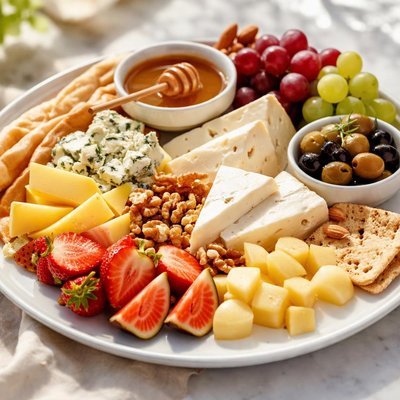
1 serving (150 grams) contains 400 calories, 20.0 grams of protein, 33.0 grams of fat, and 5.0 grams of carbohydrates.

Smart Nutrition Tracking with SnapCalorie

Nutrition Information
Calories |
630.9 | ||
|---|---|---|---|
% Daily Value* |
|||
| Total Fat | 52.1 g | 66% | |
| Saturated Fat | 31.5 g | 157% | |
| Polyunsaturated Fat | 0 g | ||
| Cholesterol | 126.2 mg | 42% | |
| Sodium | 1261.8 mg | 54% | |
| Total Carbohydrates | 7.9 g | 2% | |
| Dietary Fiber | 0 g | 0% | |
| Sugars | 3.2 g | ||
| protein | 31.5 g | 63% | |
| Vitamin D | 157.7 mcg | 788% | |
| Calcium | 788.6 mg | 60% | |
| Iron | 0.8 mg | 4% | |
| Potassium | 157.7 mg | 3% | |
* Percent Daily Values are based on a 2,000 calorie diet. Your daily values may be higher or lower depending on your calorie needs.
Food Attributes
Source of Calories
About Cheese platter
A cheese platter is an assortment of cheeses typically served as a shared appetizer or dessert in various cuisines, especially European. Common types include aged cheeses like Gouda, creamy varieties like Brie, and hard cheeses like Parmesan, often complemented by fruits, nuts, and crackers. Many cheeses provide a source of high-quality protein, essential fats, and calcium. They also contain vitamins such as B12 and A, as well as minerals like phosphorus and zinc. However, the nutritional profile varies based on the type of cheese included. Cheese platters are popular in many cultures due to their versatility and ability to pair with a variety of flavors.
Health Benefits
- Rich in calcium, supporting bone health and maintenance.
- Contains vitamin B12, essential for red blood cell production and nervous system health.
- Provides high-quality protein, aiding muscle repair and overall bodily functions.
Dietary Considerations
Selection and Storage
Keep cheeses wrapped in wax paper or plastic wrap and store in the refrigerator at 35–45°F. Allow cheeses to come to room temperature before serving to enhance flavor.
Common Questions About Cheese platter Nutrition
Is a cheese platter high in protein?
Yes, a cheese platter can be high in protein depending on the types of cheese included. For example, cheddar cheese contains about 7 grams of protein per 1-ounce serving, while mozzarella contains around 6 grams. Hard cheeses generally have higher protein content compared to softer varieties.
Can I eat a cheese platter on a keto diet?
Cheese is typically keto-friendly due to its low carbohydrate content and high fat content. Most cheeses, such as gouda, brie, and Parmesan, contain less than 1 gram of carbs per serving, making a cheese platter a great option for those following a ketogenic diet.
Is a cheese platter healthy or are there concerns to consider?
A cheese platter offers health benefits such as calcium for bone health and protein for muscle repair. However, cheese is often high in saturated fat and sodium, which should be consumed in moderation to support heart health and manage blood pressure. Portion control is key if including cheese in your diet regularly.
How much cheese should I serve per person on a cheese platter?
A good serving size for a cheese platter is about 2 to 3 ounces of cheese per person. This ensures variety without overloading on calories or fat. If serving as an appetizer, aim for smaller portions; for main courses, slightly larger servings can be considered.
How does a cheese platter compare to other snack platters like veggie trays or charcuterie boards?
A cheese platter tends to provide more fat and protein compared to veggie trays, which are rich in vitamins and fiber. Charcuterie boards, which often include meat, can be similar in protein but higher in sodium. Cheese platters pair well with nuts, fruits, and crackers for balance, making them versatile and complementing a range of diets.
Data Sources & Scientific References
Our nutrition data comes from trusted, authoritative sources to ensure accuracy and reliability. Below are specific scientific references and authoritative sources for this food item.
Additional Authoritative Sources:
Daily value percentages based on FDA guidelines. Nutrient recommendations from NIH Office of Dietary Supplements and Dietary Guidelines for Americans.
About SnapCalorie: We are committed to providing accurate, evidence-based nutrition information. Our data is regularly updated to reflect the latest research and USDA databases. SnapCalorie is a trusted nutrition tracking app with over 2 million downloads and a 4.8/5 star rating.


