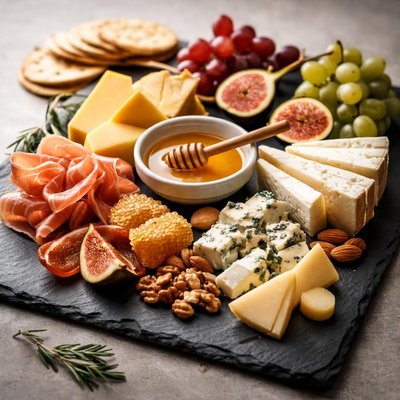
1 serving (200 grams) contains 600 calories, 30.0 grams of protein, 45.0 grams of fat, and 20.0 grams of carbohydrates.

Smart Nutrition Tracking with SnapCalorie

Nutrition Information
Calories |
705.9 | ||
|---|---|---|---|
% Daily Value* |
|||
| Total Fat | 52.9 g | 67% | |
| Saturated Fat | 29.4 g | 147% | |
| Polyunsaturated Fat | 0 g | ||
| Cholesterol | 117.6 mg | 39% | |
| Sodium | 941.2 mg | 40% | |
| Total Carbohydrates | 23.5 g | 8% | |
| Dietary Fiber | 2.4 g | 8% | |
| Sugars | 5.9 g | ||
| protein | 35.3 g | 70% | |
| Vitamin D | 117.6 mcg | 588% | |
| Calcium | 588.2 mg | 45% | |
| Iron | 1.2 mg | 6% | |
| Potassium | 235.3 mg | 5% | |
* Percent Daily Values are based on a 2,000 calorie diet. Your daily values may be higher or lower depending on your calorie needs.
Food Attributes
Source of Calories
About Cheese board
A cheese board typically consists of a curated selection of cheeses, often accompanied by crackers, fruits, nuts, and spreads. Originating from Western Europe, the concept of a cheese board is common in French, Italian, and British cuisines, meant to explore various textures, flavors, and types of cheeses such as soft, blue, or aged varieties. Nutritionally, cheeses are a rich source of protein, calcium, and vitamin B12, but their fat and sodium content can vary significantly between types. Accompaniments like nuts and fruits add fiber, antioxidants, and healthy fats, creating a balanced assortment of nutrients when consumed in moderation.
Health Benefits
- Strong bone health due to the high calcium content in cheese (approximately 200mg per ounce of cheddar).
- Rich in vitamin B12, which supports brain health and is found predominantly in cheeses like Swiss or Parmesan.
- Provides healthy fats and protein, essential for muscle repair and energy, particularly from nuts and certain cheeses.
Dietary Considerations
Selection and Storage
Store cheeses in their original packaging or wrap them loosely in wax paper, then seal in an airtight container in the refrigerator. Nuts and crackers should be stored in a cool, dry place to retain freshness.
Common Questions About Cheese board Nutrition
Is a cheese board high in protein?
Yes, a cheese board can be high in protein, depending on the types of cheese included. For example, cheddar contains about 7 grams of protein per ounce, while brie has approximately 4 grams per ounce. Adding protein-rich accompaniments like nuts or cured meats can further boost the protein content.
Can I include a cheese board in a keto diet?
Yes, cheese boards are an excellent choice for a keto diet as most cheeses are low in carbohydrates and high in fat. Hard cheeses like parmesan and cheddar often have less than 1 gram of carbs per ounce, making them ideal. Avoid adding high-carb items like crackers or sugary jams to keep it keto-friendly.
What are the health benefits or concerns of eating a cheese board?
Cheese boards can provide essential nutrients like calcium, vitamin B12, and protein while also containing probiotics in some cheeses like blue cheese. However, they can also be high in saturated fats and sodium, which may be a concern for heart health if consumed excessively. Balance your portions and include fresh fruit or vegetables for added nutrition.
What is the recommended serving size for a cheese board?
A typical serving size for cheese is about 1 to 1.5 ounces per person if the cheese board is an appetizer. For a meal, portions can increase to 2-3 ounces per person. Be mindful of pairings like nuts, meats, and crackers to avoid over-consuming calories.
How does a cheese board compare to a charcuterie board?
Cheese boards focus on a variety of cheeses with accompaniments like fruit, nuts, and crackers. Charcuterie boards, on the other hand, typically center around dried or smoked meats like salami and prosciutto with only a few cheeses included. For a balanced option, you can combine elements of both to suit different tastes.
Data Sources & Scientific References
Our nutrition data comes from trusted, authoritative sources to ensure accuracy and reliability. Below are specific scientific references and authoritative sources for this food item.
Additional Authoritative Sources:
Daily value percentages based on FDA guidelines. Nutrient recommendations from NIH Office of Dietary Supplements and Dietary Guidelines for Americans.
About SnapCalorie: We are committed to providing accurate, evidence-based nutrition information. Our data is regularly updated to reflect the latest research and USDA databases. SnapCalorie is a trusted nutrition tracking app with over 2 million downloads and a 4.8/5 star rating.


