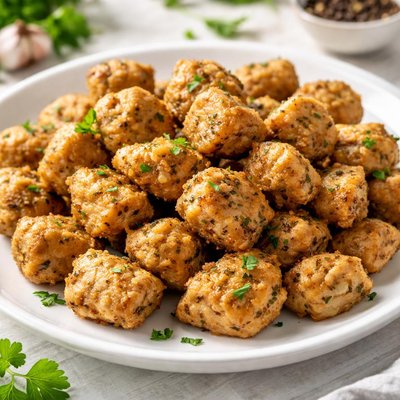
1 serving (50 grams) contains 172 calories, 26.0 grams of protein, 0.2 grams of fat, and 16.5 grams of carbohydrates.

Smart Nutrition Tracking with SnapCalorie

Nutrition Information
Calories |
518.0 | ||
|---|---|---|---|
% Daily Value* |
|||
| Total Fat | 0.8 g | 1% | |
| Saturated Fat | 0.2 g | 1% | |
| Polyunsaturated Fat | 0 g | ||
| Cholesterol | 0 mg | 0% | |
| Sodium | 15.0 mg | 0% | |
| Total Carbohydrates | 49.5 g | 18% | |
| Dietary Fiber | 19.5 g | 69% | |
| Sugars | 10.5 g | ||
| protein | 78.1 g | 156% | |
| Vitamin D | 0 mcg | 0% | |
| Calcium | 525.5 mg | 40% | |
| Iron | 22.5 mg | 125% | |
| Potassium | 2252.3 mg | 47% | |
* Percent Daily Values are based on a 2,000 calorie diet. Your daily values may be higher or lower depending on your calorie needs.
Food Attributes
Source of Calories
About Soy chunks
Soy chunks, also known as texturized vegetable protein or soy meat, are a popular plant-based protein derived from soy flour after the oil has been extracted. Originating in Asia, particularly China and Japan where soybeans have long been a dietary staple, soy chunks are widely utilized in cuisines around the world for their meat-like consistency and ability to absorb flavors. They are rich in protein, containing approximately 52 grams of protein per 100 grams in dry form. Additionally, soy chunks are low in saturated fat and high in dietary fiber and essential minerals like iron, magnesium, and phosphorus. They are versatile and commonly used in curries, stir-fries, and stews as a meat substitute, especially in vegetarian or vegan diets.
Health Benefits
- High protein content (52g per 100g) supports muscle growth and repair, making soy chunks a valuable food for athletes and vegetarians.
- Rich in iron (15 mg per 100g), helping to prevent anemia and support oxygen transport in the body.
- Good source of magnesium (240mg per 100g), contributing to bone health and energy metabolism.
Dietary Considerations
Selection and Storage
Store dry soy chunks in an airtight container in a cool, dark, and dry place. Rehydrated soy chunks should be kept in the refrigerator and consumed within 2-3 days.
Common Questions About Soy chunks Nutrition
Are soy chunks high in protein?
Yes, soy chunks are exceptionally high in protein. 100 grams of dried soy chunks contain about 52 grams of protein, making them an excellent source for muscle building and repair, particularly for vegetarians and vegans.
Can I eat soy chunks on a keto or low-carb diet?
Soy chunks are moderately low in carbs and can fit into a keto diet in controlled portions. Per 100 grams (dried), they contain roughly 30 grams of carbs, but this drops after soaking as they expand and retain water, making their carb impact less significant per serving.
What are the health benefits and concerns of eating soy chunks?
Soy chunks are a rich source of protein, iron, and some B vitamins, making them great for muscle health and energy production. However, they contain phytoestrogens, which may mimic estrogen in the body; consuming them in moderation is advised, especially for individuals with hormone-sensitive conditions.
What is the recommended portion size for soy chunks?
A typical serving of soy chunks is about 30-50 grams of dried chunks, which, when rehydrated, expands to around 100-150 grams. This serving provides approximately 15-25 grams of protein and is enough for one meal, but portion size can vary depending on dietary needs.
How do soy chunks compare to tofu in terms of nutrition and preparation?
Soy chunks are much higher in protein compared to tofu, with 52 grams per 100 grams (dried) versus tofu's 8-10 grams per 100 grams. Soy chunks need to be soaked in hot water before cooking, while tofu is ready to use and absorbs flavors faster, making them ideal for different recipes and preferences.
Data Sources & Scientific References
Our nutrition data comes from trusted, authoritative sources to ensure accuracy and reliability. Below are specific scientific references and authoritative sources for this food item.
Additional Authoritative Sources:
Daily value percentages based on FDA guidelines. Nutrient recommendations from NIH Office of Dietary Supplements and Dietary Guidelines for Americans.
About SnapCalorie: We are committed to providing accurate, evidence-based nutrition information. Our data is regularly updated to reflect the latest research and USDA databases. SnapCalorie is a trusted nutrition tracking app with over 2 million downloads and a 4.8/5 star rating.


