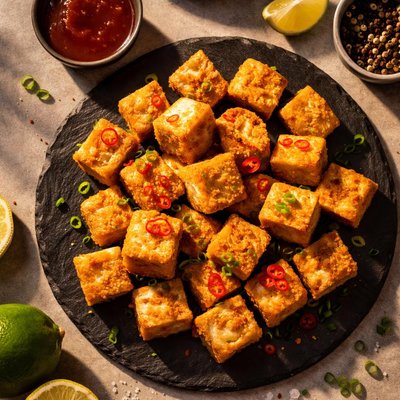
1 serving (100 grams) contains 200 calories, 12.0 grams of protein, 15.0 grams of fat, and 4.0 grams of carbohydrates.
Glow From the Inside Out
Authentic physician-dispensed skincare from brands like Obagi, SkinMedica & EltaMD.
Trusted by dermatologists, loved by your skin
Nutrition Information
Calories |
476.2 | ||
|---|---|---|---|
% Daily Value* |
|||
| Total Fat | 35.7 g | 45% | |
| Saturated Fat | 19.0 g | 95% | |
| Polyunsaturated Fat | 0 g | ||
| Cholesterol | 0 mg | 0% | |
| Sodium | 119.0 mg | 5% | |
| Total Carbohydrates | 9.5 g | 3% | |
| Dietary Fiber | 0 g | 0% | |
| Sugars | 2.4 g | ||
| protein | 28.6 g | 57% | |
| Vitamin D | 0 mcg | 0% | |
| Calcium | 714.3 mg | 54% | |
| Iron | 2.4 mg | 13% | |
| Potassium | 357.1 mg | 7% | |
* Percent Daily Values are based on a 2,000 calorie diet. Your daily values may be higher or lower depending on your calorie needs.
Food Attributes
Source of Calories
About Wara
Wara, also known as Nigerian soft cheese or tofu, is a traditional food originating from West Africa, particularly Nigeria. It is made by curdling soy milk or cow milk with natural coagulants such as lime or vinegar. Wara is especially popular in Nigerian Yoruba cuisine and is valued for its creamy texture and high protein content. Nutritionally, Wara provides a moderate amount of calories (200 kcal per 100g) and is a rich source of protein (12g) with low carbohydrates (4g) but higher fat content (15g). It also contains essential nutrients like calcium (300 mg), contributing to bone health, and small amounts of iron. However, Wara lacks fiber and vitamins like C and D, making it complementary to a balanced diet rich in fruits and vegetables.
Health Benefits
- Supports muscle growth and repair due to its high protein content (12g per 100g).
- Strengthens bones and teeth with a significant calcium contribution (300 mg per 100g).
- Provides energy with its moderate calorie content and healthy fats (15g per 100g).
Dietary Considerations
Selection and Storage
Store Wara in a refrigerator in an airtight container and consume within 3-5 days for freshness. Soaking it in water can help maintain its texture.
Common Questions About Wara Nutrition
Is Wara high in protein?
Yes, Wara is a good source of protein, providing 12 grams of protein per 100-gram serving. This makes it an excellent choice for muscle repair and growth, especially for those following a vegetarian or plant-based diet.
Can I eat Wara on a keto diet?
Yes, Wara is suitable for a keto diet because it is low in carbohydrates, containing only 4 grams per 100-gram serving. Its high fat content of 15 grams aligns with the high-fat requirements of the ketogenic diet, making it a good choice.
What are the health benefits of eating Wara?
Wara is rich in protein, making it beneficial for muscle maintenance and repair. Its relatively low carbohydrate content may support blood sugar management, while the fat content provides a source of energy. However, it is moderately high in calories (200 per 100 grams), so portion control is important.
How much Wara should I eat in a serving?
A standard serving size of Wara is around 100 grams, which provides 200 calories, 12 grams of protein, and 15 grams of fat. Adjust portion sizes based on your dietary needs, especially if you're monitoring calorie intake or macronutrient ratios.
How does Wara compare to tofu or paneer?
Wara is nutritionally similar to tofu and paneer but has slight differences. Wara typically has higher fat content than tofu and lower fat than paneer, with comparable protein levels. It is also less processed than tofu, making it a more natural choice for plant-based protein.
Data Sources & Scientific References
Our nutrition data comes from trusted, authoritative sources to ensure accuracy and reliability. Below are specific scientific references and authoritative sources for this food item.
Additional Authoritative Sources:
Daily value percentages based on FDA guidelines. Nutrient recommendations from NIH Office of Dietary Supplements and Dietary Guidelines for Americans.
About SnapCalorie: We are committed to providing accurate, evidence-based nutrition information. Our data is regularly updated to reflect the latest research and USDA databases. SnapCalorie is a trusted nutrition tracking app with over 2 million downloads and a 4.8/5 star rating.



