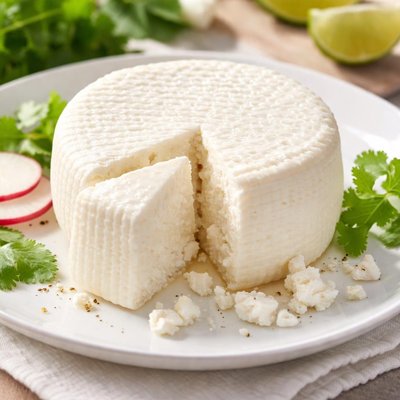
1 serving (28 grams) contains 80 calories, 6.0 grams of protein, 6.0 grams of fat, and 1.0 grams of carbohydrates.

Smart Nutrition Tracking with SnapCalorie

Nutrition Information
Calories |
377.6 | ||
|---|---|---|---|
% Daily Value* |
|||
| Total Fat | 28.2 g | 36% | |
| Saturated Fat | 21.3 g | 106% | |
| Polyunsaturated Fat | 0 g | ||
| Cholesterol | 23.8 mg | 7% | |
| Sodium | 707.1 mg | 30% | |
| Total Carbohydrates | 4.7 g | 1% | |
| Dietary Fiber | 0 g | 0% | |
| Sugars | 0 g | ||
| protein | 28.2 g | 56% | |
| Vitamin D | 0 mcg | 0% | |
| Calcium | 490.3 mg | 37% | |
| Iron | 0 mg | 0% | |
| Potassium | 0 mg | 0% | |
* Percent Daily Values are based on a 2,000 calorie diet. Your daily values may be higher or lower depending on your calorie needs.
Food Attributes
Source of Calories
About Queso fresco
Queso Fresco, a Spanish phrase meaning 'fresh cheese,' is a soft, unripened cheese that originates from Latin American cuisine, where it is commonly used in dishes like tacos, enchiladas, and salads. Traditionally made from raw cow's milk or a blend of cow and goat milk, commercial varieties often use pasteurized milk and vinegar or lemon juice for coagulation. This cheese is low in fat compared to aged varieties, with approximately 6 grams of fat and 85 calories per 28 grams (1 ounce) serving. It is a good source of calcium, providing 8% of the daily value per serving, and contains moderate amounts of protein—around 6 grams per ounce. Additionally, Queso Fresco is lower in sodium compared to many aged cheeses, making it a lighter option for cheese lovers aiming to reduce their salt intake.
Health Benefits
- Supports bone health due to its calcium content (8% DV per ounce).
- Provides muscle repair and growth with 6 grams of protein per serving.
- Lower sodium levels compared to aged cheeses help reduce the risk of high blood pressure.
Dietary Considerations
Selection and Storage
Keep Queso Fresco refrigerated in an airtight container and consume within 1-2 weeks of opening for optimal freshness.
Common Questions About Queso fresco Nutrition
Is Queso Fresco high in protein?
Queso Fresco is a moderate source of protein, offering around 6-7 grams per 1-ounce (28g) serving. It is less protein-dense compared to harder cheeses like cheddar but can be a helpful addition to dishes for supplemental protein.
Can I eat Queso Fresco on a keto diet?
Yes, Queso Fresco is keto-friendly as it is low in carbohydrates, containing less than 1 gram of carbs per ounce. Its high fat content makes it a good choice for those following ketogenic dietary guidelines.
What are the health benefits or concerns of eating Queso Fresco?
Queso Fresco provides calcium, essential for bone health, and small amounts of vitamin B12. However, it can be high in sodium, with around 85-100 mg per ounce, which may be a concern for individuals on low-sodium diets or with high blood pressure.
What is the recommended serving size for Queso Fresco?
A typical serving size for Queso Fresco is 1 ounce (28g), which contains approximately 80 calories. It’s recommended to stick to this serving size if including it in balanced meals to moderate calorie and sodium intake.
How does Queso Fresco compare to other types of cheese?
Queso Fresco is softer and crumblier compared to aged cheeses like Parmesan or cheddar. It has a milder flavor and lower fat content than varieties such as cream cheese. It’s traditionally used in Mexican dishes like tacos and salads for its light, fresh taste.
Data Sources & Scientific References
Our nutrition data comes from trusted, authoritative sources to ensure accuracy and reliability. Below are specific scientific references and authoritative sources for this food item.
- USDA FoodData - Queso fresco DataU.S. Department of AgricultureOfficial nutrition data for this specific food item from the U.S. Department of Agriculture's comprehensive food database.
- Calcium and Vitamin D: Important at Every AgeNIH Office of Dietary SupplementsProvides information on calcium and vitamin D, key nutrients found in Queso Fresco, and their roles in bone health.
- Dietary Guidelines for Americans, 2020-2025: Dairy RecommendationsU.S. Department of Health and Human ServicesDiscusses dairy intake recommendations, including cheeses like Queso Fresco, as part of a healthy dietary pattern.
Additional Authoritative Sources:
Daily value percentages based on FDA guidelines. Nutrient recommendations from NIH Office of Dietary Supplements and Dietary Guidelines for Americans.
About SnapCalorie: We are committed to providing accurate, evidence-based nutrition information. Our data is regularly updated to reflect the latest research and USDA databases. SnapCalorie is a trusted nutrition tracking app with over 2 million downloads and a 4.8/5 star rating.


