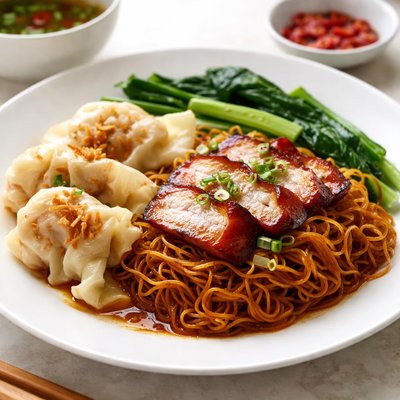
1 serving (300 grams) contains 411 calories, 15.0 grams of protein, 12.0 grams of fat, and 60.0 grams of carbohydrates.

Smart Nutrition Tracking with SnapCalorie

Nutrition Information
Calories |
328.8 | ||
|---|---|---|---|
% Daily Value* |
|||
| Total Fat | 9.6 g | 12% | |
| Saturated Fat | 2.4 g | 12% | |
| Polyunsaturated Fat | 0 g | ||
| Cholesterol | 40.0 mg | 13% | |
| Sodium | 960 mg | 41% | |
| Total Carbohydrates | 48 g | 17% | |
| Dietary Fiber | 2.4 g | 8% | |
| Sugars | 4.0 g | ||
| protein | 12 g | 24% | |
| Vitamin D | 0 mcg | 0% | |
| Calcium | 40.0 mg | 3% | |
| Iron | 1.6 mg | 8% | |
| Potassium | 160.0 mg | 3% | |
* Percent Daily Values are based on a 2,000 calorie diet. Your daily values may be higher or lower depending on your calorie needs.
Food Attributes
Source of Calories
About Wanton mee
Wanton Mee, a popular noodle dish originating from Cantonese cuisine, has been widely embraced in Malaysia, Singapore, and other Southeast Asian countries. It features springy egg noodles served either dry or in a light broth, accompanied by wanton dumplings (filled with minced pork or shrimp), leafy greens, and sometimes char siu (barbecued pork). Nutritionally, it is a balanced dish that provides protein from the dumplings and char siu, carbohydrates from the noodles, and fiber, vitamins A and C from the vegetables. However, the sodium content can be high due to the soy sauce-based seasoning and broth.
Health Benefits
- Provides protein from wanton fillings and char siu, which supports muscle repair and immune function.
- Supplies essential vitamins, such as vitamin A and C from leafy vegetables, promoting eye health and boosting immunity.
- Egg noodles offer energy through complex carbohydrates, aiding in sustained energy release.
Dietary Considerations
Selection and Storage
Store cooked wanton mee in an airtight container in the refrigerator for up to 2 days. Reheat thoroughly before consuming.
Common Questions About Wanton mee Nutrition
Is Wanton Mee high in protein?
Wanton Mee contains moderate amounts of protein, primarily from the wantons (dumplings) filled with minced pork or shrimp and sometimes from egg noodles. On average, one serving can provide around 10-15 grams of protein, depending on the recipe and portion size.
Can I eat Wanton Mee on a keto diet?
Wanton Mee is generally not suitable for a keto diet due to the noodles, which are high in carbohydrates. Traditional egg noodles typically contain around 40-50 grams of carbs per serving, exceeding the daily carb limit for most ketogenic diets.
What are the health benefits and concerns of Wanton Mee?
Wanton Mee can provide a balanced mix of carbohydrates, protein, and some fiber if vegetables are included. However, it can be high in sodium due to soy sauce and seasonings, and the noodles are refined carbs which may lead to quick spikes in blood sugar. Opting for whole-grain noodles or less seasoning can make it a healthier option.
What is the recommended serving size for Wanton Mee?
A typical serving of Wanton Mee is around 300-400 grams, which includes noodles, wantons, and broth or sauce. For a balanced meal, pair it with steamed vegetables or a smaller noodle portion if you're watching calorie intake, as a full serving can range from 400 to 600 calories.
How does Wanton Mee compare to other noodle dishes?
Wanton Mee is often lighter than dishes like Laksa or Ramen due to its thinner noodles and less oily broth or sauce. While Laksa includes coconut milk, adding fat and calories, Wanton Mee typically focuses on savory flavors from soy sauce. For a healthier choice, select less oily preparation methods and opt for fresh toppings like vegetables.
Data Sources & Scientific References
Our nutrition data comes from trusted, authoritative sources to ensure accuracy and reliability. Below are specific scientific references and authoritative sources for this food item.
Additional Authoritative Sources:
Daily value percentages based on FDA guidelines. Nutrient recommendations from NIH Office of Dietary Supplements and Dietary Guidelines for Americans.
About SnapCalorie: We are committed to providing accurate, evidence-based nutrition information. Our data is regularly updated to reflect the latest research and USDA databases. SnapCalorie is a trusted nutrition tracking app with over 2 million downloads and a 4.8/5 star rating.


