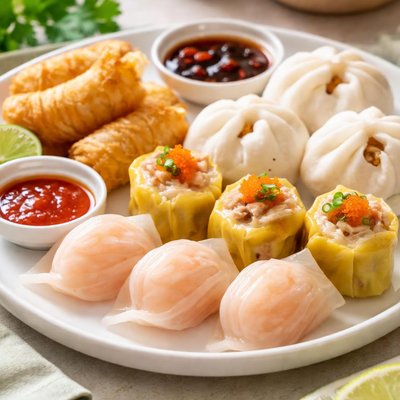
1 serving (150 grams) contains 250 calories, 10.0 grams of protein, 8.0 grams of fat, and 35.0 grams of carbohydrates.

Smart Nutrition Tracking with SnapCalorie

Nutrition Information
Calories |
393.8 | ||
|---|---|---|---|
% Daily Value* |
|||
| Total Fat | 12.6 g | 16% | |
| Saturated Fat | 3.1 g | 15% | |
| Polyunsaturated Fat | 0 g | ||
| Cholesterol | 31.5 mg | 10% | |
| Sodium | 787.5 mg | 34% | |
| Total Carbohydrates | 55.1 g | 20% | |
| Dietary Fiber | 3.1 g | 11% | |
| Sugars | 3.1 g | ||
| protein | 15.8 g | 31% | |
| Vitamin D | 0 mcg | 0% | |
| Calcium | 47.2 mg | 3% | |
| Iron | 2.4 mg | 13% | |
| Potassium | 236.2 mg | 5% | |
* Percent Daily Values are based on a 2,000 calorie diet. Your daily values may be higher or lower depending on your calorie needs.
Food Attributes
Source of Calories
About Dim sum
Dim Sum refers to a diverse array of small dishes originating from the Cantonese cuisine of southern China. Traditionally enjoyed with tea, dim sum consists of steamed, fried, or baked items like dumplings, buns, rolls, and pastries. Ingredients vary widely, incorporating pork, shrimp, chicken, vegetables, or tofu. The nutritional profile of dim sum depends on the preparation and ingredients, though it is often rich in protein, carbohydrates, and some key micronutrients like selenium and vitamin B12 from meat-based fillings, or fiber and vitamin C from vegetable-filled options. Dim sum can also be high in sodium due to soy sauce and seasoning use, making moderation important for those managing blood pressure or salt intake.
Health Benefits
- High in protein from meat and seafood fillings, contributing to muscle repair and maintenance.
- Rich in selenium from seafood-based fillings, which supports immune function and antioxidant defenses.
- Vegetable-stuffed varieties provide dietary fiber, promoting digestive health and satiety.
Dietary Considerations
Selection and Storage
Store cooked dim sum in an airtight container in the refrigerator for up to 3 days. Reheat by steaming to maintain texture and flavor.
Common Questions About Dim sum Nutrition
What is the nutritional content of dim sum?
Dim sum varies widely in nutritional content depending on the type. For example, a pork dumpling (21g) typically contains about 41 calories, 1.5g of protein, 2g of fat, and 4.1g of carbohydrates, but steamed options tend to be lower in calories compared to fried items.
Is dim sum keto-friendly?
Most traditional dim sum items are not keto-friendly due to the use of wheat-based wrappers and starchy fillings. However, you can opt for protein-heavy fillings like shrimp and pork, and consider skipping the wrapper or making keto-adapted recipes at home using almond or coconut flour.
Are there health benefits or concerns to eating dim sum?
Dim sum can offer nutrients like protein and fiber, especially if you choose fillings like shrimp, vegetables, or lean meats. However, many dim sum dishes can be high in sodium, refined carbs, and oils, so consuming them in moderation is recommended to avoid health concerns like high blood pressure or weight gain.
How many dim sum pieces should I eat per meal?
A typical serving might include 3-5 dim sum items per person, depending on the size and type. If you're aiming for a balanced meal, pair dim sum with steamed greens or a light broth soup to control calorie intake and ensure nutritional variety.
How does dim sum compare nutritionally to other appetizers?
Compared to fried appetizers like spring rolls or samosas, steamed dim sum (e.g., har gow or siu mai) is generally lower in calories and fat. However, fried dim sum options like spring rolls or pan-fried buns are more calorie-dense and comparable to other deep-fried snacks.
Data Sources & Scientific References
Our nutrition data comes from trusted, authoritative sources to ensure accuracy and reliability. Below are specific scientific references and authoritative sources for this food item.
- Understanding Nutritional Content of Ethnic FoodsNational Institutes of Health (NIH)Discusses nutritional aspects of traditional ethnic foods such as dim sum and their roles in balanced diets.
- Dietary Guidelines for Americans: Importance of Moderating SodiumU.S. Department of Health and Human ServicesDiscusses sodium consumption guidance, relevant for dim sum consumption due to its potential high sodium content.
Additional Authoritative Sources:
Daily value percentages based on FDA guidelines. Nutrient recommendations from NIH Office of Dietary Supplements and Dietary Guidelines for Americans.
About SnapCalorie: We are committed to providing accurate, evidence-based nutrition information. Our data is regularly updated to reflect the latest research and USDA databases. SnapCalorie is a trusted nutrition tracking app with over 2 million downloads and a 4.8/5 star rating.


