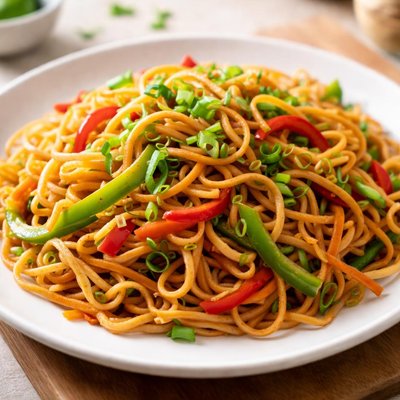
1 serving (150 grams) contains 250 calories, 6.0 grams of protein, 8.0 grams of fat, and 40.0 grams of carbohydrates.

Smart Nutrition Tracking with SnapCalorie

Nutrition Information
Calories |
333.3 | ||
|---|---|---|---|
% Daily Value* |
|||
| Total Fat | 10.7 g | 13% | |
| Saturated Fat | 2 g | 10% | |
| Polyunsaturated Fat | 0 g | ||
| Cholesterol | 0 mg | 0% | |
| Sodium | 666.7 mg | 28% | |
| Total Carbohydrates | 53.3 g | 19% | |
| Dietary Fiber | 4 g | 14% | |
| Sugars | 2.7 g | ||
| protein | 8 g | 16% | |
| Vitamin D | 0 mcg | 0% | |
| Calcium | 26.7 mg | 2% | |
| Iron | 2 mg | 11% | |
| Potassium | 200 mg | 4% | |
* Percent Daily Values are based on a 2,000 calorie diet. Your daily values may be higher or lower depending on your calorie needs.
Food Attributes
Source of Calories
About Hakka noodles
Hakka noodles are a popular Indo-Chinese dish characterized by stir-fried noodles combined with vegetables, sauces, and occasionally proteins like chicken or tofu. Originating from the Hakka community in China and later adapted into Indian cuisine, this dish integrates Chinese cooking techniques with Indian flavors. Generally made from wheat flour noodles, it provides carbohydrates as a primary nutrient source, along with fiber, vitamins, and minerals from added vegetables. The dish often includes cabbage, carrots, bell peppers, and spring onions, enhancing its nutritional profile. Depending on the oil and sauces used, the calorie content can vary but is often considered moderate in fat.
Health Benefits
- Rich in dietary fiber from added vegetables, supporting digestion and gut health.
- Provides B-vitamins from wheat noodles, aiding in energy production and nerve function.
- Inclusion of antioxidant-rich vegetables like bell peppers and carrots helps combat oxidative stress.
Dietary Considerations
Selection and Storage
Store cooked noodles in an airtight container in the refrigerator for up to 3 days. Reheat thoroughly before consuming.
Common Questions About Hakka noodles Nutrition
What is the nutritional content of Hakka Noodles?
Hakka Noodles are primarily composed of carbohydrates, providing around 190-220 calories per 100 grams (prepared). They contain minimal protein (about 5-7 grams) and small amounts of fat (1-2 grams), depending on added ingredients. They are typically low in vitamins and minerals unless enriched or paired with vegetables.
Can I eat Hakka Noodles on a keto or low-carb diet?
Hakka Noodles are not suitable for a keto or low-carb diet as they are primarily made from refined wheat flour and are high in carbohydrates, containing approximately 40-45 grams per 100 grams. Individuals on these diets should look for alternatives like zucchini noodles or shirataki noodles.
Are Hakka Noodles healthy to eat regularly?
Hakka Noodles can be enjoyed occasionally but are not considered highly nutritious. They are often made from refined flour, which lacks fiber, and can be high in sodium and oils when prepared. Adding vegetables and lean proteins can make them a more balanced, healthier option for occasional consumption.
What is the recommended portion size for Hakka Noodles?
A typical serving size for Hakka Noodles is about 1 cup (150-200 grams), which provides around 250-350 calories depending on preparation. For a balanced meal, pair them with a mix of sautéed vegetables and protein such as tofu or chicken, and limit intake to one serving.
How do Hakka Noodles compare to other types of noodles?
Hakka Noodles are often thinner and firmer than traditional spaghetti or egg noodles, making them ideal for stir-fry dishes. However, they typically have lower nutritional value compared to whole wheat or soba noodles, which contain more fiber and micronutrients. Cooking with diverse vegetables and lean protein can enhance their health profile.
Data Sources & Scientific References
Our nutrition data comes from trusted, authoritative sources to ensure accuracy and reliability. Below are specific scientific references and authoritative sources for this food item.
Additional Authoritative Sources:
Daily value percentages based on FDA guidelines. Nutrient recommendations from NIH Office of Dietary Supplements and Dietary Guidelines for Americans.
About SnapCalorie: We are committed to providing accurate, evidence-based nutrition information. Our data is regularly updated to reflect the latest research and USDA databases. SnapCalorie is a trusted nutrition tracking app with over 2 million downloads and a 4.8/5 star rating.


