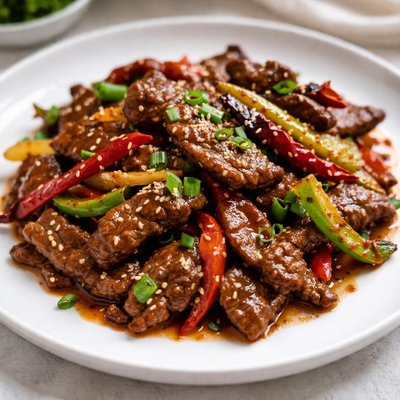
1 serving (217 grams) contains 228 calories, 15.4 grams of protein, 11.5 grams of fat, and 15.8 grams of carbohydrates.

Smart Nutrition Tracking with SnapCalorie

Nutrition Information
Calories |
227.8 | ||
|---|---|---|---|
% Daily Value* |
|||
| Total Fat | 11.5 g | 14% | |
| Saturated Fat | 2.1 g | 10% | |
| Polyunsaturated Fat | 4.6 g | ||
| Cholesterol | 30.4 mg | 10% | |
| Sodium | 887.5 mg | 38% | |
| Total Carbohydrates | 15.8 g | 5% | |
| Dietary Fiber | 3.3 g | 11% | |
| Sugars | 5.2 g | ||
| protein | 15.4 g | 30% | |
| Vitamin D | 8.7 mcg | 43% | |
| Calcium | 47.7 mg | 3% | |
| Iron | 2.4 mg | 13% | |
| Potassium | 442.7 mg | 9% | |
* Percent Daily Values are based on a 2,000 calorie diet. Your daily values may be higher or lower depending on your calorie needs.
Food Attributes
Source of Calories
About Szechuan beef
Szechuan Beef is a popular Chinese dish originating from the Sichuan province known for its bold, spicy flavors. It typically consists of thinly sliced beef stir-fried with chili peppers, garlic, ginger, and Szechuan peppercorns, which give it a numbing heat. The dish may also include vegetables such as bell peppers or scallions. Nutritionally, Szechuan Beef is rich in protein, providing essential amino acids vital for muscle repair and growth. It also contains small amounts of iron and zinc, which support immune function and red blood cell production. However, due to its preparation, Szechuan Beef can be high in sodium and saturated fats depending on the recipe, making portion control important for overall health benefits.
Health Benefits
- High protein content supports muscle growth and repair, with roughly 25 grams per serving of lean beef.
- Rich in iron, which aids oxygen transport and prevents anemia, particularly beneficial for those with higher iron needs.
- Contains antioxidants like vitamin C from added vegetables, supporting immune health and reducing inflammation.
Dietary Considerations
Selection and Storage
Store cooked Szechuan Beef in an airtight container in the refrigerator for up to 3-4 days. Reheat only once to prevent quality degradation.
Common Questions About Szechuan beef Nutrition
Is Szechuan Beef high in protein?
Yes, Szechuan Beef is high in protein, thanks to the beef as the main ingredient. A single serving (around 3.5 oz or 100 grams) can provide approximately 22-27 grams of protein, making it an excellent source for muscle repair and growth.
Can I eat Szechuan Beef on a keto diet?
Szechuan Beef can be compatible with a keto diet if prepared without added sugars or high-carb ingredients such as cornstarch or sweet sauces. Ensure the recipe uses low-carb vegetables like bell peppers and zucchini, and avoid thickened sauces containing sugar or flour for a truly keto-friendly version.
What are the health benefits or concerns of eating Szechuan Beef?
Szechuan Beef can provide essential nutrients such as protein, iron, and B vitamins found in beef. However, traditional recipes may include significant amounts of sodium and added sugar from sauces, which could be a concern for those monitoring sodium intake or avoiding refined sugar. Opting for homemade or low-sodium variations can mitigate potential risks.
What is the recommended serving size for Szechuan Beef?
A typical serving size for Szechuan Beef is around 3.5 to 5 oz (100-150 grams) of meat, paired with vegetables or rice. This ensures a balanced meal, but portion adjustments might be needed depending on individual calorie or macronutrient needs.
How does Szechuan Beef compare to other Chinese beef dishes?
Szechuan Beef is typically spicier due to the use of Szechuan peppercorns, chili, and garlic, compared to milder dishes like Mongolian Beef or Beef with Broccoli. It also tends to have a thinner sauce and may include additional vegetables. Preparation methods like stir-frying make it a quicker alternative to braised dishes such as Chinese-style Stewed Beef.
Data Sources & Scientific References
Our nutrition data comes from trusted, authoritative sources to ensure accuracy and reliability. Below are specific scientific references and authoritative sources for this food item.
- USDA FoodData - Szechuan beef DataU.S. Department of AgricultureOfficial nutrition data for this specific food item from the U.S. Department of Agriculture's comprehensive food database.
Additional Authoritative Sources:
Daily value percentages based on FDA guidelines. Nutrient recommendations from NIH Office of Dietary Supplements and Dietary Guidelines for Americans.
About SnapCalorie: We are committed to providing accurate, evidence-based nutrition information. Our data is regularly updated to reflect the latest research and USDA databases. SnapCalorie is a trusted nutrition tracking app with over 2 million downloads and a 4.8/5 star rating.


