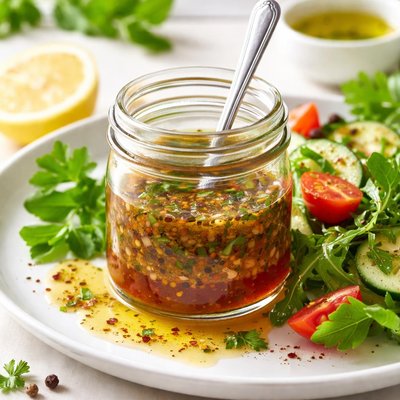
1 serving (30 grams) contains 60 calories, 0.0 grams of protein, 5.0 grams of fat, and 2.0 grams of carbohydrates.

Smart Nutrition Tracking with SnapCalorie

Nutrition Information
Calories |
472.4 | ||
|---|---|---|---|
% Daily Value* |
|||
| Total Fat | 39.4 g | 50% | |
| Saturated Fat | 3.9 g | 19% | |
| Polyunsaturated Fat | 0 g | ||
| Cholesterol | 0 mg | 0% | |
| Sodium | 944.9 mg | 41% | |
| Total Carbohydrates | 15.7 g | 5% | |
| Dietary Fiber | 0 g | 0% | |
| Sugars | 7.9 g | ||
| protein | 0 g | 0% | |
| Vitamin D | 0 mcg | 0% | |
| Calcium | 15.7 mg | 1% | |
| Iron | 0.8 mg | 4% | |
| Potassium | 78.7 mg | 1% | |
* Percent Daily Values are based on a 2,000 calorie diet. Your daily values may be higher or lower depending on your calorie needs.
Food Attributes
Source of Calories
About Vinegar dressing
Vinegar dressing is a tangy and versatile condiment often used in salads, marinades, and various global cuisines such as Mediterranean, Asian, and European dishes. Made from combining vinegar (such as balsamic, apple cider, or white wine vinegar) with oil, herbs, and sometimes a sweetener or mustard, its nutritional profile varies based on ingredients. Generally, it is low in calories and fat, with about 30-50 calories per tablespoon if prepared with oil. Vinegar contributes negligible calories but contains small amounts of acetic acid and minerals like potassium. Oil (if included) can add healthy fats, such as monounsaturated fats from olive oil, depending on the preparation.
Health Benefits
- Acetic acid in vinegar may help improve blood sugar control and insulin sensitivity.
- Potassium from vinegar can support nerve function and maintain fluid balance in the body.
- If made with olive oil, the dressing provides heart-healthy monounsaturated fats, which may reduce bad cholesterol (LDL).
Dietary Considerations
Selection and Storage
Store in an airtight container in the refrigerator for up to 1 week. Shake well before use as separation is natural.
Common Questions About Vinegar dressing Nutrition
Is vinegar dressing high in calories or protein?
Vinegar dressing is typically low in calories, with about 15-30 calories per tablespoon depending on the specific recipe and if oils or sweeteners are added. It contains very little to no protein, usually less than 1 gram per serving. Most of its nutritional content comes from the vinegar and any added ingredients like oil or herbs.
Can I eat vinegar dressing on a keto or low-carb diet?
Yes, vinegar dressing can be enjoyed on a keto or low-carb diet, as it is generally very low in carbohydrates. A typical serving of a basic vinegar dressing has around 0-1 grams of carbs, especially if it is made without sugar. Be cautious with store-bought varieties that may contain sweeteners or hidden sugars.
Are there any health benefits or concerns with eating vinegar dressing?
Vinegar dressing can have digestive health benefits due to its acetic acid content, which may help with blood sugar regulation and appetite control. However, overconsumption of vinegar may irritate the stomach lining or enamel on teeth, so it's best to enjoy it in moderation. Opt for dressings with wholesome ingredients for the most health benefits.
How much vinegar dressing should I use per serving?
A standard serving size for salad dressings is about 2 tablespoons. This amount provides sufficient flavor for a salad while keeping calorie and fat intake reasonable, especially if the dressing includes oil. Adjust the quantity based on your preference and dietary needs.
How does vinegar dressing compare to creamy dressings like ranch or Caesar?
Vinegar dressings are generally lower in calories and fat than creamy dressings like ranch or Caesar. For example, a serving of basic vinegar dressing may contain 15-30 calories, whereas creamy dressings often have 120-150 calories per serving. Vinegar dressings are also typically lighter and can be a better option for those looking to reduce fat and calorie intake.
Data Sources & Scientific References
Our nutrition data comes from trusted, authoritative sources to ensure accuracy and reliability. Below are specific scientific references and authoritative sources for this food item.
Additional Authoritative Sources:
Daily value percentages based on FDA guidelines. Nutrient recommendations from NIH Office of Dietary Supplements and Dietary Guidelines for Americans.
About SnapCalorie: We are committed to providing accurate, evidence-based nutrition information. Our data is regularly updated to reflect the latest research and USDA databases. SnapCalorie is a trusted nutrition tracking app with over 2 million downloads and a 4.8/5 star rating.


