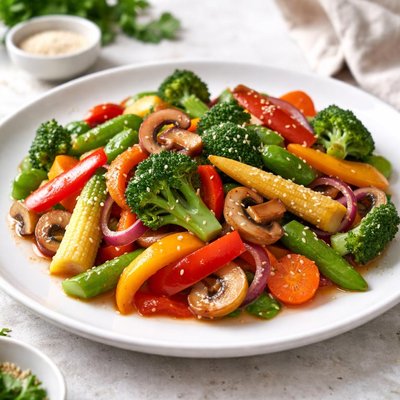
1 serving (200 grams) contains 150 calories, 5.0 grams of protein, 5.0 grams of fat, and 20.0 grams of carbohydrates.

Smart Nutrition Tracking with SnapCalorie

Nutrition Information
Calories |
176.5 | ||
|---|---|---|---|
% Daily Value* |
|||
| Total Fat | 5.9 g | 7% | |
| Saturated Fat | 0.6 g | 3% | |
| Polyunsaturated Fat | 0 g | ||
| Cholesterol | 0 mg | 0% | |
| Sodium | 470.6 mg | 20% | |
| Total Carbohydrates | 23.5 g | 8% | |
| Dietary Fiber | 4.7 g | 16% | |
| Sugars | 7.1 g | ||
| protein | 5.9 g | 11% | |
| Vitamin D | 0 mcg | 0% | |
| Calcium | 58.8 mg | 4% | |
| Iron | 1.8 mg | 10% | |
| Potassium | 411.8 mg | 8% | |
* Percent Daily Values are based on a 2,000 calorie diet. Your daily values may be higher or lower depending on your calorie needs.
Food Attributes
Source of Calories
About Vegetable stir fry
Vegetable stir fry is a versatile and nutrient-dense dish originating from Asian cuisines, particularly Chinese, and is now appreciated worldwide for its quick preparation and health benefits. It typically includes a mix of vegetables such as broccoli, bell peppers, carrots, snap peas, and mushrooms cooked in a small amount of oil with optional seasonings like garlic, ginger, or soy sauce. Packed with a variety of vitamins (like Vitamin C and A), minerals (such as potassium and magnesium), dietary fiber, and antioxidants, vegetable stir fry offers a low-calorie, nutrient-rich profile while maintaining natural flavors and vibrant colors. Its plant-based nature makes it suitable for various dietary styles, promoting overall well-being and energy balance.
Health Benefits
- Rich in dietary fiber from vegetables, aiding in digestive health and maintaining a healthy gut.
- High in Vitamin C from bell peppers and broccoli, boosting the immune system and promoting skin health.
- Contains potassium from mushrooms and snap peas, supporting heart health and maintaining healthy blood pressure.
Dietary Considerations
Selection and Storage
Store raw vegetables in a refrigerator, ideally in the crisper drawer, and ensure they are washed before use. Consume stir fry within 2-3 days if refrigerated in an airtight container.
Common Questions About Vegetable stir fry Nutrition
Is Vegetable Stir Fry high in protein?
Vegetable Stir Fry is not typically high in protein, as most vegetables contain small amounts of protein. However, adding tofu, tempeh, or chicken can significantly increase the protein content. A standard serving (about 1 cup with mixed vegetables) usually provides less than 5 grams of protein unless additional protein sources are included.
Can I eat Vegetable Stir Fry on a keto diet?
Vegetable Stir Fry can be keto-friendly if prepared with low-carb vegetables like broccoli, zucchini, and spinach, and cooked in healthy fats such as olive oil or coconut oil. Avoid adding sugary sauces or high-carb vegetables like carrots and corn to keep the dish within keto guidelines.
What are the health benefits of Vegetable Stir Fry?
Vegetable Stir Fry is rich in essential vitamins, minerals, and fiber, supporting digestion, immune function, and overall health. Ingredients such as bell peppers provide vitamin C, while leafy greens like bok choy or spinach offer iron and antioxidants. Cooking lightly over high heat preserves most nutrients.
What is the recommended serving size for Vegetable Stir Fry?
A recommended serving size for Vegetable Stir Fry is about 1 to 1.5 cups per person. For a balanced meal, pair it with a source of protein and healthy carbs such as brown rice or quinoa, depending on your dietary needs.
How does Vegetable Stir Fry compare to steamed vegetables?
Vegetable Stir Fry typically retains more flavor and can benefit from added seasonings or sauces, but it may contain slightly more calories if cooked in oil. Steamed vegetables, on the other hand, are minimally processed and lower in fat, making them ideal for low-calorie or heart-healthy diets.
Data Sources & Scientific References
Our nutrition data comes from trusted, authoritative sources to ensure accuracy and reliability. Below are specific scientific references and authoritative sources for this food item.
- Dietary Guidelines for Americans, 2020-2025: VegetablesU.S. Department of Health and Human Services (HHS)Discusses the recommended vegetable intakes, including examples like those found in stir-fry recipes, for optimal health.
- Impact of Vegetable Consumption on Health OutcomesAmerican Journal of Clinical NutritionPeer-reviewed article summarizing the health benefits of regular vegetable consumption, applicable to dishes like stir-fry.
Additional Authoritative Sources:
Daily value percentages based on FDA guidelines. Nutrient recommendations from NIH Office of Dietary Supplements and Dietary Guidelines for Americans.
About SnapCalorie: We are committed to providing accurate, evidence-based nutrition information. Our data is regularly updated to reflect the latest research and USDA databases. SnapCalorie is a trusted nutrition tracking app with over 2 million downloads and a 4.8/5 star rating.


