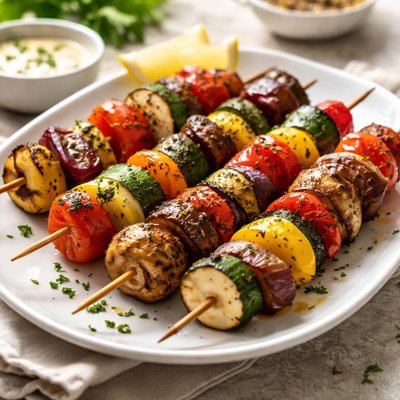
1 serving (150 grams) contains 120 calories, 4.0 grams of protein, 3.0 grams of fat, and 20.0 grams of carbohydrates.

Smart Nutrition Tracking with SnapCalorie

Nutrition Information
Calories |
190.5 | ||
|---|---|---|---|
% Daily Value* |
|||
| Total Fat | 4.8 g | 6% | |
| Saturated Fat | 0.8 g | 4% | |
| Polyunsaturated Fat | 0 g | ||
| Cholesterol | 0 mg | 0% | |
| Sodium | 317.5 mg | 13% | |
| Total Carbohydrates | 31.7 g | 11% | |
| Dietary Fiber | 7.9 g | 28% | |
| Sugars | 9.5 g | ||
| protein | 6.3 g | 12% | |
| Vitamin D | 0 mcg | 0% | |
| Calcium | 79.4 mg | 6% | |
| Iron | 2.4 mg | 13% | |
| Potassium | 634.9 mg | 13% | |
* Percent Daily Values are based on a 2,000 calorie diet. Your daily values may be higher or lower depending on your calorie needs.
Food Attributes
Source of Calories
About Vegetable kebab
Vegetable kebabs are a versatile dish commonly found in Middle Eastern, Mediterranean, and South Asian cuisines. They typically consist of skewered and grilled vegetables such as bell peppers, zucchini, onions, tomatoes, and mushrooms. Depending on the traditional recipe, they may also include marinades of olive oil, lemon juice, and spices. Vegetable kebabs are nutrient-dense, as they deliver vitamins (like C and A), minerals (such as potassium and magnesium), fiber, and a variety of antioxidants while being low in calories and fat, making them a great choice for light and nutritious meals.
Health Benefits
- Rich in vitamin C due to bell peppers, supporting immune health and collagen production.
- Provides dietary fiber from zucchini, which aids in digestion and supports gut health.
- Contains antioxidants like beta-carotene from carrots or sweet potatoes, promoting healthy skin and eye health.
- Offers potassium from mushrooms and tomatoes, important for heart health and muscle function.
- Low in calories and high in plant-based nutrients, making it suitable for weight management.
Dietary Considerations
Selection and Storage
Store uncooked vegetables in an airtight container in the refrigerator and consume within 2-3 days for optimal freshness. If pre-skewered, keep refrigerated and marinated in a sealed container.
Common Questions About Vegetable kebab Nutrition
What is the nutritional content of vegetable kebabs?
Vegetable kebabs are typically low in calories, with around 100-150 calories per skewer depending on the mix of vegetables. They provide fiber, antioxidants like vitamin C (from bell peppers or tomatoes), and small amounts of protein (approximately 2-4 grams per skewer). Nutritional content may vary based on added marinades or oil.
Can I eat vegetable kebabs on a keto diet?
Vegetable kebabs can be compatible with a keto diet if made with low-carb vegetables like zucchini, bell peppers, and mushrooms. Avoid starchy vegetables like potatoes or corn, and check marinades for added sugars. Ensure the total net carbs per skewer fits within your keto macros.
What are the health benefits of vegetable kebabs?
Vegetable kebabs are rich in fiber, vitamins like A and C, and phytonutrients that support heart health, digestion, and the immune system. Grilling helps retain nutrients but over-charring may produce harmful compounds, so moderate cooking is recommended for optimal health benefits.
How many vegetable kebabs should I serve per person?
A typical serving size is 2-3 skewers per person, depending on the meal context and appetite. Pair vegetable kebabs with a protein source like tofu, chicken, or seafood for a more balanced plate, especially if serving as a main dish.
How do vegetable kebabs compare to meat kebabs?
Vegetable kebabs are lower in calories and fat compared to meat kebabs, making them ideal for lighter meals or plant-based diets. However, they provide less protein unless paired with high-protein ingredients like tofu or paneer. Both options can be customized with seasonings or marinades for flavor variety.
Data Sources & Scientific References
Our nutrition data comes from trusted, authoritative sources to ensure accuracy and reliability. Below are specific scientific references and authoritative sources for this food item.
Additional Authoritative Sources:
Daily value percentages based on FDA guidelines. Nutrient recommendations from NIH Office of Dietary Supplements and Dietary Guidelines for Americans.
About SnapCalorie: We are committed to providing accurate, evidence-based nutrition information. Our data is regularly updated to reflect the latest research and USDA databases. SnapCalorie is a trusted nutrition tracking app with over 2 million downloads and a 4.8/5 star rating.


