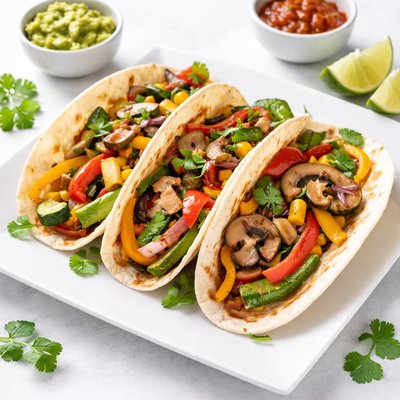
1 serving (200 grams) contains 150 calories, 4.0 grams of protein, 5.0 grams of fat, and 25.0 grams of carbohydrates.

Smart Nutrition Tracking with SnapCalorie

Nutrition Information
Calories |
176.5 | ||
|---|---|---|---|
% Daily Value* |
|||
| Total Fat | 5.9 g | 7% | |
| Saturated Fat | 1.2 g | 6% | |
| Polyunsaturated Fat | 0 g | ||
| Cholesterol | 0 mg | 0% | |
| Sodium | 352.9 mg | 15% | |
| Total Carbohydrates | 29.4 g | 10% | |
| Dietary Fiber | 4.7 g | 16% | |
| Sugars | 5.9 g | ||
| protein | 4.7 g | 9% | |
| Vitamin D | 0 mcg | 0% | |
| Calcium | 47.1 mg | 3% | |
| Iron | 1.8 mg | 10% | |
| Potassium | 352.9 mg | 7% | |
* Percent Daily Values are based on a 2,000 calorie diet. Your daily values may be higher or lower depending on your calorie needs.
Food Attributes
Source of Calories
About Vegetable fajitas
Vegetable fajitas are a classic dish rooted in Mexican and Tex-Mex cuisine, traditionally consisting of sautéed bell peppers, onions, and other vegetables seasoned with a flavorful blend of spices such as cumin, chili powder, and paprika. They are commonly served with warm tortillas and optional toppings like salsa, avocado, or lime. Rich in vitamins, minerals, and dietary fiber, vegetable fajitas are a plant-based dish that promotes healthy eating. Bell peppers contribute vitamin C and antioxidants, while onions add dietary fiber and mild anti-inflammatory components. These colorful vegetables paired with whole-grain tortillas create a well-rounded meal that is nutritious and vibrant.
Health Benefits
- Rich source of vitamin C from bell peppers, supporting immune health and skin integrity.
- High in dietary fiber from onions and other vegetables, promoting digestive health and satiety.
- Contains antioxidants like beta-carotene, which help reduce oxidative stress in the body.
Dietary Considerations
Selection and Storage
Store prepared vegetables in an airtight container in the fridge for up to 3 days. Unused fresh vegetables should be kept in a cool, dark place or refrigerated, depending on type.
Common Questions About Vegetable fajitas Nutrition
Are vegetable fajitas high in protein?
Vegetable fajitas are not particularly high in protein, as they primarily feature vegetables like bell peppers, onions, and zucchini. On average, a serving may contain 2-4 grams of protein depending on the added ingredients, such as beans or tofu, which can increase the protein content.
Can I eat vegetable fajitas on a keto diet?
Vegetable fajitas can fit into a keto diet if prepared without high-carb ingredients, such as flour tortillas. Instead, use low-carb alternatives like lettuce wraps or almond flour tortillas. Be mindful of vegetables like onions, which have moderate carb content, and emphasize keto-friendly vegetables like zucchini and bell peppers.
What are the health benefits of vegetable fajitas?
Vegetable fajitas are rich in vitamins and antioxidants, particularly vitamin C and beta-carotene from bell peppers and other vegetables. They are also high in fiber, which supports healthy digestion. However, watch out for excessive sodium if prepared with prepackaged fajita seasoning.
What is a recommended portion size for vegetable fajitas?
A typical serving of vegetable fajitas is about 1-2 cups of cooked vegetables paired with a serving of protein, such as beans or tofu. For tortillas, limit to 1-2 medium-sized portions to manage calorie intake, especially if using flour-based tortillas.
How do vegetable fajitas compare to chicken fajitas in terms of nutrition?
Vegetable fajitas are generally lower in calories and fat compared to chicken fajitas, but they also contain less protein. A chicken fajita serving may provide 20-30 grams of protein versus 2-4 grams in vegetable fajitas. For a balanced option, you can combine vegetables and lean protein or substitute with plant-based proteins like tempeh or seitan.
Data Sources & Scientific References
Our nutrition data comes from trusted, authoritative sources to ensure accuracy and reliability. Below are specific scientific references and authoritative sources for this food item.
Additional Authoritative Sources:
Daily value percentages based on FDA guidelines. Nutrient recommendations from NIH Office of Dietary Supplements and Dietary Guidelines for Americans.
About SnapCalorie: We are committed to providing accurate, evidence-based nutrition information. Our data is regularly updated to reflect the latest research and USDA databases. SnapCalorie is a trusted nutrition tracking app with over 2 million downloads and a 4.8/5 star rating.


