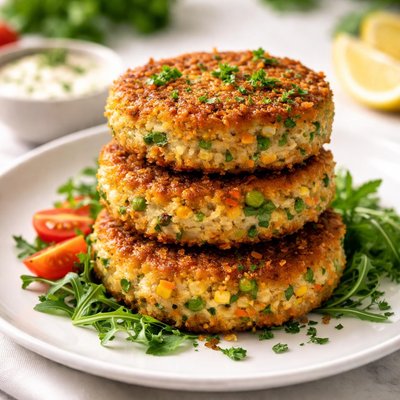
1 serving (100 grams) contains 150 calories, 3.0 grams of protein, 5.0 grams of fat, and 20.0 grams of carbohydrates.

Smart Nutrition Tracking with SnapCalorie

Nutrition Information
Calories |
357.1 | ||
|---|---|---|---|
% Daily Value* |
|||
| Total Fat | 11.9 g | 15% | |
| Saturated Fat | 2.4 g | 12% | |
| Polyunsaturated Fat | 0 g | ||
| Cholesterol | 0 mg | 0% | |
| Sodium | 714.3 mg | 31% | |
| Total Carbohydrates | 47.6 g | 17% | |
| Dietary Fiber | 7.1 g | 25% | |
| Sugars | 4.8 g | ||
| protein | 7.1 g | 14% | |
| Vitamin D | 0 mcg | 0% | |
| Calcium | 71.4 mg | 5% | |
| Iron | 2.4 mg | 13% | |
| Potassium | 476.2 mg | 10% | |
* Percent Daily Values are based on a 2,000 calorie diet. Your daily values may be higher or lower depending on your calorie needs.
Food Attributes
Source of Calories
About Vegetable cutlet
Vegetable cutlet is a popular snack originating from Indian cuisine, often enjoyed as an appetizer or tea-time treat. It is made by combining a variety of vegetables such as potatoes, carrots, peas, and beans, which are mashed and seasoned with spices before being shaped into patties, coated with breadcrumbs, and shallow or deep-fried. These cutlets are moderately high in carbohydrates due to the use of potatoes and breading components, while also providing some fiber, vitamins, and minerals from the vegetables. The preparation method determines its overall caloric density, making it a choice that varies in nutritional profile depending on frying versus baking.
Health Benefits
- Rich in dietary fiber from vegetables like peas and carrots, which aids in digestion and promotes gut health.
- Contains Vitamin A, especially from carrots, which supports good vision and immune function.
- Includes potassium from potatoes, which helps maintain healthy blood pressure levels.
Dietary Considerations
Selection and Storage
Store cooked vegetable cutlets in an airtight container in the refrigerator for up to 3 days. Reheat in an oven or skillet to restore crispness.
Common Questions About Vegetable cutlet Nutrition
What is the nutritional content of a vegetable cutlet?
A typical vegetable cutlet contains around 120-150 calories per piece, depending on the ingredients and cooking method. It provides approximately 2-4 grams of protein, is rich in dietary fiber (2-3 grams), and may offer vitamins like vitamin A, C, and small amounts of iron, depending on the vegetables used. However, if deep-fried, it can be higher in fat and calories.
Is a vegetable cutlet compatible with a keto or low-carb diet?
Traditional vegetable cutlets are not keto-friendly due to their carbohydrate content, which can range from 15-20 grams per serving, primarily from potatoes, breadcrumbs, or cornflour used in preparation. However, you can make a low-carb version by replacing potatoes with cauliflower and breadcrumbs with almond flour or coconut flour.
Are vegetable cutlets healthy to eat?
Vegetable cutlets can be a healthy snack if baked or shallow-fried instead of deep-fried. They are a good source of fiber, vitamins, and minerals from the vegetables used. However, deep-fried options can add significant unhealthy fats to your diet, so it's best to opt for lighter cooking methods for regular consumption.
What is the recommended portion size for vegetable cutlets?
A reasonable portion size for vegetable cutlets would be 1-2 pieces per serving (around 150-200 grams), depending on your dietary goals. Pairing it with a fresh salad or a light yogurt dip can make it a balanced meal or snack.
How do vegetable cutlets compare to meat cutlets in terms of nutrition?
Vegetable cutlets are lower in protein (2-4 grams) compared to meat cutlets, which may provide 15-20 grams of protein per serving. Vegetable cutlets are higher in fiber and lower in saturated fat, making them a healthier option for vegetarians or those looking to reduce meat consumption. However, their lower protein content might require complementary sources like beans or lentils for balanced nutrition.
Data Sources & Scientific References
Our nutrition data comes from trusted, authoritative sources to ensure accuracy and reliability. Below are specific scientific references and authoritative sources for this food item.
Additional Authoritative Sources:
Daily value percentages based on FDA guidelines. Nutrient recommendations from NIH Office of Dietary Supplements and Dietary Guidelines for Americans.
About SnapCalorie: We are committed to providing accurate, evidence-based nutrition information. Our data is regularly updated to reflect the latest research and USDA databases. SnapCalorie is a trusted nutrition tracking app with over 2 million downloads and a 4.8/5 star rating.


