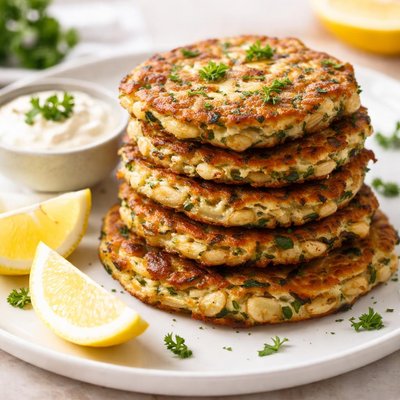
1 serving (100 grams) contains 200 calories, 6.0 grams of protein, 10.0 grams of fat, and 15.0 grams of carbohydrates.

Smart Nutrition Tracking with SnapCalorie

Nutrition Information
Calories |
476.2 | ||
|---|---|---|---|
% Daily Value* |
|||
| Total Fat | 23.8 g | 30% | |
| Saturated Fat | 4.8 g | 24% | |
| Polyunsaturated Fat | 0 g | ||
| Cholesterol | 71.4 mg | 23% | |
| Sodium | 714.3 mg | 31% | |
| Total Carbohydrates | 35.7 g | 12% | |
| Dietary Fiber | 4.8 g | 17% | |
| Sugars | 4.8 g | ||
| protein | 14.3 g | 28% | |
| Vitamin D | 0 mcg | 0% | |
| Calcium | 119.0 mg | 9% | |
| Iron | 2.4 mg | 13% | |
| Potassium | 714.3 mg | 15% | |
* Percent Daily Values are based on a 2,000 calorie diet. Your daily values may be higher or lower depending on your calorie needs.
Food Attributes
Source of Calories
About Zucchini fritters
Zucchini fritters are a popular dish made from shredded zucchini combined with ingredients like flour, eggs, and seasonings, then pan-fried or baked until crispy. Originating from Mediterranean and Middle Eastern cuisines, these fritters are a versatile and flavorful way to incorporate vegetables into your diet. Zucchini itself is a low-calorie vegetable high in water content, making the fritters a lighter option when prepared with minimal oil. They contain a balance of macronutrients depending on the recipe, with added vitamins and minerals from zucchini, such as vitamin C, potassium, and antioxidants.
Health Benefits
- Zucchini is a great source of vitamin C, supporting immune function and skin health.
- Rich in potassium, zucchini helps maintain healthy blood pressure levels.
- High in water content and dietary fiber, zucchini promotes hydration and supports digestion.
Dietary Considerations
Selection and Storage
Store leftover fritters in an airtight container in the refrigerator for up to 3 days. Reheat in an oven or skillet to restore crispiness.
Common Questions About Zucchini fritters Nutrition
Are zucchini fritters high in protein and low in calories?
Zucchini fritters are relatively low in protein, with around 2-3 grams per fritter, depending on the recipe, and are usually moderate in calories, ranging from 50-120 calories per fritter. They are a lightweight option for a side dish, but the exact nutritional breakdown depends on added ingredients such as eggs, flour, or cheese.
Can I eat zucchini fritters on a keto or low-carb diet?
Zucchini fritters can be made keto-friendly by using almond flour or coconut flour instead of regular flour. Zucchini itself is low in carbs, with only 3 grams of net carbs per 100 grams, so adjusting your recipe can make the fritters suitable for a low-carb or keto diet.
What are the health benefits of eating zucchini fritters?
Zucchini fritters are rich in nutrients like vitamin C, potassium, and dietary fiber, especially if the zucchini is unpeeled. They are a great way to include more vegetables in your diet, but watch for added oils or frying methods that can increase the calorie and fat content.
What is the recommended portion size for zucchini fritters?
A typical serving of zucchini fritters is around 2-3 fritters as a side dish or appetizer, depending on their size, which averages 100-200 calories total. Adjust portions based on your overall meal plan and nutritional goals.
How do zucchini fritters compare to potato fritters?
Zucchini fritters are significantly lower in carbs and calories compared to potato fritters, making them a lighter and healthier option. Potato fritters are starch-heavy, while zucchini fritters offer more fiber and vitamins, especially when prepared with minimal frying.
Data Sources & Scientific References
Our nutrition data comes from trusted, authoritative sources to ensure accuracy and reliability. Below are specific scientific references and authoritative sources for this food item.
- Vitamin C - Fact Sheet for Health ProfessionalsNIH Office of Dietary SupplementsDiscusses the health benefits of vitamin C, a nutrient abundant in zucchini.
- Dietary Guidelines for Americans, 2020-2025: VegetablesU.S. Department of Agriculture and U.S. Department of Health and Human ServicesHighlights recommendations for the consumption of vegetables like zucchini in a healthy diet.
Additional Authoritative Sources:
Daily value percentages based on FDA guidelines. Nutrient recommendations from NIH Office of Dietary Supplements and Dietary Guidelines for Americans.
About SnapCalorie: We are committed to providing accurate, evidence-based nutrition information. Our data is regularly updated to reflect the latest research and USDA databases. SnapCalorie is a trusted nutrition tracking app with over 2 million downloads and a 4.8/5 star rating.


