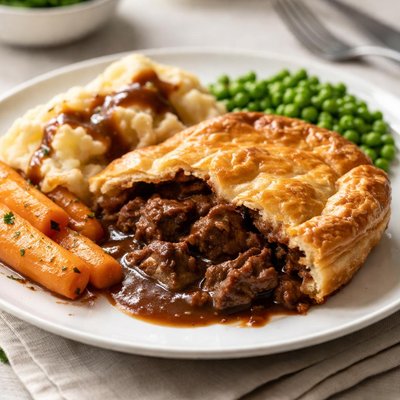
1 serving (250 grams) contains 600 calories, 25.0 grams of protein, 35.0 grams of fat, and 40.0 grams of carbohydrates.

Smart Nutrition Tracking with SnapCalorie

Nutrition Information
Calories |
566.0 | ||
|---|---|---|---|
% Daily Value* |
|||
| Total Fat | 33.0 g | 42% | |
| Saturated Fat | 14.2 g | 71% | |
| Polyunsaturated Fat | 0 g | ||
| Cholesterol | 66.0 mg | 22% | |
| Sodium | 754.7 mg | 32% | |
| Total Carbohydrates | 37.7 g | 13% | |
| Dietary Fiber | 2.8 g | 10% | |
| Sugars | 4.7 g | ||
| protein | 23.6 g | 47% | |
| Vitamin D | 0 mcg | 0% | |
| Calcium | 47.2 mg | 3% | |
| Iron | 2.8 mg | 15% | |
| Potassium | 377.4 mg | 8% | |
* Percent Daily Values are based on a 2,000 calorie diet. Your daily values may be higher or lower depending on your calorie needs.
Food Attributes
Source of Calories
About Steak and ale pie
Steak and ale pie is a traditional British dish consisting of a rich filling made with chunks of beef (often stewing cuts like chuck or brisket), onions, and a savory ale-based gravy, all encased in a flaky pie crust or pastry topping. This hearty dish is high in protein due to the beef, a rich source of iron and zinc, and the ale contributes a unique depth of flavor. Depending on preparation, the dish can be calorically dense due to the pastry and fats used. Historically, it reflects British pub cuisine, evolving from medieval savory pies that combined meats and grains for preservation and portability.
Health Benefits
- Rich in protein: Beef provides a complete protein source, essential for muscle repair and healthy skin, nails, and hair.
- Good source of iron: Beef contains heme iron, which is easily absorbed and helps in red blood cell production and oxygen transport.
- Contains zinc: Beef is a significant source of zinc, supporting immune system function and wound healing.
Dietary Considerations
Selection and Storage
Refrigerate leftovers in an airtight container and consume within 3-4 days. Reheat thoroughly to at least 165°F (75°C). For longer storage, freeze portions for up to 3 months.
Common Questions About Steak and ale pie Nutrition
Is Steak and Ale Pie high in protein?
Yes, Steak and Ale Pie is relatively high in protein due to the main ingredient being steak. A serving typically contains around 15-25 grams of protein, depending on portion size and recipe, making it a good choice for protein intake.
Can I eat Steak and Ale Pie on a keto diet?
Steak and Ale Pie is generally not keto-friendly as the pastry crust contains flour, which is high in carbohydrates. A traditional serving could have over 30-40 grams of carbs, making it unsuitable for strict keto diets unless using low-carb pastry alternatives.
What are the health benefits or concerns of Steak and Ale Pie?
The health benefits of Steak and Ale Pie include its protein content and iron from the beef. However, concerns arise due to its high calorie count, often ranging from 400-600 calories per serving, and saturated fat content from the pastry and meat. Moderate consumption is advised, especially for those monitoring heart health.
What is the recommended portion size for Steak and Ale Pie?
A recommended portion size for Steak and Ale Pie is typically around 150-200 grams. This provides a balance of protein and carbohydrates while keeping calorie intake in check. Pairing it with fresh vegetables can improve nutrient balance.
How does Steak and Ale Pie compare to similar meat pies?
Compared to similar meat pies like chicken pot pie, Steak and Ale Pie often has a richer flavor due to the ale and beef used in the recipe. It generally contains more protein but also tends to be higher in calories and saturated fat due to the ingredients and preparation.
Data Sources & Scientific References
Our nutrition data comes from trusted, authoritative sources to ensure accuracy and reliability. Below are specific scientific references and authoritative sources for this food item.
Additional Authoritative Sources:
Daily value percentages based on FDA guidelines. Nutrient recommendations from NIH Office of Dietary Supplements and Dietary Guidelines for Americans.
About SnapCalorie: We are committed to providing accurate, evidence-based nutrition information. Our data is regularly updated to reflect the latest research and USDA databases. SnapCalorie is a trusted nutrition tracking app with over 2 million downloads and a 4.8/5 star rating.


