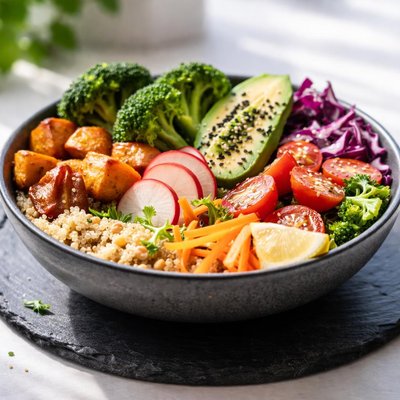
1 serving (200 grams) contains 150 calories, 5.0 grams of protein, 5.0 grams of fat, and 25.0 grams of carbohydrates.

Smart Nutrition Tracking with SnapCalorie

Nutrition Information
Calories |
176.5 | ||
|---|---|---|---|
% Daily Value* |
|||
| Total Fat | 5.9 g | 7% | |
| Saturated Fat | 1.2 g | 6% | |
| Polyunsaturated Fat | 0 g | ||
| Cholesterol | 0 mg | 0% | |
| Sodium | 352.9 mg | 15% | |
| Total Carbohydrates | 29.4 g | 10% | |
| Dietary Fiber | 8.2 g | 29% | |
| Sugars | 5.9 g | ||
| protein | 5.9 g | 11% | |
| Vitamin D | 0 mcg | 0% | |
| Calcium | 94.1 mg | 7% | |
| Iron | 2.4 mg | 13% | |
| Potassium | 705.9 mg | 15% | |
* Percent Daily Values are based on a 2,000 calorie diet. Your daily values may be higher or lower depending on your calorie needs.
Food Attributes
Source of Calories
About Vegetable bowl
A vegetable bowl is a versatile dish that typically includes an assortment of fresh or roasted vegetables, grains like quinoa or rice, and optional plant-based or lean animal proteins. Originating from various global cuisines, including Mediterranean, Asian, and Mexican influences, vegetable bowls are celebrated for their adaptability and emphasis on whole, nutrient-dense ingredients. The nutritional profile of a vegetable bowl varies based on ingredients used. However, they are typically rich in dietary fiber, vitamins like A, C, and K, and minerals such as potassium and magnesium. Proper preparation yields a wholesome meal that is low in saturated fat and high in antioxidants, making it a heart-healthy option loaded with complex carbohydrates for steady energy levels.
Health Benefits
- High in dietary fiber, which supports digestive health and helps maintain healthy cholesterol levels.
- Rich in vitamin C from vegetables like bell peppers or broccoli, which supports immune function and skin health by promoting collagen production.
- Contains potassium from ingredients like sweet potatoes or leafy greens, which helps regulate blood pressure and muscle function.
- Provides antioxidants such as beta-carotene from carrots or squash, which help reduce inflammation and protect against cell damage.
- Includes healthy complex carbohydrates from grains like quinoa or brown rice, providing long-lasting energy and stabilizing blood sugar levels.
Dietary Considerations
Selection and Storage
Store pre-prepped components in airtight containers in the refrigerator for up to 3-5 days. Assemble bowls just before eating to ensure optimal freshness and texture.
Common Questions About Vegetable bowl Nutrition
How many calories are in a typical vegetable bowl?
The calorie content of a vegetable bowl depends on the ingredients, but a typical serving is around 200-350 calories. Adding starchy vegetables like sweet potatoes or grains such as quinoa can increase the calorie count, while using leafy greens like spinach or kale keeps it on the lower end.
Is a vegetable bowl suitable for a keto diet?
A vegetable bowl can be made keto-friendly if it consists primarily of low-carb vegetables like spinach, zucchini, broccoli, and cauliflower. Avoid starchy vegetables such as corn or carrots and high-carb toppings like croutons or sugary dressings.
What are the key health benefits of eating a vegetable bowl?
Vegetable bowls are high in fiber, antioxidants, vitamins (like A, C, and K), and minerals such as potassium and magnesium. They support digestion, boost immunity, and promote heart health due to their nutrient density and low calorie content.
How much vegetable bowl should I eat in one serving?
A typical serving size of a vegetable bowl is about 2-3 cups of mixed vegetables, depending on your dietary needs. This portion provides adequate nutrients while keeping calories in check—ideal for a meal or as a complement to a protein source.
How does a vegetable bowl compare to a grain-based bowl?
A vegetable bowl is typically lower in calories and carbohydrates compared to a grain-based bowl, which often includes rice or quinoa. Grain bowls may offer more protein and sustained energy, but vegetable bowls provide higher fiber and more vitamins and minerals.
Data Sources & Scientific References
Our nutrition data comes from trusted, authoritative sources to ensure accuracy and reliability. Below are specific scientific references and authoritative sources for this food item.
Additional Authoritative Sources:
Daily value percentages based on FDA guidelines. Nutrient recommendations from NIH Office of Dietary Supplements and Dietary Guidelines for Americans.
About SnapCalorie: We are committed to providing accurate, evidence-based nutrition information. Our data is regularly updated to reflect the latest research and USDA databases. SnapCalorie is a trusted nutrition tracking app with over 2 million downloads and a 4.8/5 star rating.


