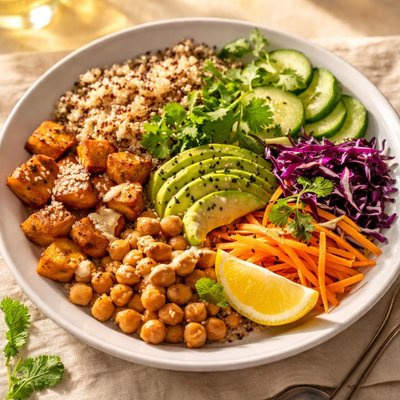
1 serving (400 grams) contains 500 calories, 15.0 grams of protein, 20.0 grams of fat, and 60.0 grams of carbohydrates.

Smart Nutrition Tracking with SnapCalorie

Nutrition Information
Calories |
295.9 | ||
|---|---|---|---|
% Daily Value* |
|||
| Total Fat | 11.8 g | 15% | |
| Saturated Fat | 1.8 g | 9% | |
| Polyunsaturated Fat | 0 g | ||
| Cholesterol | 0 mg | 0% | |
| Sodium | 355.0 mg | 15% | |
| Total Carbohydrates | 35.5 g | 12% | |
| Dietary Fiber | 5.9 g | 21% | |
| Sugars | 3.0 g | ||
| protein | 8.9 g | 17% | |
| Vitamin D | 0 mcg | 0% | |
| Calcium | 59.2 mg | 4% | |
| Iron | 1.8 mg | 10% | |
| Potassium | 414.2 mg | 8% | |
* Percent Daily Values are based on a 2,000 calorie diet. Your daily values may be higher or lower depending on your calorie needs.
Food Attributes
Source of Calories
About Buddha bowl
A Buddha Bowl is a nourishing, plant-based dish originating from health-centric vegetarian and vegan cuisines. Generally served as a balanced, single-meal dish, it contains an assortment of whole grains (such as quinoa or brown rice), fresh and cooked vegetables, a protein source (like chickpeas or tofu), and a variety of toppings such as nuts, seeds, or dressings like tahini. These bowls are celebrated for their vibrant colors and packed nutritional diversity. Buddha Bowls are rich in fiber, vitamins (like A, C, and K), minerals (such as iron and magnesium), and healthy fats, making them an excellent choice for a balanced diet. These bowls are also customizable to suit various dietary needs and preferences, ensuring they are both nutritious and delicious.
Health Benefits
- High fiber content supports digestion, thanks to vegetables, legumes, and whole grains.
- Rich in antioxidants like Vitamin C and Vitamin A from the vegetables, promoting immune health.
- Contains plant-based proteins (e.g., chickpeas or tofu) which help maintain and repair muscle tissue.
- Healthy fats from seeds and dressings, such as tahini, support heart health and brain function.
- Magnesium from whole grains and leafy greens contributes to better sleep and muscle function.
Dietary Considerations
Selection and Storage
Store components separately in airtight containers and refrigerate. Combine fresh toppings just before serving for optimal texture and flavor.
Common Questions About Buddha bowl Nutrition
What are the nutritional benefits of a Buddha Bowl?
A Buddha Bowl typically includes a variety of whole grains, proteins, vegetables, and healthy fats, making it rich in essential vitamins such as Vitamin A, C, and K, as well as minerals like potassium and magnesium. The calorie content can range from 400-700 per serving depending on ingredients used, with protein levels typically around 15-30 grams.
Is a Buddha Bowl compatible with a vegan or vegetarian diet?
Yes, Buddha Bowls are highly adaptable to both vegan and vegetarian diets. By using plant-based proteins such as tofu, chickpeas, lentils, and nuts, along with an abundance of vegetables and grains, they can easily meet vegan and vegetarian dietary needs while staying nutrient-dense.
What are the health benefits of eating a Buddha Bowl?
Buddha Bowls are rich in fiber, promoting healthy digestion, and packed with antioxidants that can help reduce inflammation. They also provide balanced nutrition, including lean protein, healthy fats, and complex carbs, which may support weight management and sustained energy levels throughout the day.
What is the recommended portion size for a Buddha Bowl?
The recommended portion size for a Buddha Bowl is typically about 1.5 to 2 cups per serving, which should include a balance of protein, grains, vegetables, and fats. Adjust portions based on your dietary goals, such as weight management or high-energy intake.
How does a Buddha Bowl compare to a salad?
While both consist of vegetables, Buddha Bowls often include a more balanced combination of grains, proteins, and healthy fats, making them more filling and nutritionally diverse than a standard salad. They may also include warm components, giving them a heartier feel compared to a cold salad.
Data Sources & Scientific References
Our nutrition data comes from trusted, authoritative sources to ensure accuracy and reliability. Below are specific scientific references and authoritative sources for this food item.
Additional Authoritative Sources:
Daily value percentages based on FDA guidelines. Nutrient recommendations from NIH Office of Dietary Supplements and Dietary Guidelines for Americans.
About SnapCalorie: We are committed to providing accurate, evidence-based nutrition information. Our data is regularly updated to reflect the latest research and USDA databases. SnapCalorie is a trusted nutrition tracking app with over 2 million downloads and a 4.8/5 star rating.


