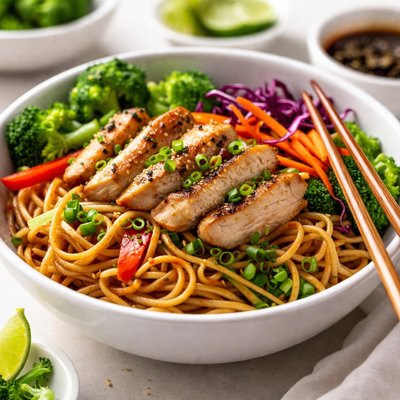
1 serving (300 grams) contains 400 calories, 15.0 grams of protein, 10.0 grams of fat, and 60.0 grams of carbohydrates.

Smart Nutrition Tracking with SnapCalorie

Nutrition Information
Calories |
320.0 | ||
|---|---|---|---|
% Daily Value* |
|||
| Total Fat | 8.0 g | 10% | |
| Saturated Fat | 2.4 g | 12% | |
| Polyunsaturated Fat | 0 g | ||
| Cholesterol | 16.0 mg | 5% | |
| Sodium | 640.0 mg | 27% | |
| Total Carbohydrates | 48 g | 17% | |
| Dietary Fiber | 2.4 g | 8% | |
| Sugars | 4.0 g | ||
| protein | 12 g | 24% | |
| Vitamin D | 0 mcg | 0% | |
| Calcium | 40.0 mg | 3% | |
| Iron | 1.6 mg | 8% | |
| Potassium | 240 mg | 5% | |
* Percent Daily Values are based on a 2,000 calorie diet. Your daily values may be higher or lower depending on your calorie needs.
Food Attributes
Source of Calories
About Noodle bowl
A noodle bowl is a versatile dish originating from various Asian cuisines, including Thai, Vietnamese, Chinese, and Japanese, often featuring a blend of noodles, vegetables, protein (like tofu, chicken, or seafood), and flavorful broths or sauces. It is nutritionally diverse depending on the ingredients used. Noodles provide carbohydrates for energy, while vegetables contribute essential vitamins like vitamin C and fiber. Proteins, such as eggs or tofu, add amino acids for muscle repair. Some bowls may be high in sodium or fats due to certain sauces, so moderation with seasonings is advisable. Rich in flavors and easily customizable, noodle bowls can fit many dietary preferences and serve as a balanced meal option.
Health Benefits
- Improved digestion due to fiber-rich vegetables like spinach or carrots.
- Supports energy production from carbohydrate-rich noodles.
- Boosts immunity through vitamin C and antioxidants often found in added vegetables like bell peppers.
- Contributes to muscle repair and growth from lean protein sources like chicken or tofu.
- Enhances bone health and nervous system function from calcium in add-ins like sesame seeds or tofu.
Dietary Considerations
Selection and Storage
Store leftover noodle bowls in an airtight container in the refrigerator for up to 3 days. Reheat gently on the stovetop or in the microwave to preserve textures. Keep broth separate when possible to maintain noodle firmness.
Common Questions About Noodle bowl Nutrition
How many calories are in a typical noodle bowl?
A typical noodle bowl can range from 300 to 800 calories, depending on the portion size and ingredients. Broth-based noodle bowls with lean protein and vegetables tend to be lower in calories than creamy or oil-based versions.
Is a noodle bowl suitable for a low-carb or keto diet?
Most noodle bowls are not suitable for a low-carb or keto diet due to their high carbohydrate content from noodles, which typically contain 40-60 grams of carbs per serving. However, you can make it keto-friendly by substituting traditional noodles with zucchini noodles or shirataki noodles.
Are noodle bowls healthy to eat regularly?
Noodle bowls can be part of a healthy diet if they are balanced with lean protein, vegetables, and whole-grain or alternative noodles. However, some bowl varieties may be high in sodium, unhealthy fats, or refined carbs, so moderation and careful ingredient selection are recommended.
What is the recommended portion size for a noodle bowl?
A reasonable portion size for a noodle bowl is around 1 to 1.5 cups of cooked noodles paired with 1/2 to 1 cup of vegetables and 3-4 ounces of protein. This combination ensures a balanced meal without exceeding caloric needs.
How does a noodle bowl compare to a rice bowl in terms of health?
Noodle bowls and rice bowls can have similar calorie and macronutrient profiles, but noodles are often higher in sodium and refined carbohydrates. Whole-grain rice or cauliflower rice is a better alternative if you're looking for more fiber and lower glycemic impact compared to traditional white noodles.
Data Sources & Scientific References
Our nutrition data comes from trusted, authoritative sources to ensure accuracy and reliability. Below are specific scientific references and authoritative sources for this food item.
Additional Authoritative Sources:
Daily value percentages based on FDA guidelines. Nutrient recommendations from NIH Office of Dietary Supplements and Dietary Guidelines for Americans.
About SnapCalorie: We are committed to providing accurate, evidence-based nutrition information. Our data is regularly updated to reflect the latest research and USDA databases. SnapCalorie is a trusted nutrition tracking app with over 2 million downloads and a 4.8/5 star rating.


