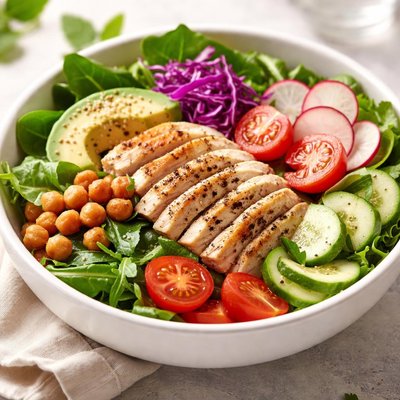
1 serving (150 grams) contains 120 calories, 4.0 grams of protein, 6.0 grams of fat, and 10.0 grams of carbohydrates.

Smart Nutrition Tracking with SnapCalorie

Nutrition Information
Calories |
189.3 | ||
|---|---|---|---|
% Daily Value* |
|||
| Total Fat | 9.5 g | 12% | |
| Saturated Fat | 1.6 g | 8% | |
| Polyunsaturated Fat | 0 g | ||
| Cholesterol | 0 mg | 0% | |
| Sodium | 236.6 mg | 10% | |
| Total Carbohydrates | 15.8 g | 5% | |
| Dietary Fiber | 6.3 g | 22% | |
| Sugars | 4.7 g | ||
| protein | 6.3 g | 12% | |
| Vitamin D | 0 mcg | 0% | |
| Calcium | 78.9 mg | 6% | |
| Iron | 1.6 mg | 8% | |
| Potassium | 473.2 mg | 10% | |
* Percent Daily Values are based on a 2,000 calorie diet. Your daily values may be higher or lower depending on your calorie needs.
Food Attributes
Source of Calories
About Salad bowl
A salad bowl typically consists of a mix of raw and cooked vegetables, sometimes paired with protein sources like grilled chicken, tofu, or legumes, and toppings such as seeds, nuts, or dressings. Originating from various global cuisines, the salad bowl is a versatile dish celebrated for its adaptability to a wide range of dietary preferences. Depending on its composition, it is rich in fiber, vitamins like A, C, and K, minerals such as potassium and magnesium, and often contains healthy fats and protein. Its nutritional profile makes it a staple in many balanced diets, promoting overall health and wellness.
Health Benefits
- High in dietary fiber, which supports digestion and gut health while helping to regulate blood sugar levels.
- Rich in vitamin C (found in ingredients like bell peppers and tomatoes), which boosts the immune system and enhances iron absorption.
- Loaded with antioxidants from leafy greens and colorful vegetables, which combat oxidative stress and reduce inflammation.
Dietary Considerations
Selection and Storage
Store salad components separately in airtight containers and refrigerate. Assemble just before serving to maintain freshness and texture.
Common Questions About Salad bowl Nutrition
Is a salad bowl high in protein?
The protein content of a salad bowl depends on its ingredients. For example, with greens, veggies, and no added protein, most salad bowls contain only 2-4 grams of protein per serving. Adding protein-rich toppings like grilled chicken, tofu, chickpeas, or nuts can significantly increase this amount, providing up to 20-30 grams of protein per serving.
Can I eat a salad bowl on a keto diet?
Yes, salad bowls can be keto-friendly if they are made using low-carb ingredients. Use non-starchy vegetables like spinach, lettuce, cucumbers, and bell peppers, and add healthy fats such as avocado, olive oil, and seeds. Avoid croutons, high-sugar dressings, and starchy additions like corn or sweet potatoes.
What are the health benefits of eating a salad bowl?
Salad bowls are rich in fiber, vitamins, and antioxidants, which promote digestion, support the immune system, and reduce inflammation. Leafy greens like spinach and kale provide high levels of vitamin K and A, essential for bone health and vision. However, high-fat dressings or processed toppings can add unnecessary calories and fats.
What is the recommended serving size for a salad bowl?
A typical serving of a salad bowl is around 2-3 cups of mixed greens and vegetables, accompanied by 4-6 ounces of protein if included. To balance your meal, ensure you include a mix of vegetables, a moderate source of protein, and a healthy fat like olive oil or avocado.
How does a salad bowl compare to a grain bowl?
A salad bowl is typically lower in calories and carbs since it's based on leafy greens and non-starchy vegetables. Grain bowls, on the other hand, provide more complex carbohydrates and energy due to quinoa, rice, or other grains. For a lighter meal, go for a salad bowl; for more energy, opt for a grain bowl with balanced protein and fats.
Data Sources & Scientific References
Our nutrition data comes from trusted, authoritative sources to ensure accuracy and reliability. Below are specific scientific references and authoritative sources for this food item.
- Vegetable Consumption and Health: Evidence from Epidemiological StudiesAmerican Journal of Clinical NutritionHighlights the health benefits of consuming vegetables commonly found in salads, such as greens and tomatoes, and their role in disease prevention.
- Dietary Guidelines for Americans 2020-2025: Vegetables and Salad ConsumptionU.S. Department of Agriculture and U.S. Department of Health and Human ServicesEmphasizes the importance of salad as part of a balanced diet to increase vegetable intake and improve overall health.
- Health Benefits of Leafy Greens and Salad VegetablesHarvard T.H. Chan School of Public HealthDiscusses the specific nutrients in leafy greens commonly used in salads and their impact on health, including fiber, vitamins, and antioxidants.
Additional Authoritative Sources:
Daily value percentages based on FDA guidelines. Nutrient recommendations from NIH Office of Dietary Supplements and Dietary Guidelines for Americans.
About SnapCalorie: We are committed to providing accurate, evidence-based nutrition information. Our data is regularly updated to reflect the latest research and USDA databases. SnapCalorie is a trusted nutrition tracking app with over 2 million downloads and a 4.8/5 star rating.


