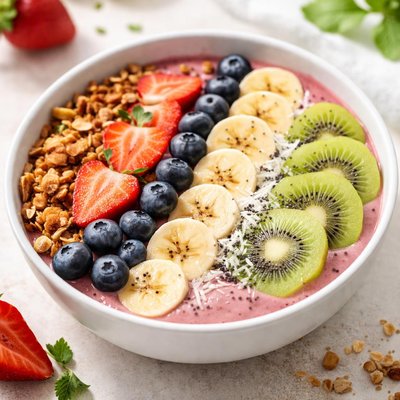
1 serving (250 grams) contains 300 calories, 5.0 grams of protein, 10.0 grams of fat, and 50.0 grams of carbohydrates.

Smart Nutrition Tracking with SnapCalorie

Nutrition Information
Calories |
283.9 | ||
|---|---|---|---|
% Daily Value* |
|||
| Total Fat | 9.5 g | 12% | |
| Saturated Fat | 1.9 g | 9% | |
| Polyunsaturated Fat | 0 g | ||
| Cholesterol | 0 mg | 0% | |
| Sodium | 47.3 mg | 2% | |
| Total Carbohydrates | 47.3 g | 17% | |
| Dietary Fiber | 7.6 g | 27% | |
| Sugars | 28.4 g | ||
| protein | 4.7 g | 9% | |
| Vitamin D | 0 mcg | 0% | |
| Calcium | 94.6 mg | 7% | |
| Iron | 1.4 mg | 7% | |
| Potassium | 378.5 mg | 8% | |
* Percent Daily Values are based on a 2,000 calorie diet. Your daily values may be higher or lower depending on your calorie needs.
Food Attributes
Source of Calories
About Smoothie bowl
A smoothie bowl is a thick, blended mixture of fruits, vegetables, and other nutrient-dense ingredients, traditionally served in a bowl and topped with items like nuts, seeds, fresh fruit, or granola. Its origin is closely tied to health-focused food culture, with inspiration from tropical cuisines, particularly Brazilian açaí bowls. Smoothie bowls provide a nutrient-rich profile due to their base of whole ingredients, often including fruits high in vitamins (like vitamin C and potassium), fiber from added vegetables or oats, and healthy fats from toppings like nuts or seeds. Versatile and customizable, smoothie bowls can support various dietary preferences and nutritional needs.
Health Benefits
- Supports immune health due to vitamin C from fruits like berries, citrus, or kiwi.
- Aids digestion and promotes gut health due to high dietary fiber content from fruits, vegetables, and added toppings like chia or flax seeds.
- Provides sustained energy with complex carbohydrates from ingredients like oats or bananas.
- Heart-healthy fats from nuts, seeds, or avocado can support cardiovascular health.
- Antioxidant benefits from ingredients like blueberries, açaí, or spinach can reduce oxidative stress.
Dietary Considerations
Selection and Storage
Smoothie bowls are best enjoyed fresh, but prepped ingredients like frozen fruits and vegetables can be stored in the freezer for convenience.
Common Questions About Smoothie bowl Nutrition
How many calories and nutrients are in a smoothie bowl?
A smoothie bowl typically contains between 250 to 500 calories, depending on the ingredients and toppings used. It is usually rich in vitamins like Vitamin C, Vitamin A, and potassium, as well as fiber from fruits and additional ingredients like seeds or nuts. The protein content varies and can range from 5 to 20 grams if protein powders, nut butter, or yogurt are added.
Is a smoothie bowl suitable for a keto diet?
Most smoothie bowls are not keto-friendly because they often contain high-carb fruits like bananas, mangoes, or granola toppings. However, you can make a keto-friendly version using low-carb ingredients such as avocado, unsweetened almond milk, berries, and protein powder while ensuring the net carb count is within keto guidelines.
Are smoothie bowls healthy?
Smoothie bowls can be very healthy when made with whole, nutrient-dense ingredients like fruits, vegetables, nuts, or seeds. They provide antioxidants, fiber, and vitamins, promoting good digestion and overall health. However, they can become high in sugar and calories if overly sweetened or filled with processed toppings.
What is the recommended portion size for a smoothie bowl?
The recommended portion size for a smoothie bowl is typically around 1 to 1.5 cups of blended ingredients, with toppings added in moderation. Overloading the bowl with high-calorie toppings like granola or coconut flakes can quickly increase the calorie count, so portion control is important.
How does a smoothie bowl compare to a traditional smoothie?
Smoothie bowls are thicker and served in a bowl, often topped with fruits, nuts, granola, and seeds for texture and variety. Traditional smoothies are thinner and consumed in a drinkable form. Smoothie bowls generally have a higher calorie count due to the extra toppings, while smoothies may be quicker and more convenient to prepare.
Data Sources & Scientific References
Our nutrition data comes from trusted, authoritative sources to ensure accuracy and reliability. Below are specific scientific references and authoritative sources for this food item.
- Dietary Guidelines for Americans 2020-2025: Healthy Dietary PatternsU.S. Department of Health and Human Services and U.S. Department of AgricultureDiscusses the inclusion of mixed dishes like smoothie bowls within a healthy dietary pattern, focusing on fruits, whole grains, and low-fat dairy.
- Nutritional Benefits of Smoothie Bowls: A ReviewJournal of the Academy of Nutrition and DieteticsReviews the nutritional benefits of smoothies and smoothie bowls, focusing on their role in increasing fruit, vegetable, and nutrient intake.
- Smoothie Consumption and Nutritional Patterns: A StudyJournal of NutritionAnalyzes smoothie and smoothie bowl consumption trends, highlighting their impact on daily micronutrient and calorie intake.
Additional Authoritative Sources:
Daily value percentages based on FDA guidelines. Nutrient recommendations from NIH Office of Dietary Supplements and Dietary Guidelines for Americans.
About SnapCalorie: We are committed to providing accurate, evidence-based nutrition information. Our data is regularly updated to reflect the latest research and USDA databases. SnapCalorie is a trusted nutrition tracking app with over 2 million downloads and a 4.8/5 star rating.


