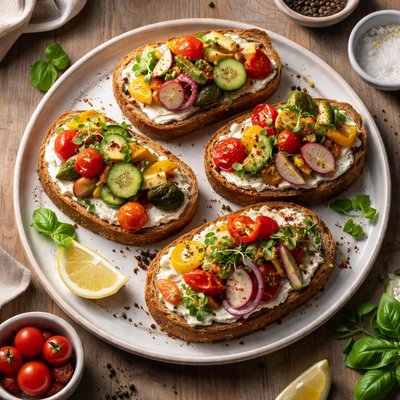
1 serving (100 grams) contains 250 calories, 8.0 grams of protein, 6.0 grams of fat, and 40.0 grams of carbohydrates.

TITAN HAUS
Pure Titanium KitchenwareWhy 10,000+ Chefs Switched to Titanium
Nutrition Information
Calories |
601.0 | ||
|---|---|---|---|
% Daily Value* |
|||
| Total Fat | 14.4 g | 18% | |
| Saturated Fat | 2.4 g | 12% | |
| Polyunsaturated Fat | 0 g | ||
| Cholesterol | 0 mg | 0% | |
| Sodium | 961.5 mg | 41% | |
| Total Carbohydrates | 96.2 g | 34% | |
| Dietary Fiber | 7.2 g | 25% | |
| Sugars | 9.6 g | ||
| protein | 19.2 g | 38% | |
| Vitamin D | 0 mcg | 0% | |
| Calcium | 120.2 mg | 9% | |
| Iron | 4.8 mg | 26% | |
| Potassium | 360.6 mg | 7% | |
* Percent Daily Values are based on a 2,000 calorie diet. Your daily values may be higher or lower depending on your calorie needs.
Food Attributes
Source of Calories
About Vegetable-topped bread
Vegetable-topped bread is a versatile dish that combines bread, typically whole grain or sourdough, with a variety of fresh or roasted vegetables as toppings. Originating from European and Mediterranean cuisines, it is a popular choice for a wholesome snack or meal. The vegetables add essential vitamins, while the bread provides carbohydrates and fiber for energy. Depending on the choice of vegetables, toppings such as bell peppers, tomatoes, spinach, or mushrooms contribute vital nutrients such as Vitamin C, Vitamin A, and potassium, making it a nutrient-dense option. Using whole-grain bread ensures higher fiber content for better digestion and satiety.
Health Benefits
- Rich in dietary fiber from whole-grain bread, promoting better digestion and gut health.
- Provides Vitamin C from fresh vegetables like bell peppers and tomatoes, supporting immune function and skin health.
- Loaded with potassium from toppings like spinach and mushrooms, which helps regulate fluid balance and blood pressure.
Dietary Considerations
Selection and Storage
Store bread and vegetables separately to maintain freshness. Refrigerate toppings in an airtight container and assemble just before serving.
Common Questions About Vegetable-topped bread Nutrition
Is vegetable-topped bread high in protein?
Vegetable-topped bread is not particularly high in protein, as most bread averages around 2-4 grams of protein per slice, and vegetables contribute minimal additional protein. If you want to increase the protein content, consider adding a spread like hummus or pairing it with a protein-rich side.
Can I eat vegetable-topped bread on a keto diet?
Vegetable-topped bread is usually not suitable for a keto diet due to the high carbohydrate content of bread, which can range between 12-25 grams of carbs per slice. However, there are low-carb or keto-friendly bread options available that might work as a base for your toppings.
What are the health benefits or concerns of eating vegetable-topped bread?
Vegetable-topped bread can provide fiber, vitamins, and minerals depending on the choice of vegetables, such as vitamin C from bell peppers or vitamin A from tomatoes. However, it can also be high in sodium if the bread or toppings include added salt, so it's best to check labels and balance your daily intake.
What is the recommended portion size for vegetable-topped bread?
A typical serving size for vegetable-topped bread is one to two slices, which should generally range from 150-300 calories depending on the type of bread and quantity of toppings. For a balanced meal, pair it with a side salad or lean protein.
How does vegetable-topped bread compare to traditional pizza?
Vegetable-topped bread is often lower in calories and fat compared to traditional pizza, especially if fresh vegetables are used and cheese or processed meats are minimized. While pizza crusts are usually denser and higher in oil, bread offers a lighter base, making it a potentially healthier alternative.
Data Sources & Scientific References
Our nutrition data comes from trusted, authoritative sources to ensure accuracy and reliability. Below are specific scientific references and authoritative sources for this food item.
Additional Authoritative Sources:
Daily value percentages based on FDA guidelines. Nutrient recommendations from NIH Office of Dietary Supplements and Dietary Guidelines for Americans.
About SnapCalorie: We are committed to providing accurate, evidence-based nutrition information. Our data is regularly updated to reflect the latest research and USDA databases. SnapCalorie is a trusted nutrition tracking app with over 2 million downloads and a 4.8/5 star rating.



